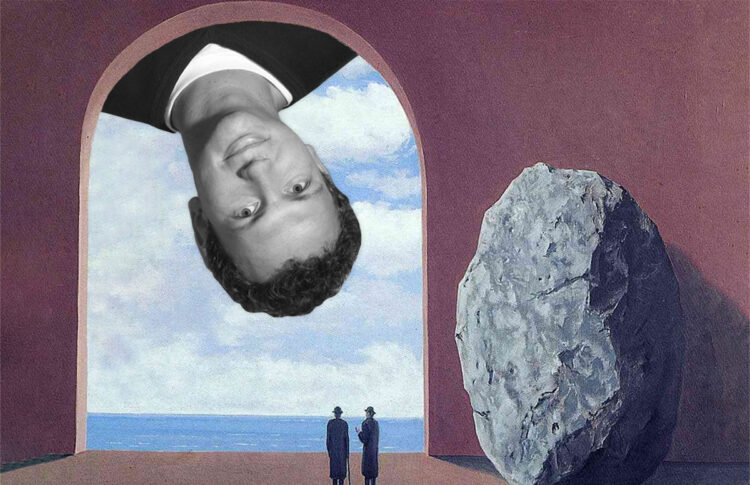
THE ART OF INTERVIEWING: the path from question to meaning


Photo by Leuchtturm Entertainment on Unsplash
THE ORIGIN OF THE INTERVIEW
T
he history of the interview began long before the word itself appeared in the journalists’ vocabulary. As far back as in ancient times, conversation was a way of gaining knowledge. A vivid example is Socrates, who, through dialogue, helped his interlocutors reach the truth. He believed that the question is the main tool for its discovery.
His philosophical dialogues, recorded by Plato, are essentially the first written interviews — though not in the form we are used to. Socrates said that the meaning lies not in knowing the answers, but in finding them together — reaching the essence of things through a sequential, sometimes painful dialogue. This mode of thinking — dialogical, open to an answer not yet formulated — is one of the origins of the in-depth interview.
In the Middle Ages and the early modern era, conversations aimed at transmitting experience or recording events can be found in chronicles, hagiographies, inquisitorial interrogations, and the correspondence of philosophers. All these were attempts to document the human voice in writing. Yet, at that time, the individual was not yet at the center, remaining part of broader structures: religious, political, ideological.
Only in the Age of Enlightenment did a new focus on individuality appear. Human thought, feelings, and personal stance became worthy of attention in themselves, regardless of one’s belonging to a particular social group. This paved the way for the interview as a genre where not only the content but also the person matters.
In journalism, the first «real» interview was published in 1836 in the New York Herald. Its founder, James Gordon Bennett, printed a conversation with a bartender who had witnessed a murder. It was a sensation — a text in which readers could «hear» a living person, their emotions, their voice. And although the topic was criminal, the format proved remarkably powerful. Instead of a dry report — an emotional, dynamic story.
In the 1870s, interviews with famous figures began to appear in the American press, including with Brigham Young, the leader of the Mormons. These publications finally established the interview as a distinct genre: lively, personal, and influential.
Over time, the interview made its way to Europe. In France, Britain, and Germany, journalists began to speak with politicians, scientists, and artists. The word interview entered everyday language as a symbol of direct communication with those who had once seemed distant and inaccessible. Today, we perceive the interview as something ordinary. Yet behind this simple form lies a profound history of human consciousness — from collective silence to the personal voice that deserves to be heard.
WHAT IS AN INTERVIEW
The word interview comes from the French entrevue — «meeting, conversation.» It can be described as a form of live dialogue with a clear purpose: to learn, convey, and capture another person’s thoughts, experience, or emotions. It is not merely a sequence of questions and answers — it is an interaction in which the interviewer acts simultaneously as a researcher, a listener, and a mediator between the interviewee and the audience.
An interview can take many forms. It may be strictly structured, deep and personal, provocative or formal, joyful or painful — but it is always genuine. A successful interview not only reveals facts but also unveils the person — their voice, pauses, omissions, and stance.
In today’s world, the interview goes far beyond the printed page. It can be heard in podcasts, seen on livestreams, read in Telegram channels, or even reinterpreted in memes. Yet its essence remains unchanged: an interview is a dialogue in search of truth and meaning — even if the answer is never fully found.

A STEP INTO THE FUTURE: FROM NEWSPAPERS TO SCREENS
In the 1920s, radio became the first medium to bring interviews directly into people’s homes. Hosts spoke with artists, politicians, and military figures — and for the first time, listeners could hear the real voices of those they had previously only read about in newspapers. Radio interviews were lively, emotional, and sometimes even improvised. It was true intimacy. Television went further — it added a face to the voice. Gradually, the interview took on a new form: it evolved from a printed conversation into a full-fledged art. It was no longer just words on paper, but voice, expression, and emotion broadcast live.
In the 1950s, a new kind of interviewer emerged — charismatic, deeply prepared, sometimes provocative. Conversations with remarkable personalities became a staple of evening television, in programs such as The Tonight Show, BBC Hardtalk, and 60 Minutes. Portrait interviews, particularly in glossy magazines, gained special significance. Publications like The New Yorker, Vogue, and Esquire created a new form — not just asking questions, but capturing the essence of a person: how they speak, how they dress, and what their philosophy of life is. Especially notable was The Paris Review’s series of interviews with 20th-century writers, who spoke about inspiration, style, and fear. These were not mere explorations of their work, but intimate glimpses into the inner worlds of the authors.
From the 1960s to the 1980s, interviews began to take on a political dimension and became an active instrument of politics. Television and newspapers increasingly used them for investigations and exposés. Conversations with dissidents, opposition figures, and revolutionaries did more than inform — they challenged systems and gave voice to the forbidden. Throughout the 20th century, the interview remained a mirror of its time: fashions, ideas, and formats changed, but the main thing — the human being at the center of the conversation — stayed constant.
THE INTERVIEW AS A MIRROR OF ITS TIME
A thoughtful and well-crafted interview always captures more than just the voice of the speaker — it catches the pulse of an era. Through it, we hear the voices of those who are no longer with us. In the themes, tones, fears, and dreams expressed in the answers, we see not only the individual — it becomes a conversation with the very time in which they lived.
In the 1960s, interview subjects spoke about freedom, revolution, the meaning of life, and rebellion against systems.
In the 1990s — about the collapse of ideologies, survival, new money, and confusion.
In the 2000s, about success, self-realization, and lifestyle.
In the 2010s, questions of identity, human rights, and trauma came to the forefront.
And in recent years, anxiety and hope intertwine: conversations about war and peace, about climate and technology, about borders and migration, about solidarity and loneliness, about the future of humanity in the age of artificial intelligence.
The format, too, evolves with the times. The world, where speed has become the norm, has given rise to short interviews of five questions, fifteen-second remarks, emotional reactions, and out-of-context quotes — all of which often gather millions of views. The interview has become part of the clip culture, losing some of its depth but gaining virality in return.
However, despite modern trends, in our «fast-paced world» that lacks depth, long and sincere conversations are gradually returning — conversations with silence between the words, where another person becomes visible. And that is precisely why the interview will never lose its value.
When copying materials, please place an active link to www.huxley.media
Select the text and press Ctrl + Enter