CHILDREN FIRST: The Personal Drama of Nataliya Zabyla


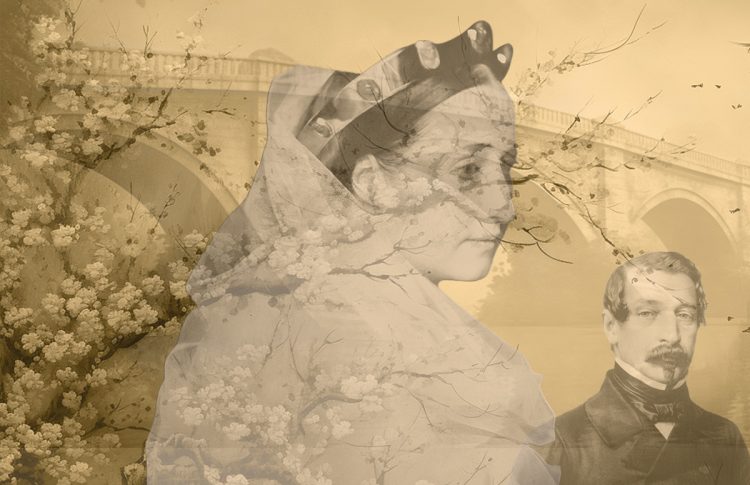
Nataliya Zabyla (photo from the archive of the Central State Archive-Museum of Literature and Art of Ukraine) / pmu.in.ua
Nataliya Zabyla (1903–1985) was a Ukrainian writer, poet, and translator. She became known as the author of numerous poems, fairy tales, and novellas for children. Her works are distinguished by a vivid style, rich imagination, and pedagogical value. Zabyla became one of the founders of modern Ukrainian children’s literature, leaving behind a significant literary legacy.
She was called «the general’s daughter», «the proletarian poetess», a femme fatale, and «the Ukrainian Agniya Barto». Nataliya had classical facial features, arched, winged eyebrows, and long eyelashes. She wore a short, boyish haircut, laughed deeply and stirringly, yet radiated a passionate nature with every fiber of her being.
She was always in active search but never idealized men. Children remained her top priority: Taras, Yasya, Halynka, and Marynka.
S
he wanted a baby right away. As if the wedding night had just passed, the young, still green-faced sun had cried out, an owl had hooted, and something tadpole-like was already pulsing in her belly. Nataliya kept up with housework, juggling rhyming words, shredding cabbage, tasting the borscht for salt — then suddenly froze, listening to whether the baby was stirring.
Savva Bozhko — a simple peasant guy from Krutoyarivka — didn’t share his wife’s fervent desire to become a mother, but he didn’t object either. He wrote essays, stopped by the «Pluh» union, and wore a proletarian cap and a traditional embroidered shirt. He ate raw fish sprinkled with salt. He earned decent royalties, but money never stayed long.
He considered his wife too bourgeois — she knew languages, played the piano, and wrote poetry, but in Russian. That irritated the proletarian, so he insisted that she switch to Ukrainian. She tried — and it worked.
Their marriage became surrounded by gossip. Malicious tongues claimed Savva didn’t love Natasha and had married her to reform her. He would, half-jokingly, half-seriously, call her «a noble dropout». He embraced the idea of free love — or rather, the «glass of water» theory. He quoted slogans like: «Wives, befriend your husband’s lovers!»
In time, the man received his diploma and left for Kamianets-Podilskyi to launch the newspaper Chervonyi Kordon. Nataliya stayed in Kharkiv with little Taras, who wasn’t even a year old. She studied, taught, and carried the baby to the nursery. One day she realized she didn’t see a happy future with an admirer of impulsive love affairs. So, the young couple divorced, and a nanny was found for little Taras.
LIFE AT «SLOVO» AND MARITAL HARDSHIPS
The poetess worked at several publishing houses. She composed poems, edited texts, and taught her son to recognize a circle, a square, and a triangle. To count a cat’s paws and a hare’s ears. Her works began to be published, and her personal life was lively. Nataliya had a passionate nature, so lovers came and went, though they always remained secondary.

In the blue city, the murmurs fell silent,
The earth kissed the twilight…
At the corner of darkened streets,
You threw sharply:
— The children or me!..
The sleepy faces of silent buildings,
Somewhere in the blue — dreams of distant villages…
My dear! First and foremost, I am a mother,
And for me, children come first.
Children were born from her lovers (the poetess truly believed that intimacy had no meaning if it did not result in a child), mostly daughters, but they stayed only briefly. Some for a few months, others — only a few days:
From stiff hands cold chrysanthemums
Drop petals on frozen ground.
So heavy, so heavy we carry,
That we cannot lift, cannot bend our hands.
So heavy, and yet so small,
As if floating in a dream in a little boat,
It clutched a bright toy in its hand —
Blond, gentle, and, you see — lifeless…
It was at that time that construction of the «Slovo» building began on the outskirts of Kharkiv. The apartments were designed to be spacious, with many rooms. Each had a bathhouse, a lavatory, and a kitchen with a stove. The walls were insulated, the courtyard had a sports ground, and the roof featured a solarium. The apartments were distributed by lottery: Nataliya drew apartment number twenty-four.
She celebrated the housewarming with her new husband — Anton Shmyhelskyi, who had a high forehead, squinting eyes, a vertical scar on his left cheek, and also — an unpleasant personality and envious disposition because his wife was widely quoted while he was not. Nataliya gave her new partner a daughter, Yasya, a delightful baby with fluffy little hair. And so it turned out:
Yasya took a pencil, a little drawing pencil.
She sat down by the table and unfolded a piece of paper…

Anton turned out to be an informant and a scoundrel. He had no friends, and even his fellow party members disliked him. He published little — just some notes and the occasional poem — and treated his wife and stepson Taras with cruelty, beating them. As a result, the marriage didn’t last long. Still, the former spouses continued living under the same roof. Anton took over one of the rooms, and when he left on business trips, he acted despicably — locking his door, switching on a loudspeaker, and going off to attend to his «important matters».
The woman was very popular at «Slovo». At first, writer and publicist Volodymyr Hzhytskyi would visit her. When the passion cooled, she entered into a relationship with Oleksandr Kopylenko, who knew more about birds than anyone else. She was involved with the sensitive Vasyl Vrazhlyvyi (the writer praised her to the skies) and once slapped Volodymyr Sosiura.
The poet amused himself with romantic notes, invited her on dates — though strangely, to the cemetery. Respectable women in the building judged their neighbors. They couldn’t understand how one could write «There, where pines and fir trees stand in a row in the grove» with one hand and undo buttons with the other. To be both intelligent and liberated.
But she managed everything: cooking porridge and writing about a bunny’s adventures, starting a love affair, and arguing with Yurii Smolych. The writer scolded her for being immoral, though he himself cheated on his wife and actively wrote denunciations.
Taras didn’t let his mother be sad either. The little rebel was constantly covered in bruises and scratches, but his mother never raised a hand to him. She washed him, treated his wounds, kissed both cheeks and «blessed» him for new adventures. No nanny ever lasted long, and even the kindergarten operating at «Slovo» asked her not to bring the troublemaker anymore.
During the quiet hour, the boy taught other children how to build wigwams, drop cats from the fifth floor, and count to a thousand. He experimented with doorbells, eventually causing them to malfunction. You’d ring Pavlo Tychyna’s apartment, and Mykola Kulish would answer. You’d try to visit Mykola Khvylovy, and Leonid Chernov would open the door.

One day, Korney Chukovsky came to visit. A cheerful uncle, even in his old age, he joked with the children — tossing chairs and mugs up to the ceiling. He understood Ukrainian (his mother was from the Kherson province), so he could exchange a few pleasant-sounding phrases. Yasochka confidently went into his arms and nestled close. Taras performed a headstand.
Two years later, the girl died. Korney sent a telegram of sympathy, because he knew what it meant to bury a child. Soon after, little Halynka followed. It seemed like just yesterday she was admiring her children, mending stockings, baking casseroles. And now the girls had soared upward — fair-haired angels.
Not long after, artist Dmytro Shavykin appeared in her life. Tall, handsome, educated. He skillfully painted seagulls and water lilies and illustrated the children’s magazines Zhovten and Tuk-tuk. He and Nataliya worked together on The Tale of Igor’s Campaign, and that likely brought them closer. They married, and Marinka was born:
Daddy was painting a picture,
Dipped the brush into some paint,
Then he left the room behind him
And sat down to have his meal.
Tap-tap, someone’s tapping,
Trying hard to open up…
And into the room that moment
Walked a little girl — Marinka…

There was all manner of things. Dmytro loved to philosophize, play cards, and had a growing fondness for morphine. The couple lived sometimes together, sometimes apart. Nataliya suffered deeply from his debauchery — and to make matters worse, Kharkiv educators turned against her fairy tale. They accused her of not being a true proletarian writer and of overusing the adjective «blue».
The woman took the criticism to heart and fell silent for two years. After the war ended, she returned to Kharkiv with Marinka, reunited with her soldier son Taras, took charge of the Kharkiv branch of the Writers’ Union, and became editor of the magazine Barvinok.
I grew up here, had a son here,
Here lie buried my two daughters.
And now, my little Maryna
Gladly walks to kindergarten.
Dmytro was invited to Kyiv to teach, so they began living apart again. The poetess tearfully begged Shavykin to return, tempting him with warm, tidy Kharkiv housing and sand pies, a baking skill she had recently mastered. She wrote that the bathtub worked perfectly — you could soak in hot water three times a day.
Taras got married and moved out. Dmytro fell into total dissolution. He would call or write to his wife with cruel words, comparing her to some young «chicks». He would call drunk and ask for money (the artist dabbled in drugs). And then — another misfortune: Marinka died. Nataliya buried her child, mourned her, and closed up her Kharkiv apartment.
FINAL YEARS AND LEGACY
After that, she wrote little, spending most of her time at the dacha or going to football matches with her husband. Dmytro painted the walls of the «Noty» store and created works like Evening on the Dnipro, in which a man and a woman ferry a pile of hay across the river in a boat. The water is weary and drowsy. The man’s back — red strained.
At the dacha, the poetess worked the garden beds, and when noon came, she would settle on the veranda with her sewing. She ripped apart old dresses and turned them into «new» sundresses. She wrote a novella about Katrusya, who had grown up. She corresponded gladly with her sister, sharing stories about tomato and plum harvests.
Her granddaughter asked if she would ever write memoirs. Nataliya answered honestly:
«About memoirs: my hands do itch, of course, but if I write, it must be truthfully and openly — and I certainly won’t write out all my love affairs. Better not».
In her final years, she lived for her grandchildren. She completed the dramatic poem Troyanovi dity («The Children of Troyan»), baked sweets. She buried her third husband, then her son Taras. She left behind around two hundred books, with a total circulation of five million copies.
Galynka, Marynka, Taras, and Yasochka still live in them to this day.
When copying materials, please place an active link to www.huxley.media
Select the text and press Ctrl + Enter