THE GOLDEN DOZEN OF UKRAINIAN PHILOSOPHERS: from moralist to futurist


Art Design: huxley.media via Photoshop
The history of each nation’s philosophy is unique and reveals itself through distinct features that reflect the spirit of its cultural tradition. A defining trait of Ukrainian philosophy has always been its mode of comprehension, in which imagery prevailed over logic, and the emotional over the conceptual.
Thus, Ukrainian philosophy sought living answers to eternal questions. Truth was viewed primarily from an ethical rather than a theoretical or epistemological perspective. As it becomes increasingly evident today, the achievements of Ukrainian philosophical thought — centered on the living human being — are gaining new relevance.
Twelve of the most outstanding Ukrainian philosophers will now attempt to introduce themselves to us.
#1 THE MORALIST

SKOVORODA Hryhorii Savych (1722–1794) — the Ukrainian Socrates, the first Ukrainian philosopher, moralist, poet, fabulist, and a man who foretold his own death. He was a thinker who, like Spinoza, lived in accordance with his own philosophical principles. Much like Plato, he composed many of his treatises in the form of dialogue.
He was a great educator, and some of his students often called him not only Socrates but also the Diogenes of Kharkiv, taking into account his constant wanderings. A true polymath, in addition to his philosophical and literary pursuits, he played the flute, bandura, gusli, and violin and composed music and songs.
Since 2006, Skovoroda has been depicted on the 500-hryvnia banknote, and two of his drawings were used in its design.
Truth speaks in a simple voice.
Everything in the world is wisely arranged. All that is necessary is simple; all that is complicated is unnecessary.
Aim for the heights, and you will attain the middle.
Only when time is lost do we understand its value.
For a new path, seek new legs.
A wise person must sift gold from dung.
It is not the mind that comes from books, but books that come from the mind.
The world can only wound us; it cannot heal us.
The most dangerous enemy is the one who pretends to be your friend.
It is easier to love humanity than to do good for your own mother.
The soul is what makes grass, grass, a tree a tree, and a human a human. Without it, grass is hay, a tree is firewood, and a human is a corpse
Hryhorii Skovoroda
#2 THE LINGUIST

POTEBNIA Oleksandr Afanasievych (1835–1891) — a theorist of linguistics, philosopher, ethnographer, literary scholar, and public figure. His book Thought and Language, published in 1862, brought him widespread recognition.
One of his most significant contributions was the development of the concept of the inner form of the word. Building on the ideas of Wilhelm von Humboldt, Potebnia pointed out the connection between an object’s structure and its linguistic designation, thereby identifying a linguistic universal.
He founded the Kharkiv Linguistic School and prepared a commentary on The Tale of Igor’s Campaign. He studied Ukrainian folklore and dialects and was one of the first to propose art as a distinct way of understanding the world.
The truth obtained through the efforts of many generations comes easily even to children — and this is the essence of progress.
Languages are essentially tools for transforming the initial pre-linguistic elements of thought, and therefore can be called instruments for the creation of thought.
If the unification of humanity in terms of language and nationality were possible, it would be a disaster for universal human thought — like replacing many feelings with just one.
Human beings need other people to exist; nations need other nations
Oleksandr Potebnia
#3 THE SOCIALIST

DRAHOMANOV Mykhailo Petrovych (1841–1895) — historian and philosopher, economist and publicist, literary critic and folklorist, scholar and politician, and founder of Ukrainian socialism.
He was the first to substantiate the ethnic and psychological identity and distinctiveness of Ukrainians. He promoted the idea that Ukrainians should establish their own state. He developed a concept of societal organization based on maximum decentralization of power and self-governance by communities and regions.
In his system, the individual is the cornerstone and foundation of this society — the highest value, whose rights are protected by a free community rather than by the state.
A just cause requires clean hands.
Every person who leaves Ukraine, every kopeck not spent on the Ukrainian cause, every word spoken in a language other than Ukrainian is an expense from the peasant Ukrainian treasury — an expense that, under current conditions, will not return from anywhere.
Everyone who sets out to serve the people puts on a crown of thorns
Mykhailo Drahomanov
#4 THE MATERIALIST
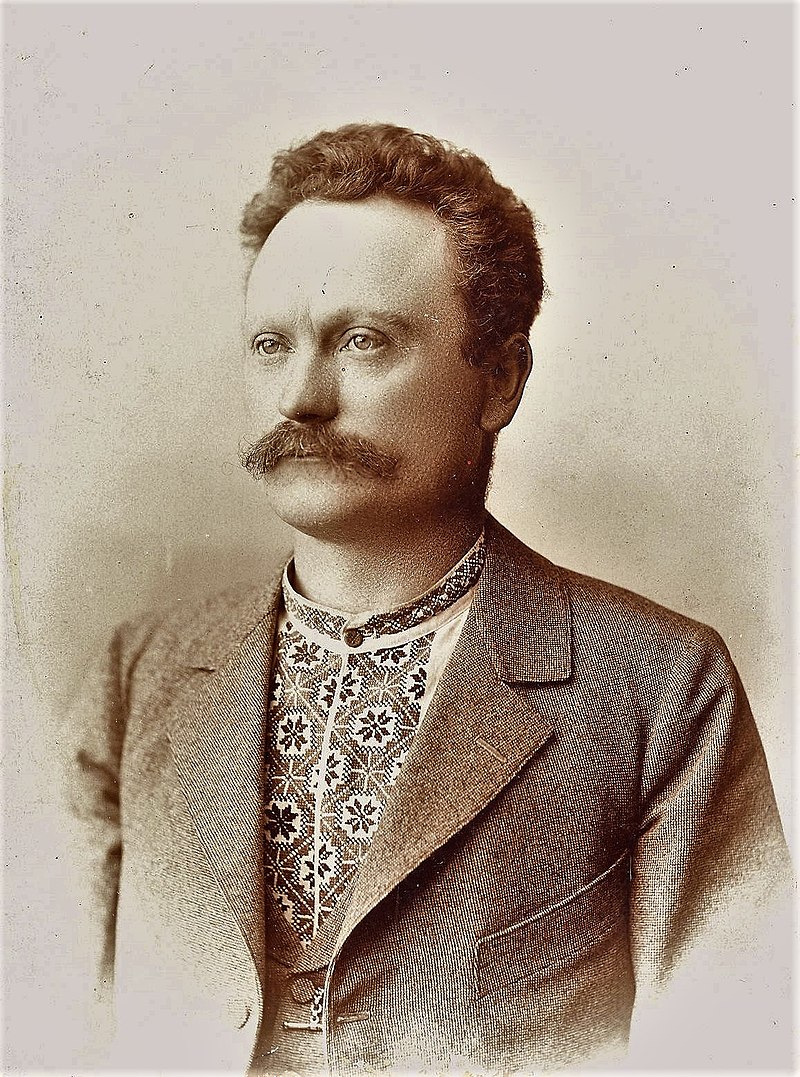
FRANKO Ivan Yakovych (1856–1916) — a brilliant Ukrainian writer, poet and playwright, literary critic and translator, philosopher, psychologist, ethnographer, linguist, and public figure. He studied at the Faculty of Philosophy of Lviv University and held a doctorate in philosophy.
A nominee for the Nobel Prize in Literature in 1916, he was removed from consideration due to his untimely death. He authored 220 books published during his lifetime, while his complete collected works consist of several thousand pieces and amount to about 100 volumes.
A polyglot, he wrote not only in Ukrainian — the language of most of his works — but also in Polish, Bulgarian, Russian, and Czech. He was the first professional Ukrainian writer to live solely on literary royalties. He used around 100 pseudonyms.
To this day, he remains the most translated and published Ukrainian author of all time in various languages. For the breadth of his interests and the universality of his talent, he fully deserves to be called the Ukrainian Leonardo. He is depicted on the 20-hryvnia banknote.
His worldview was based on philosophical realism, with a materialist conception of the world and clearly expressed elements of dialectics. He considered “mother nature” in all its diversity and eternity — in constant transformation — to be the foundation of all existence. Matter, he believed, is the eternal origin of all things, while consciousness and spirit are secondary, belonging only to humans — the pinnacle of nature’s creation.
To struggle — that alone is to live!
Who does not fight evil does not love people!
More dangerous than the sword, fire, arrow, or scythe — is the weapon of a woman’s beauty.
Love does not depend on our will, it comes without our merit and disappears without our fault.
Happiness never lasts long. All happiness is a day, an hour, a single minute.
Humor is an inseparable trait of every true talent.
My patriotism is not sentimentality, not national pride — it is a heavy yoke
Ivan Franko
#5 THE HUMANIST
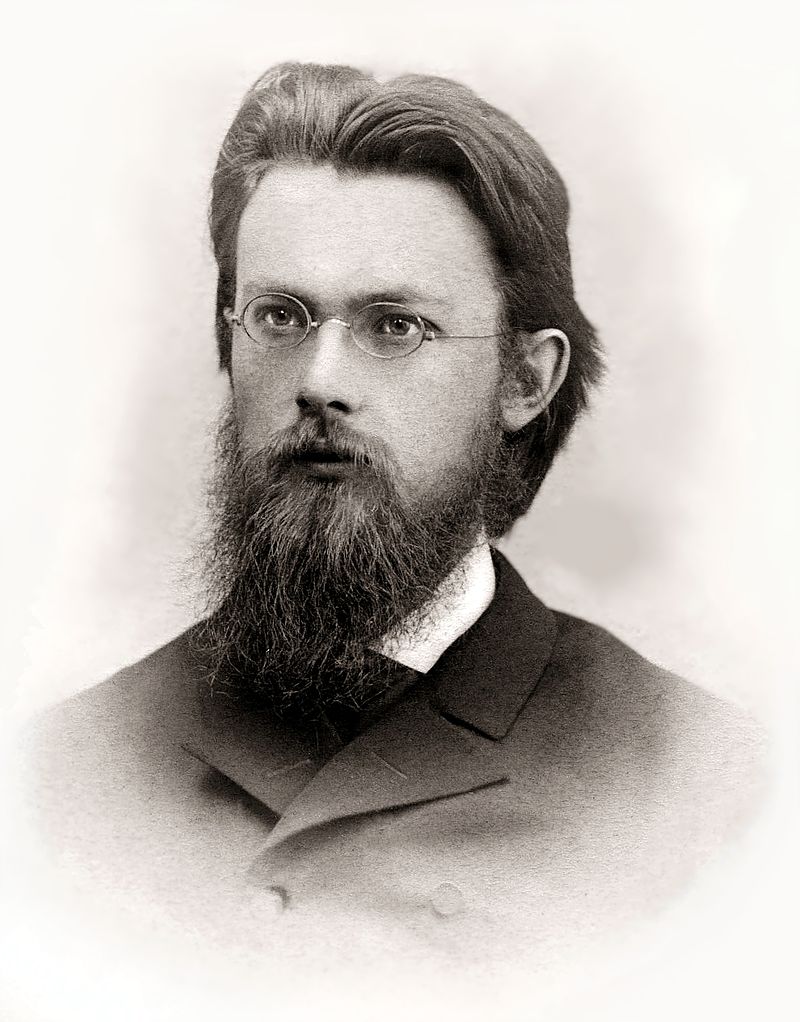
VERNADSKYI Volodymyr Ivanovych (1863–1945) — an outstanding scientist with a wide range of scholarly interests: geology, mineralogy, geochemistry, soil science, radiology, paleontology, history of science, and philosophy. An academician, he was the founder and first president of the Ukrainian Academy of Sciences (1918–1921) and took part in the establishment of the Radium Institute.
He founded a new scientific discipline — biogeochemistry — and, beginning in 1927, headed the Biogeochemical Laboratory of the Academy of Sciences. He authored 473 scientific works and mentored an entire generation of young scientists. He also contributed to the development of the GOELRO plan. Since 2019, he has been depicted on the 1,000-hryvnia banknote.
As a philosopher, he gained worldwide recognition as the author of the theory of the noosphere. The foundation of this theory is built upon the principles of humanism. Key components of the worldview of a noospheric human being and the principles of their behavior include universal human interests and equality. The transition of the biosphere into the noosphere — the sphere of reason — represents the highest stage in the evolution of life on Earth.
The entire history of science shows at every step that individual thinkers have often been more correct in their assertions than entire corporations of scientists or hundreds and thousands of researchers adhering to prevailing views.
The apparatus of scientific thinking is crude and imperfect; it is improved primarily through the philosophical work of human consciousness. Here, philosophy, in turn, powerfully contributes to the discovery, development, and advancement of science.
Philosophy and religion are closely connected to those forces of the human soul that run deeper than logic and whose influence profoundly affects the perception and understanding of logical conclusions
Volodymyr Vernadskyi
#6 THE EXISTENTIALIST

SHESTOV Lev Isaakovych (1866–1938) — a renowned philosopher and writer of Jewish origin. He was born in Kyiv and graduated from the Faculty of Law at Kyiv University. His philosophical views, expressed in an aphoristic and fragmentary style, were grounded in a critique of universally accepted truths and social morality, creating the effect of an intellectual bomb.
After the publication of his book The Apotheosis of Groundlessness: An Attempt at Adogmatic Thinking in 1905, Shestov became one of the most widely discussed authors among intellectuals. His ideas, along with those of Søren Kierkegaard and Gabriel Marcel, were foundational to the development of 20th-century existentialist philosophy.
He wrote works on the philosophy of Dostoevsky, Tolstoy, Nietzsche, and Kierkegaard and lectured at the Sorbonne. He was part of the European intellectual elite and maintained contact with Martin Heidegger, Georges Bataille, Edmund Husserl, Max Scheler, and other prominent philosophers.
People often begin to aspire to great goals when they feel incapable of handling small tasks. And not always without results.
The habit of logical thinking kills the imagination.
Wise men know no more than fools — they simply have more courage and self-confidence.
If poetry must be somewhat foolish, then philosophy must be mad.
Philosophy must live by sarcasm, mockery, anxiety, struggle, confusion, despair, and great hopes — and allow itself contemplation and peace only from time to time as a respite
Lev Shestov
#7 THE PERSONALIST

BERDYAEV Nikolai Alexandrovich (1874–1948) — the most renowned 20th-century philosopher born in Ukraine, a major figure of the religious-philosophical Renaissance, and a writer and essayist of extraordinary literary talent.
From 1942 to 1948, he was nominated for the Nobel Prize in Literature seven years in a row, and only the fact that the prize was not awarded during the war prevented him from becoming a laureate.
Author of 43 books and over 500 articles, he developed a unique concept of the philosophy of freedom. He was an honorary Doctor of Theology at the University of Cambridge. Berdyaev’s views are closely aligned with personalism — an existential-theistic philosophical current that sees the human being as the highest spiritual value of the world and the primary creative reality, while the world itself is the creation of God.
The state does not exist to create paradise on Earth but to prevent hell from taking hold.
The worst enemy of freedom is the well-fed and contented slave.
Freedom is the right to inequality.
Man is a slave because freedom is hard, while slavery is easy.
A national person is more — not less — than just a person.
Culture has never been and never will be abstractly human; it is always concretely human — that is, national, individually rooted in a people.
It is precisely the highest achievements of national creativity that possess universal human significance.
Nationality is a positive enrichment of being, and it must be fought for as a value.
National unity runs deeper than that of class, party, or any other transient historical formations in the life of nations.
Every nation fights for its culture and for a higher life in the atmosphere of national mutual responsibility. And it is a great self-deception to attempt creation apart from nationality
Nikolai Berdyaev
#8 THE HERMENEUTIST
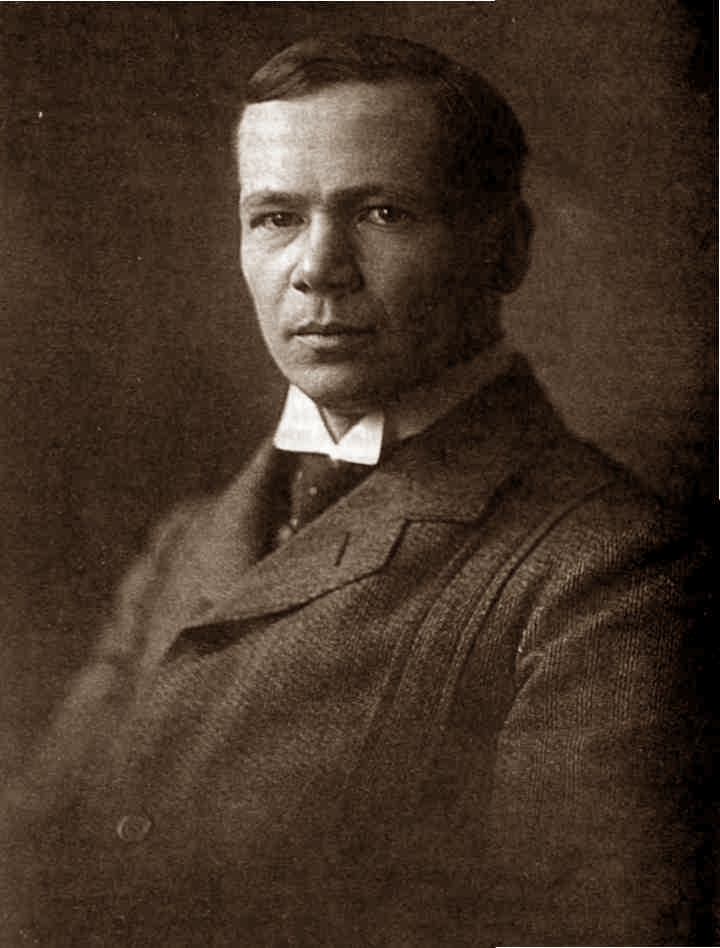
SHPET Gustav Gustavovych (1879–1937) — one of the key philosophers of the 20th century, who developed ideas in phenomenology and hermeneutics, psychological anthropology and was the first to introduce the word “semiotics” into Russian-language academic discourse. He was also a theorist of art and acting, as well as a gifted translator of philosophical and literary works.
Born in Kyiv, he graduated from a Kyiv gymnasium and initially studied at the Faculty of Physics and Mathematics at Saint Vladimir University before being expelled for revolutionary activities. He later reenrolled at the same university, this time in the Faculty of History and Philology, from which he graduated successfully.
He studied at the University of Göttingen and attended Edmund Husserl’s lectures on phenomenology. A polyglot fluent in 17 languages, he also taught. Among his students at a Kyiv girls’ gymnasium was Anna Gorenko — the future poet Anna Akhmatova.
He headed the Institute of Scientific Philosophy and served as a professor at the Institute of Higher Acting Mastery.
Under the influence of Husserl’s phenomenology, Shpet developed the idea that a phenomenon reaches its full realization only in language. In phenomenologically addressing the problem of the identity of objects and thought, he formulated the concept of full representation.
From this standpoint, he worked fruitfully in the study of various forms of linguistic intention.
His writings also outlined themes later central to phenomenological sociology — particularly the concept of social being, its properties, and its characteristics.
Shpet made significant contributions to the philosophy of history as well, developing a methodology for historical inquiry rooted in hermeneutics. His understanding of hermeneutics as a theory of knowledge of historical reality remains relevant today.
At the end of his life, he accomplished a great intellectual and translational feat — he translated Hegel’s Phenomenology of Spirit from German. Since then, no other translation of this work has been produced.
Philosophy is always anxiety, always a claim, always unrest — the philosopher has no haven.
History could not exist if all the past appeared to it as nothingness.
We separate intellect and language, but in reality, such a separation does not exist.
A person surrounds themselves with a world of sounds in order to take in and process the world of objects.
In a work of art, we are dealing with reality — but elevated to the ideal.
A “play” and a “role” for the actor are merely “text.” Yet from “text” to “performance” lies an immense distance
Gustav Shpet
#9 THE NATIONALIST

DONTSOV Dmytro Ivanovych (1883–1973) — a theorist of Ukrainian nationalism, philosopher, literary critic, and publicist, often referred to as the Ukrainian Machiavelli. He held a Doctorate in Law from Lviv University. In 1914, at the outbreak of World War I, he became the head of the Union for the Liberation of Ukraine. In 1918, he led the Press Bureau under the government of Skoropadsky.
From 1922 to 1939, he lived in Lviv, where he wrote his major work — Nationalism, in which he developed the concept of integral nationalism. His philosophy drew on the then-popular doctrine of social Darwinism, in which the concept of a nation was interpreted as a species in the animal world, akin to lions or dogs. Consequently, there would always be competition and struggle for survival between nations — leading to the conclusion that war is inevitable and that conflicts between nations are eternal.
To rule not over others but on one’s own land.
Democracy — the rule of the many — recognizes only the law of numbers.
A sum of the weak does not produce strength.
When we read the history of Europe, we read the history of its nations. Reading the history of Russia, we see nothing but a dark mass.
The world belongs to those who know how to will.
The most oppressed is the one who demands the least.
The will to live is the will to power.
Whatever mask of internationalism or cosmopolitanism Russian political ambitions may wear among us, they will always be carried out by Russians. Ukraine will live as an independent state only when it acts, both in internal and external policy, guided by its own national political ideal. This can be achieved only against Russia and never alongside it
Dmytro Dontsov
#10 THE CULTUROLOGIST

CHYZHEVSKYI Dmytro Ivanovych (1894–1977) — an outstanding Ukrainian scholar, culturologist, philosopher, historian of religion, literary critic, and researcher of Ukrainian and Slavic literatures who made a tremendous contribution to Ukrainian studies. He studied at the Faculty of History and Philology at Kyiv University.
He was the first historiographer of Ukrainian philosophical thought and introduced the world to a previously unknown manuscript by Jan Amos Comenius, the Czech humanist of the Renaissance. He authored over 900 scholarly works.
Chyzhevskyi gained international recognition for his original model of cultural development, which entered the field of cultural studies as the “Chyzhevskyi pendulum.” He proposed a theory of alternating cultures in binary opposition: Renaissance and Baroque, Classicism and Romanticism, Realism and Modernism.
In each pair, the first is oriented toward “content,” while the second emphasizes “form.” Moreover, the gap between these pairs increases: Renaissance and Baroque are different, Classicism and Romanticism represent almost irreconcilable worldviews in European culture, and between Realism and Modernism lies a true chasm — hence the pendulum metaphor.
In recognition of his contribution to global philosophy, Ukraine established the “D. I. Chyzhevskyi Prize” in 1997, awarded to scholars for outstanding achievements in philosophy.
The historical process is determined not only by the free will and actions of individuals but also by higher forces. It is not merely “good intentions” and “goodwill” that shape the future, but also the “grace” that responds to and echoes them. The gracefulness of historical events does not depend on the will of their participants.
European dictatorships — this new form of state structure — are entirely and utterly devoid of grace. Hence the insignificance, weakness, or internal falsehood of the “leaders”; hence the unparalleled in human history triviality of the “ideas” — trivial in their struggle for the limited and accidental, trivial in defending the pitiful remnants of yesterday’s historic day, and most trivial in their content, which largely consists of disfigured and mutilated fragments of democratic principles
Dmytro Chyzhevskyi
#11 THE RATIONALIST

POPOVYCH Myroslav Volodymyrovych (1930–2018) — Ukrainian philosopher, academician, Doctor of Philosophical Sciences, professor, educator, and specialist in the study of logic and the methodology of science. He was also a public and political figure. Director of the H. S. Skovoroda Institute of Philosophy and President of the Philosophical Society of Ukraine.
A member of the People’s Movement of Ukraine since 1989, he was the recipient of the “Person of the Year 2003” award in the “Scholar of the Year” category and a laureate of the Taras Shevchenko National Prize. He served as editor-in-chief of the journal Philosophical Thought and was a Knight of the French Legion of Honour. He authored numerous scholarly works and books.
Popovych’s ideas encompassed a wide range of issues. On one hand, he made significant contributions to the philosophy of science, focusing on the logical and methodological analysis of scientific language.
On the other hand, he played a key role in clarifying issues related to the understanding of culture and humanism. His philosophical work also substantially enriched discussions on Ukraine and its place in the world.
As long as a person is alive, we cannot say anything definite about them because today they may act one way, and tomorrow — completely differently, nullifying everything that came before. A human biography is the sum of one’s actions. The last of which is a person’s departure. Only after death can we say: this person… and list the facts of their life.
The question is not even why to live. The question is, why die? Once, I asked an ordinary soldier what he was dying for. He thought for a moment and said: “All of us — for Ukraine. Each of us has their own Ukraine.” You know, I wasn’t satisfied with that answer. It’s a terrible thing when we are forced to choose our future at the edge of a grave
Myroslav Popovych
#12 THE FUTURIST
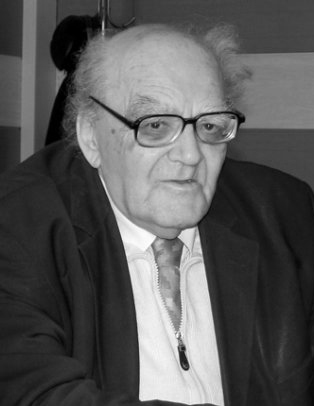
KRYMSKYI Serhii Borysovych (1930–2010) — a prominent Ukrainian philosopher and cultural theorist. He graduated from the Faculty of Philosophy at Kyiv University and held a Doctorate in Philosophy. He was a professor at the National University of Kyiv-Mohyla Academy.
A laureate of the Shevchenko National Prize (2005) and the Dmytro Chyzhevskyi Prize (2001), he was also a member of the New York Academy of Sciences. He authored more than 10 books and around 200 scholarly articles.
Krymskyi’s subtle, intuitive reflections were directed not only toward understanding the present but also toward developing a methodology for grasping the future. For example, emphasizing the importance of value, he introduced the concept of “approach” as a complex methodological tool in contemporary science.
He also attached particular importance to the notion of spirituality, highlighting its role in the formation of civilization. Krymskyi was the author of poignant texts about himself, the current state of the modern world, and Ukraine:
A philosopher is not simply a “thinking machine”; they are a person capable of translating thoughts and feelings into their own biography.
Life is always an overcoming of difficulties — if you will, a struggle — and therefore, one should be surprised not by the presence of troubles, which occur quite often, but by successes, which are truly rare. Philosophy allows us to understand the meaningful measure between successes and failures, achievements and defeats.
In Warsaw, in one of the churches, there is a modern icon of Christ depicting a man carrying… himself in his arms to give himself to people. In my opinion, this image is the best answer to the question of the meaning of life.
For four centuries in Europe, people awaited the Last Judgment — they prayed and neglected the economy. Then, they saw that the Last Judgment did not come. But in reality, the Last Judgment was prolonged over time. During the second millennium, 400 million people perished — the entire population that lived in the 10th century. Over the past millennium, no major social problems have been solved, such as poverty, unemployment, crime, and issues concerning youth.
Today, we are summing up the global historical process that began in the second millennium BCE, when the first imperial states emerged. The activities of these states in the 20th century led to such casualties that made the crimes of Ashurbanipal and Nebuchadnezzar pale in comparison.
No imaginary or real sins of people can justify the death of tens of millions, who in our century are counted as victims of imperial totalitarianism in Europe and Asia.
Humanity has looked into such abysses of evil that have changed our understanding of God, man, and history. Human suffering has proven more tragic than the suffering of God.
Although the light of eternal truths has dawned on us, it has once again been proven that man is a vertical being and cannot live on his knees.
As the 20th century showed, a certain law of the preservation of humanity still operates in history, reflected in our success in avoiding World War III and confirming the saving principle of the discussability of all conflicts.
Serhii Krymskyi
INSTEAD OF AN AFTERWORD
Certainly, the presented list of outstanding philosophers is not complete. It does not include less well-known but no less significant minds, such as Yurkevych, Kulchytskyi, and Kurinskyi. This means that the acquaintance with representatives of Ukrainian philosophy should continue.
When copying materials, please place an active link to www.huxley.media
Select the text and press Ctrl + Enter


