WRITER OLEKSANDR BALABKO: In the Footsteps of Ukrainians Around the World

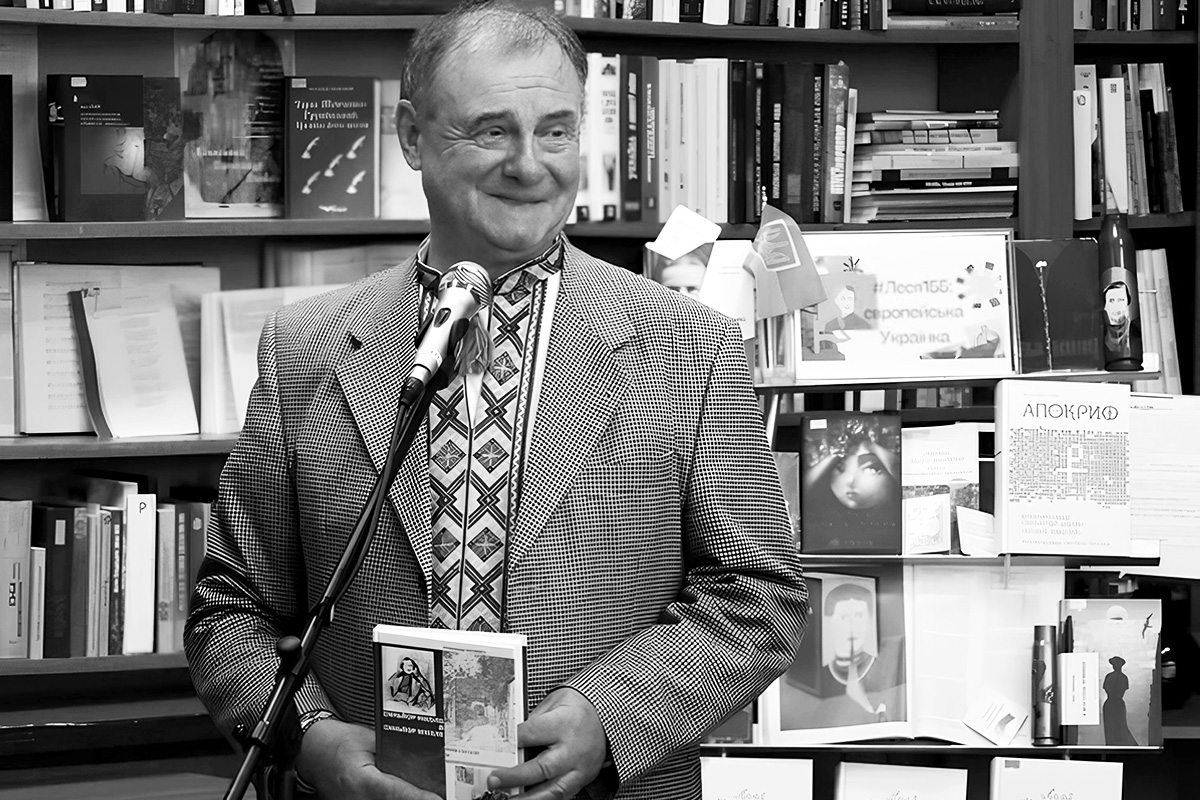
Oleksandr Balabko / Photo from personal archive
SHORT PROFILE
Name: Oleksandr Balabko
Date of Birth: April 24, 1955
Place of Birth: Novhorod-Siverskyi, Chernihiv Region, Ukraine
Profession: journalist, editor, prose writer, poet
In the early 2000s, while serving as editor-in-chief of the newspaper Vechirnii Kyiv, Oleksandr Balabko launched a cycle of novellas, essays, and travelogues titled In the Footsteps of Ukrainians Around the World. Traveling across Europe, the Middle East, and Southeast Asia, he first published in periodicals and later released separate books dedicated to world-renowned writers and artists — Mykola Hohol, Mykhailo Kotsiubynskyi, Serge Lifar, Mariia Bashkirtseva, Volodymyr Vynnychenko, and Oleksandr Vertynskyi.
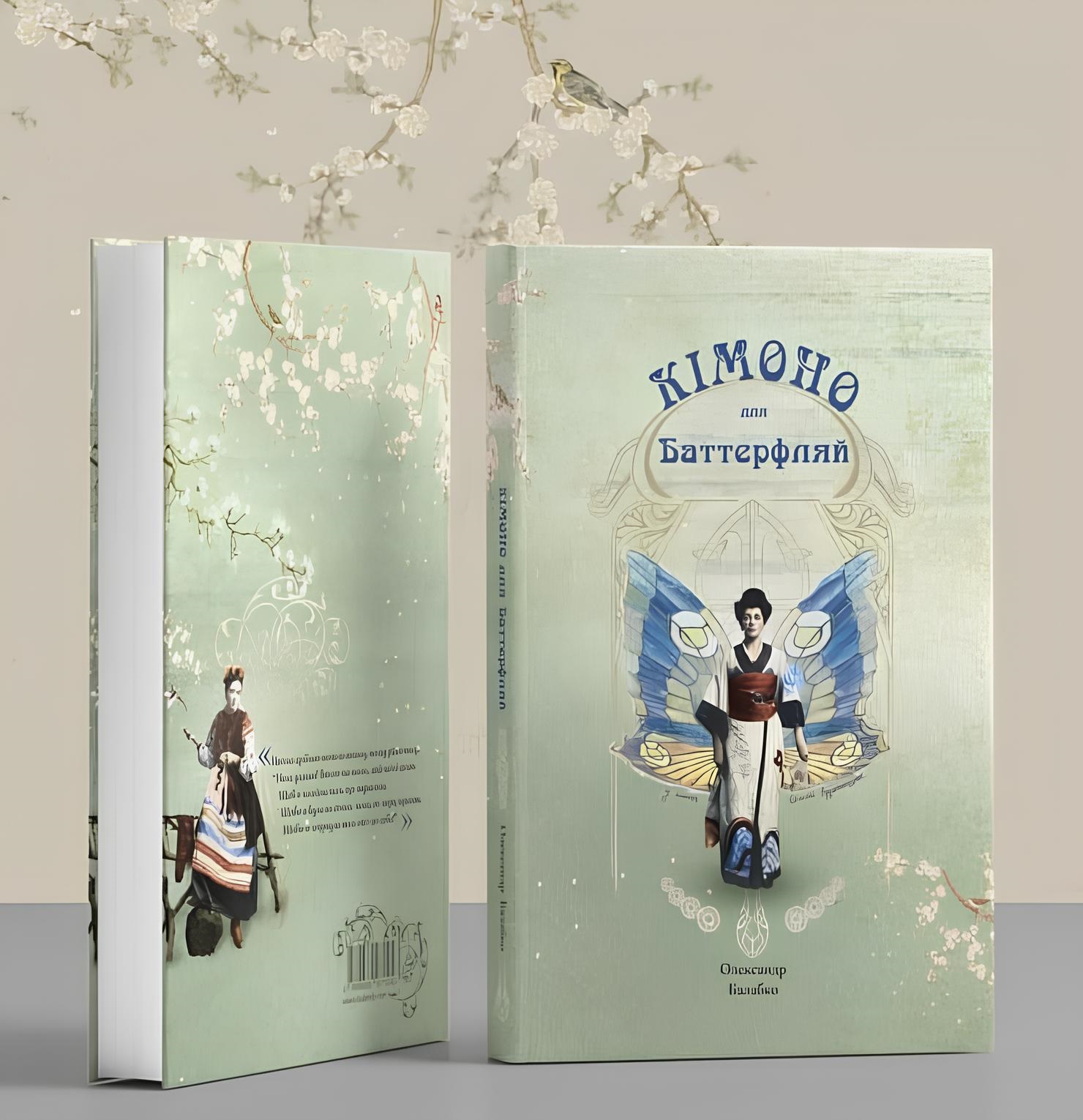
In recent years, Oleksandr Balabko’s novels about the outstanding opera singer Solomiia Krushelnytska — Kimono for Butterfly and Roles and Mannequins — have generated significant resonance both in Ukraine and abroad. The presentation of the first novel took place in Lviv in 2022 as part of the nationwide celebration marking the 150th anniversary of Krushelnytska’s birth, and the book was nominated for the Taras Shevchenko National Prize of Ukraine. The second novel was published in 2025 with the support of the Ukrainian Book Institute for distribution to libraries across Ukraine.
He is the screenwriter and host of the television film Serge Lifar from the Famous Ukrainians series (World Service UTR, 2014). He is also a co-founder of the Ukrainian international poetry, prose, and journalism competition Franko’s Stars in the Croatian city of Rijeka, and a member of the jury of the international Ukrainian-German Oles Honchar Prize. His literary evenings have taken place in Prague, Paris, Limassol, Florence, and Rijeka.
In 2025, Oleksandr presented his works at the international cultural and artistic conference Voices of the East and the Caucasus in Reggio Calabria. He is also the author of song lyrics set to music by Ukrainian composers. Balabko’s poems, as part of the project Anthology of Ukrainian Poetry from Taras Shevchenko to the Present Day “Sunny Clarinets”, have been translated into French, Italian, and Albanian.
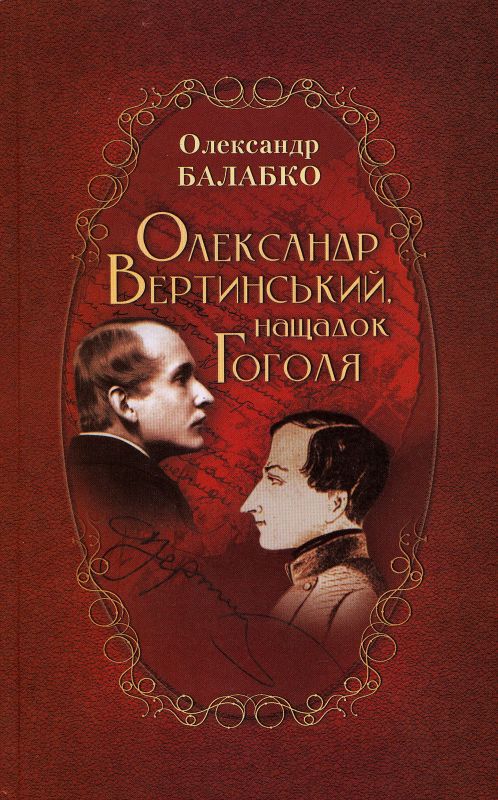
Andrii Kostiuchenko: We have known each other for a very long time, and I immerse myself in the world of your books with tremendous pleasure, Mr. Oleksandr. The largest of your works in my library is the 600-page essay novel Oleksandr Vertynskyi, Gogol’s Descendant. In the Artist’s Footsteps. The title is intriguing. Is he truly a descendant?
Oleksandr Balabko: Yes. And a descendant not only in the sense that he came from a Ukrainian family, was born in Kyiv, admired performances featuring Maria Zankovetska, and was fascinated by Ukrainian folklore in the villages of the Kyiv region owned by his aunts; eventually, like Mykola Hohol, he left in search of recognition for the capital and became a striking figure on the stage of that era. He is a descendant of the outstanding writer in the literal sense as well. Gogol’s grandfather, Panas Demianovych, a graduate of the Kyiv-Mohyla Academy, had a second cousin, Ivan Petrovych Hohol-Yanovskyi. From him descended Vertynskyi’s maternal line — the noble Illiashenkos. This was the maiden name of his grandmother, Yevheniia Skalatska. His mother also bore this name and surname, since her marriage to the lawyer Mykola Vertynskyi was not officially recognized. And on the cover of the novel, as you probably noticed, the youthful profiles of Gogol and Vertynskyi look almost identical…
А. К.: How long did it take to write such a substantial work? What inspired you? And what was Vertynskyi’s Shanghai like?
O. B.: A long time. From 2006, when I visited China as part of a journalists’ delegation, until 2016, when the novel in three books was published and later received the Kyiv Art Prize. I wrote it starting from the end. First came One Word — Shanghai, then Paris Alone Is the Whole of France!, and finally the beginning: Constantinople — a “No One’s” City. It also includes a prologue about Vertynskyi’s childhood and youth in Ukraine. In other words, I visited the three main centers of Ukrainian emigration after the October Revolution of 1917. The events unfolding there reach back to the times of Roxolana and Yurii Khmelnytskyi, intertwining with the destinies of Symon Petliura, Nestor Makhno, Volodymyr Vynnychenko, Oleksa Hryshchenko, Oleksandr Archypenko, Serge Lifar… Those names, and everything happening around them, fascinated me. And Vertynskyi became the central axis of the work: he never forgot his roots and, before going on stage, would warm up his voice with Ukrainian folk songs, of which he knew countless numbers.
During those ten years of work, I also managed to publish the novella based on Serge Lifar’s letters, Kyiv, Irynska Street, to the Lifars. It was Vertynskyi himself who left invaluable recollections of Lifar’s triumphs in Paris. And Vertynskyi’s Shanghai — that was a miracle! We were even accommodated at the Yangtze Hotel, which had already existed in his time. I asked representatives of the Journalists’ Association who accompanied us to show me the former French Joffre Quarter, where Vertynskyi had lived and performed. Amazingly, at that time the single-story houses in the style of Provençal villas were still preserved there, along with the Lyceum Theatre building and, most importantly, the former Church of Our Lady, Helper of Sinners, where Oleksandr Mykolaiovych married Lidiia Tsirgvava, who came from a Georgian-Russian family. Today, the five blue domes no longer bear crosses, and the building itself has been turned into a restaurant.
А. К.: It seems that, in general, we still know very little about such a significant figure as Mykola Hohol, despite the enormous amount written about him. What makes him close to you personally, and what have you discovered that we have probably never heard or read about?
O. B.: Evenings on a Farm Near Dikanka has been known and beloved to me since the time when I still could not read… And I began truly discovering Gogol exactly twenty years ago, after my travels to Italy resulted in the publication of my essay collection Signor Nicolo and Signor Michele. Gogol’s Rome and Kotsiubynskyi’s Capri. There is much that is unexpected, even mystical, in the Gogol family line. Gogol’s grandfather, Panas, in his youth abducted his student Tetiana from the estate of the wealthy nobleman Lysohub and married her without a parental blessing. Fourteen years later, their first son Vasyl, Gogol’s father, was born. At the age of fourteen, Gogol himself dreamed of the Mother of God holding a little girl in her arms, saying that she would become his bride. A few days later, while visiting with his mother, he saw that same girl in the arms of her aunt. From that moment, he began “raising” a future wife for himself, and fourteen years later he proposed to her.
The first two children of Mariia Ivanivna Hohol-Yanovska were stillborn. Only the third child was Mykola, prayed for in the St. Nicholas Church of Dikanka, the burial place of the Kochubei princes. And after that, there were so many discoveries that it is impossible to list them all! Mykosha — that was what his mother called him — did not speak until the age of three. The recollections of his classmates and teachers from Nizhyn are mostly biased and untruthful, intended to belittle the outstanding writer. This tendency was joined by his first biographer, Panteleimon Kulish, who moved from admiration of Gogol’s works to hatred and defamation. It is untrue that Gogol studied poorly: according to the results of his graduation examinations, Hohol-Yanovskyi — as he was known at the Nizhyn Gymnasium — received only a “satisfactory” mark in mathematics, while in all other disciplines, including foreign languages, he earned “excellent”, “very good”, and “good”.
Another myth is that Alexander Pushkin provided Gogol with the plot for The Government Inspector. In reality, even before writing the play, Mykola Vasylovych had already tested himself in the role of Khlestakov by sending a friend ahead to postal stations with the warning that an “adjunct professor” — Gogol’s position at Saint Petersburg University — was arriving, supposedly an adjutant of the tsar himself on a secret inspection mission. And the best horses were immediately provided to the “inspector” without delay! However, two months before the play’s publication, Gogol did indeed write a letter to Pushkin with such a request, nearly exposing himself: there would be a funny play in five acts. He already knew that Pushkin would mention precisely this plot, because stories about fraudsters pretending to be important officials were extremely common. Long before that, Gogol had also learned from the writer and censor Sergey Aksakov that several years earlier he had approved for publication Hryhorii Kvitka’s play The Visitor from the Capital, or Commotion in a District Town.
A separate story altogether is how Gogol’s friends read The Government Inspector aloud to Nicholas I of Russia, and how the tsar was the first to applaud at the premiere amid “grave-like silence” in the theater. The first chapters of Dead Souls and Taras Bulba were “examined” either in the presence of the imperial family or in the salon of the empress’s lady-in-waiting, Alexandra Rosset Smirnova. Thus, Gogol established himself as a monarchist striving to “improve the empire”. Such attention, along with financial support from the tsar, the heir, and the empress, could not but contribute to Gogol’s tragedy in his final years. As a sign of gratitude, he wished to create a “positive Russia” in the second volume of Dead Souls. But he failed, and with the assistance of “well-wishers” from his Moscow circle, he essentially decided to take his own life by refusing food. And instead of force-feeding him, the “medical council” decided to place leeches on his face to suck out his blood. All of this will be presented through facts, but also with conjecture and imagination, in the novel Gogol in Nets and Shackles, which I am now completing.
А. К.: What role does humor play in your life — when is it absolutely essential, and when is it much better and calmer without it?
O. B.: Without humor, my characters simply could not exist! My new work about Mykola Hohol is full of it, as is the novel about Oleksandr Vertynskyi, who left behind wonderful memories of childhood that I would call Evenings on a Farm Near Zolotonosha. There was also a period when I wrote novellas and short stories. There is much sadness there, but even more humor. For example, a little watermelon marked by the trail of a snail on its rind imagines itself to be unique, while the owners of the vegetable garden interpret the patterns as a sign that great wealth awaits them. And so begins an amusing media story that ends tragically and comically at once. In the book Dad on the Watermelon, animals, plants, and people communicate and argue — in other words, they coexist. There is more elevation and drama in the destinies of Mykhailo Kotsiubynskyi, who, terminally ill, traveled to the island of Capri; Serge Lifar, who several times escaped Bolshevik Kyiv in order to study ballet abroad; and Solomiia Krushelnytska, who gave up many of life’s pleasures for the sake of singing…
А. К.: The characters in your books travel extensively. You decided not to lag behind them and to follow in their footsteps — and not only theirs. What are your most vivid memories?
O. B.: There are places I would love to visit again — the island of Capri and Shanghai. I could also add Thailand, where in the early twentieth century the Kyiv-born Kateryna Desnytska became the wife of the heir to the royal throne. And one can never have too much of Paris!
А. К.: Maria Bashkirtseva. What was it about this young girl from the Poltava region that impressed you so deeply?
O. B.: But she was from a hamlet near Dikanka! She was born in the village of Havrontsi. There is a wonderful museum dedicated to her in Dikanka. What struck me about her fate was that, although she was not ethnically Ukrainian — she came from the Bashkirtsev and Babanin families — she became deeply imbued with our language, songs, customs, and nature. In Paris, she dreamed of painting a cycle of canvases titled Picturesque Ukraine. Her famous Diary, admired by Lesya Ukrainka and Solomiia Krushelnytska, begins with a scene at a villa in Nice: a governess sings Ukrainian songs to piano accompaniment, while Maria listens in fascination. So I immediately headed to Nice, where her paintings are exhibited in a museum, and where a street near the Promenade des Anglais bears her name! I placed the essay A Promenade with Mademoiselle Marie “under one roof” with an essay about Volodymyr Vynnychenko, who lived and found peace nearby, in Mougins.
А. К.: You are also a songwriter-poet. Is that something one can learn, or is it something one is born with? And who are your favorite composers and performers of songs based on your poems?
O. B.: I began writing poetry while still at school. But then journalism captivated me, and poetry was pushed aside. Unexpectedly, however, it resurfaced after I turned fifty — this time as song lyrics. I was involved with the Autumn Gold Prize named after Dmytro Lutsenko and became acquainted with its laureate, the late composer Leonid Nechyporuk. I gave him several texts, and, to my surprise, they turned into songs! Then came acquaintance and collaboration with others — Oleksandr Shvydkyi, Kseniia Nykolska, and Oleksandr Lisenchuk. There are songs dedicated to the heroes of my prose — Mykola Hohol, Mykhailo Kotsiubynskyi, and Lesya Ukrainka. They are performed by well-known singers — the unforgettable Viktor Shportko, as well as Svitlana Myrvoda, Oleksandr Vasylenko, Oleh Dziuba, Olha Makarenko, Karina Karasova, Iryna Persanova, and others.
А. К.: A writer who travels through time or beyond time — which feels closer to you? People say different things. And regarding the 2025 conference in Reggio Calabria: what surprised the Italian artists most?
O. B.: Certainly through time! Now, during these difficult years for Ukraine, transporting myself either to the middle of the nineteenth century or to the beginning of the twentieth saves me from depression and inspires me to continue creating. And I had long dreamed of reaching the tip of the Italian “boot”. The conference participants were first of all impressed, during my presentation about “Ukrainian-Italian” books, by my vyshyvanka — blue embroidered on blue. And by my stories about Solomiia Krushelnytska, who is well known there; and about Mykhailo Kotsiubynskyi, who visited Messina in Sicily after the devastating earthquake and wrote the novella Praise to Life. Together with publishers from the Chernivtsi publishing house Bukrek Publishing House, we traveled by ferry to Messina. I brought with me the book Kotsiubynskyi’s Paradise and Hell and photographed myself there with it among the ruins he had once explored!
А. К.: And then comes Solomiia Krushelnytska — now there are already two books, two destinies for these books. Which of them is dearer to you?
O. B.: Both are dear to me! The first — Kimono for Butterfly — because it was my first fictional novel, in which only about a third was based on documentary material. And the second, the more substantial Roles and Mannequins, because the experience of the first novel made itself felt, and I already felt much freer while writing it.
А. К.: What concerns you today, Mr. Oleksandr? What do you believe in, what do you strive for? What are your passions?
O. B.: I believe that peace will come to Ukraine after victory. And now, in the springtime, at the estate in the Chernihiv region where my wife and I live — we only occasionally visit the capital — there is much work to do in the garden, the vegetable patch, among the bushes and flowers, and alongside our kind-hearted neighbors. In the future, I would like to write my own Diary of Greenery, following the example of the Swiss French-language writer Philippe Jaccottet, whom my friend, the poet and professor Dmytro Chystiak translated into Ukrainian.
When copying materials, please place an active link to www.huxley.media
Select the text and press Ctrl + Enter