CHAMPAGNE AND CONFESSION: “Charade” and “Corpus Christi”

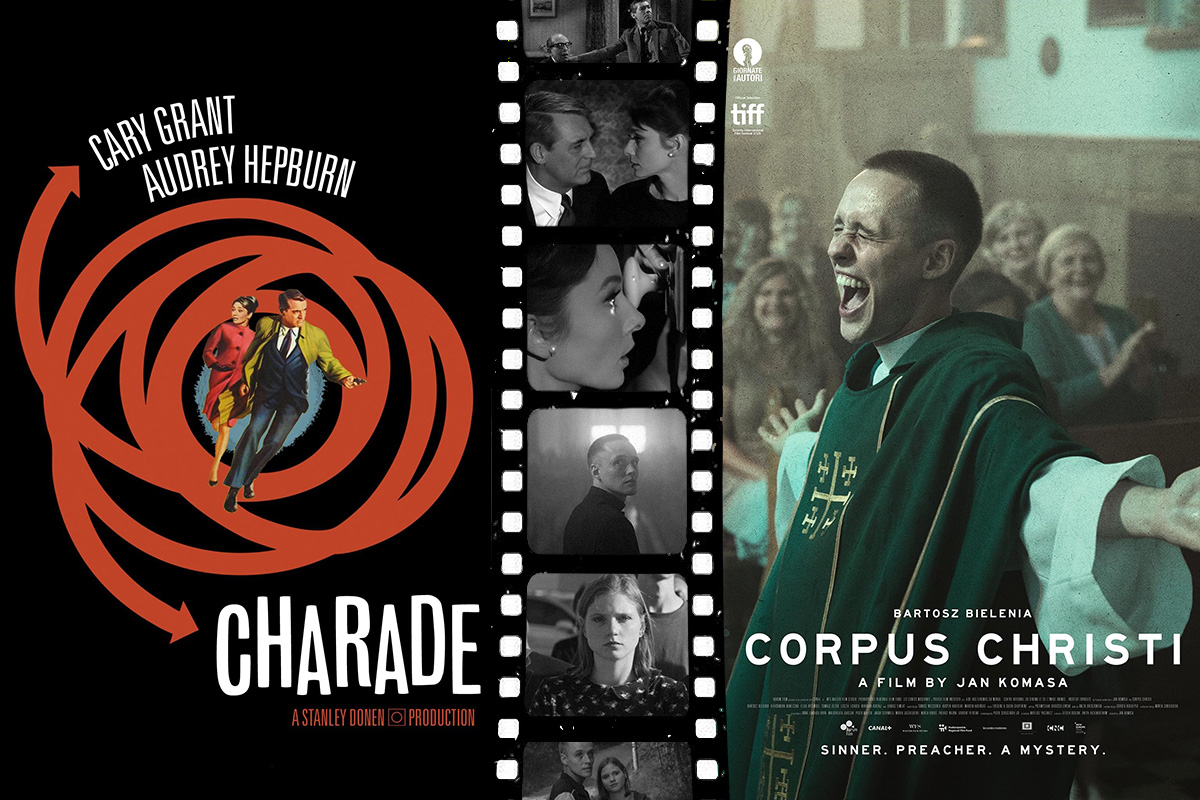
Art design: huxley.media via Photoshop
In the June edition of the Cinemasophy column, we present two more masterpieces — quiet, unassuming films of immense scope, whose grandeur is easy to miss at first glance. The first is a quintessential example of 1960s cinematic escapism: a sophisticated entertainment blending sex, suspense, and comedy, with the incomparable Audrey Hepburn as a spirited widow fending off the creditors of her late husband. Stanley Donen’s Charade (1963) is less a film than a champagne bath — a thriller infused with romance, laughter, and an almost pre-war, almost prehistoric optimism as it races away from reality. It rejects that reality with both defiance and despair, as though foreseeing the moment when reality itself would reduce the classical splendor of old Hollywood to dust. The second film, Corpus Christi (2019), disarms that very reality through satire. Nominated for an Academy Award and reminiscent of Gogol’s The Government Inspector, this drama tells the story of a young ex-convict who assumes the identity of a newly appointed priest in a provincial parish. If Charade offers an escape from stress, Corpus Christi invites viewers to recognize, in its eccentric, almost freakish protagonist — who seems to parody the myth of the fanatical Catholic — the grotesque realities not only of present-day Poland, but of modern civilization itself.
CHARADE (USA, 1963)
Director: Stanley Donen
Starring: Audrey Hepburn, Cary Grant, Walter Matthau, James Coburn
T
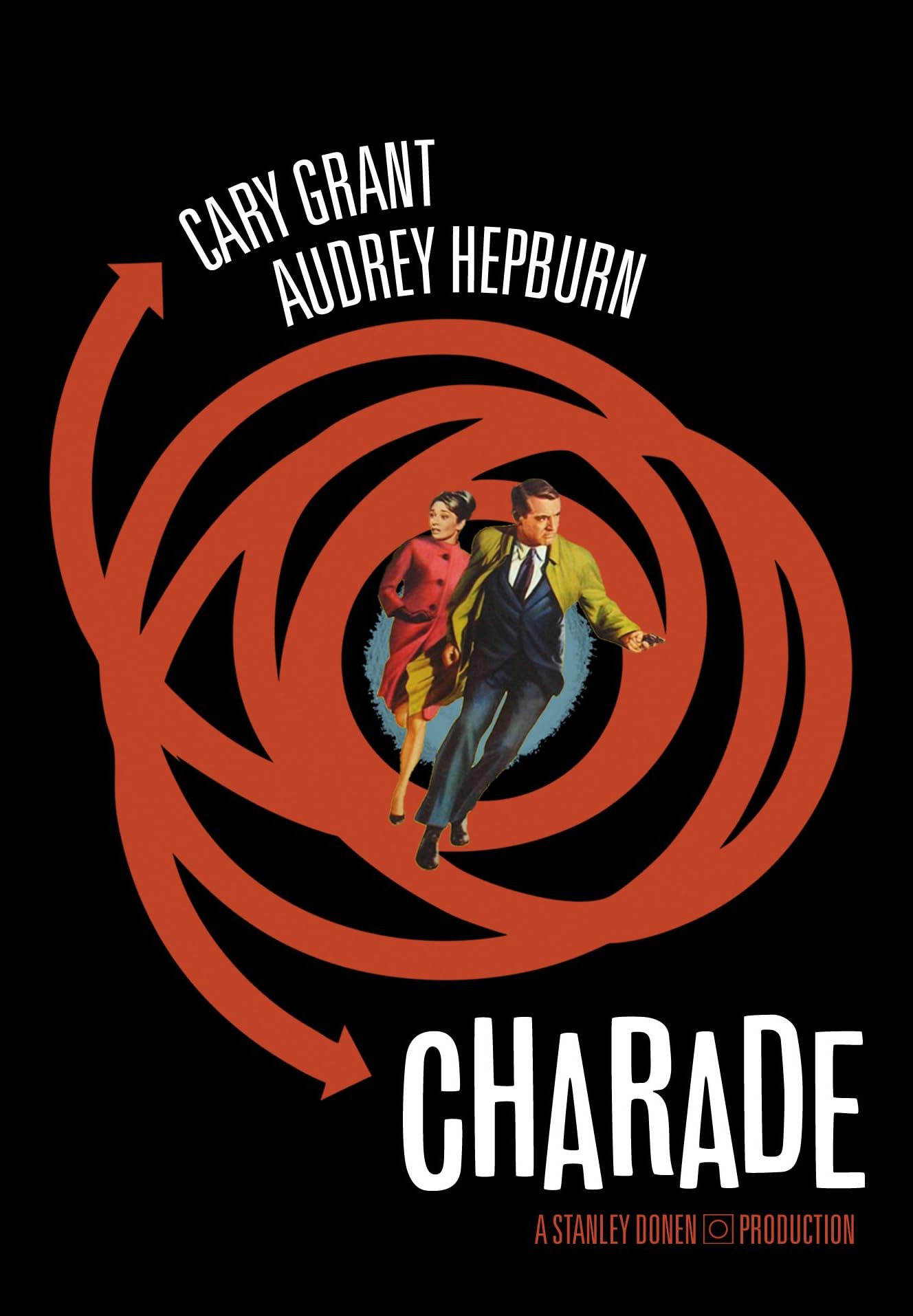
he film is a quintessential example of 1960s cinematic escapism — a sophisticated entertainment built on a blend of sex, suspense, and comedy. Regina (Hepburn), the wife of a dull Parisian stamp dealer, learns that her husband has died. She soon realizes she never really knew him: it turns out he stole a quarter of a million dollars before being thrown from a moving train. Good riddance, perhaps. The trouble is that she now becomes the target of everyone searching for the missing fortune: her late husband’s former accomplices (led by James Coburn), a seemingly chance acquaintance of the deceased (Cary Grant), and an oddly enigmatic official from the American embassy (Walter Matthau).
This is entertainment in its purest form — the kind that could only have emerged from the exuberant 1960s, at the twilight of Hollywood’s Golden Age: vibrant, lavish, and unapologetically bourgeois. A comic treasure hunt wrapped in sparkling verbal banter, enriched by Henry Mancini’s unforgettable score and an entire wardrobe of Hubert de Givenchy creations, elegantly worn by Audrey Hepburn. Paris looks as though it has stepped straight off a tourist postcard — a device Woody Allen would borrow some fifteen years later. Cary Grant appears as if he has wandered out of one of his own classic movie posters. The villains become increasingly absurd with each appearance, and even the life-and-death fistfights feel more like friendly scuffles. In short, Charade is less a film than a champagne bath.
Charade feels like a lighter, more playful version of Alfred Hitchcock’s North by Northwest, with the gender roles subtly reversed. Instead of Cary Grant as the man on the run, it is the fragile Audrey Hepburn who finds herself pursued, while Grant is assigned what is, by comparison, a secondary, almost traditionally feminine role. The entire affair is seasoned with romance, wit, and a kind of pre-war — almost prehistoric — optimism. Director Stanley Donen (Singin’ in the Rain) was a master of graceful, ironic comedies rooted in tragedy, with feather-light plots, dazzling dialogue, and some of the finest musical sequences in cinema history. Yet Charade, too, conceals material that could easily have become tragedy — among it, the deception and conspiracy surrounding corrupt intelligence agencies, institutions that had lost the public’s trust in the aftermath of John F. Kennedy’s assassination.
What truly matters in the film, however, are the lovingly observed details, the unmistakable signs of the era that shape the characters’ choices. Charade arrived at the twilight of America’s prolonged “Summer of Love”, just before the sobering shocks of Vietnam and the murder of Sharon Tate. The era’s extravagant, almost irrational faith in love would soon be replaced by an equally excessive and irrational hatred. The beginning of a decade that would culminate in youth rebellion and the Soviet invasion of Prague still lingered under the shadow of the “hypocritical” 1950s. Donen, however, was no hypocrite. While winking at Hitchcock, he was also engaged in a serious argument with Jean-Luc Godard, who famously declared that cinema was “truth twenty-four frames per second”. The Hollywood master of imaginative realism responded with laughter, insisting instead that cinema was “lies twenty-four frames per second”.
In Charade, everyone lies — because cinema itself lies. One deception follows another, and although the film scatters clues pointing toward the solution, its final revelation remains impossible to predict. Donen created an extended apologia for deception, suggesting that the more convincingly you lie — and the warmer your smile — the more readily people will believe you. Charade is comforting deception in its purest form. The film does not merely flee from reality with childlike innocence; it rejects reality with defiance and despair, as though foreseeing the day when reality itself would reduce all the classical splendor of old Hollywood to dust. Cary Grant was fifty-nine when the film was made, Audrey Hepburn only thirty-four, yet within three or four years, both would leave the screen: Grant because he felt he had grown too old for the roles that had defined him, Hepburn, for far more personal reasons. Grant retired decisively and forever. Hepburn would occasionally attempt a return, but each effort proved unsuccessful. A new era had little use for celestial stars. It preferred different heroes — earthbound, restless, and profoundly unsettled.

CORPUS CHRISTI (POLAND, 2019)
Director: Jan Komasa
Starring: Bartosz Bielenia, Eliza Rycembel
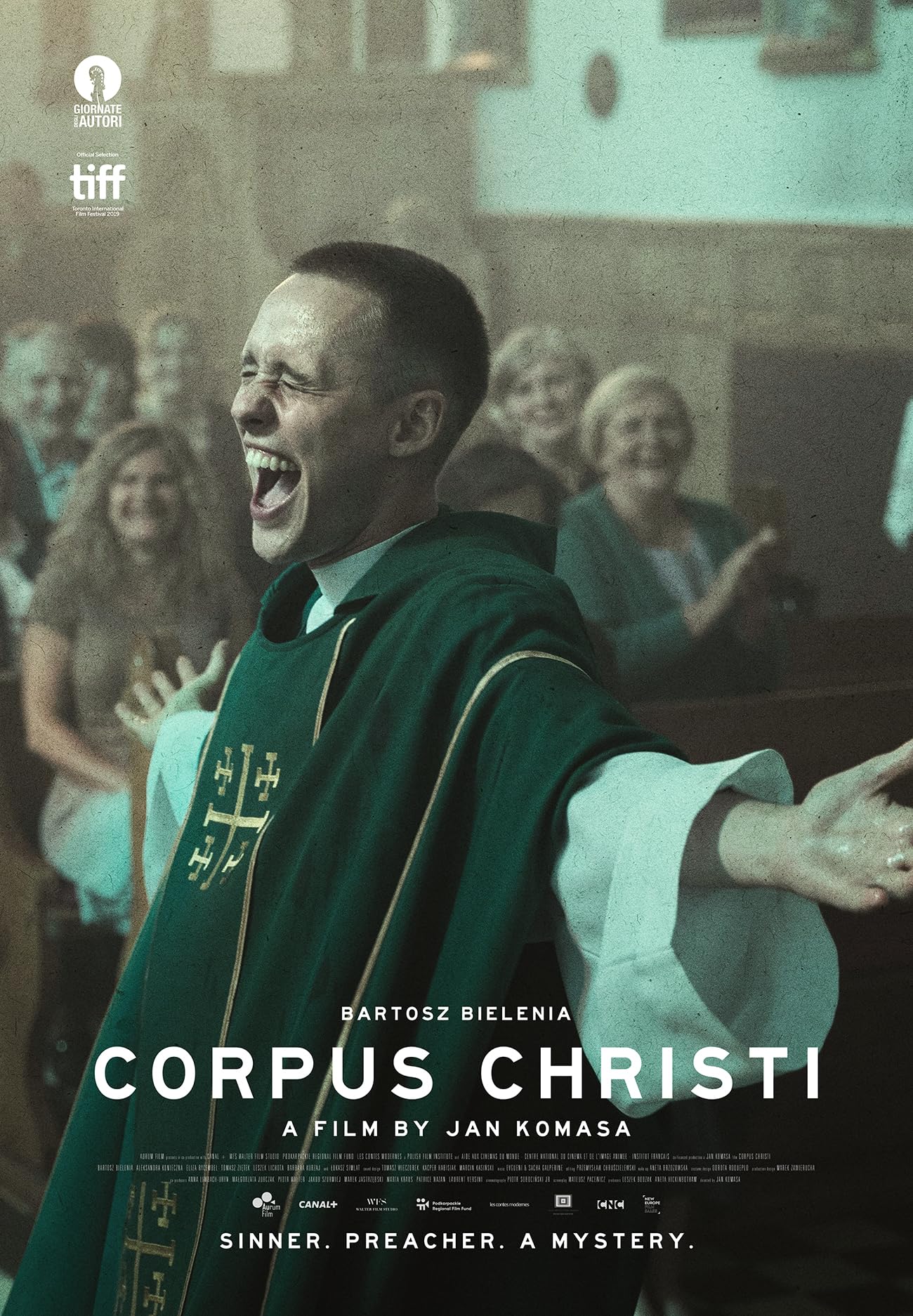
Daniel (Bartosz Bielenia), a young street thug with bottomless blue eyes and permanent dark circles beneath them, is released from juvenile detention. While incarcerated, he did what everyone else did — violence — but he also sang psalms in the prison chapel and served at the altar, becoming the favorite pupil of the resident priest. Granted early release, Daniel dreams of entering a seminary, yet his criminal record condemns him to the humble position of a laborer at a provincial sawmill. Arriving there hungover after a night of heavy drinking, he suddenly introduces himself as the newly appointed parish priest. Donning a cassock, he becomes Father Tomasz. What follows is an extraordinary performance of improvisation: every gap in his liturgical knowledge is compensated for by sincerity and genuine passion. Thus, a former convict becomes the spiritual center of a local congregation fractured by a recent tragedy — the deaths of six young people in a car accident on a country road…
Jan Komasa, one of the leading figures of contemporary Polish cinema, examines the closed world of a conservative Polish village through a palette that shifts from grim realism to biting satire. Winner of accolades at the Venice Film Festival and nominated for the Academy Award for Best International Feature Film, Corpus Christi is a Gogolian phantasmagoria infused with mysticism and satire, radiating quiet charisma and leaving behind an unusually subtle aftertaste. That lingering impression deserves closer attention. Tolerance has rarely been counted among the defining virtues of the traditional Polish character, and Komasa skewers the rigidity of provincial communities with remarkable sharpness, though never without irony.
His film is a rare satire of the toxic atmosphere surrounding tiny provincial Catholic parishes — a free adaptation, in spirit, of The Government Inspector: the story of an impostor who both lies and believes. Daniel truly believes — not in his deception, but in God. He can just as easily be read as Khlestakov, a holy fool, a hidden psychopath, or an angel of destruction. Dressed in a black T-shirt and carrying an oversized bag, he appears from nowhere and seems destined to disappear just as mysteriously. He is a god arriving on a scheduled bus, a messenger from another world who brings with him the serene detachment of Zen Buddhism, traces of eccentric spiritual practices, and the enigmatic melancholy of the East. The village becomes a microcosm of existence itself — not merely Poland, but arguably the whole of Eastern Europe, a region that neither conceals nor escapes its deeply rooted conservatism.
Jan Komasa filters youthful alienation, boredom, and the pretensions of villages no bigger than a button through the lens of tragicomedy, bringing to light a story that is less about a second chance than about the collective discovery of one’s true self. It is about how a single individual can transform an entire era rather than merely a handful of provincial parishioners. It is about a modern saint, forged in dirty streets and searching for a new path to salvation. A saint who chooses to live differently — to live according to conscience — guiding his flock not with passages from Scripture, but with the words he himself longs to hear: “Most people come to church so their neighbors can see them”. After all, the best way to make your son quit smoking is not to pray to God, but for his parents to quit first — or even to buy the strongest cigarettes available and make him smoke the whole pack, one after another, until he is sick, draining the cup to the dregs. Of course, it is easier to soothe oneself with an Ave Maria, but then one should hardly be surprised when all the local teenagers spend their weekends wandering the streets high.
Before our eyes, the false Father Tomasz becomes far more than a priest. He emerges as a spiritual leader practicing a liberating form of alternative Christianity — sincere, pure, and free from lifeless formalism. There is little trace of Catholic orthodoxy in his services, yet for the first time in years the townspeople begin to glow with the joy of genuine understanding. Komasa preserves the distinctive identity of the Polish cinematic tradition, which continues to thrive thanks to courageous filmmakers willing to challenge public opinion and the unspoken social narrative. He also preserves the delicate balance between realism and absurdity, the physical and the metaphysical, that has long distinguished the art of Eastern Europe, even in these far from hopeful times. Reflected in the mirror of his eccentric, almost freakish protagonist — who parodies the myths of the fanatical Catholic — are the grotesque realities not only of contemporary Poland, but of modern civilization itself.
When copying materials, please place an active link to www.huxley.media
Select the text and press Ctrl + Enter


