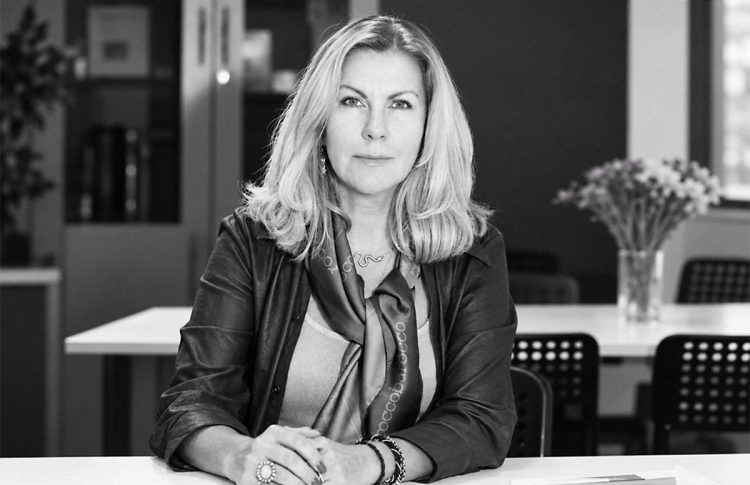
DIGITAL SUTRA: DMarket founder Volodymyr Panchenko and his path to nirvana in the virtual world

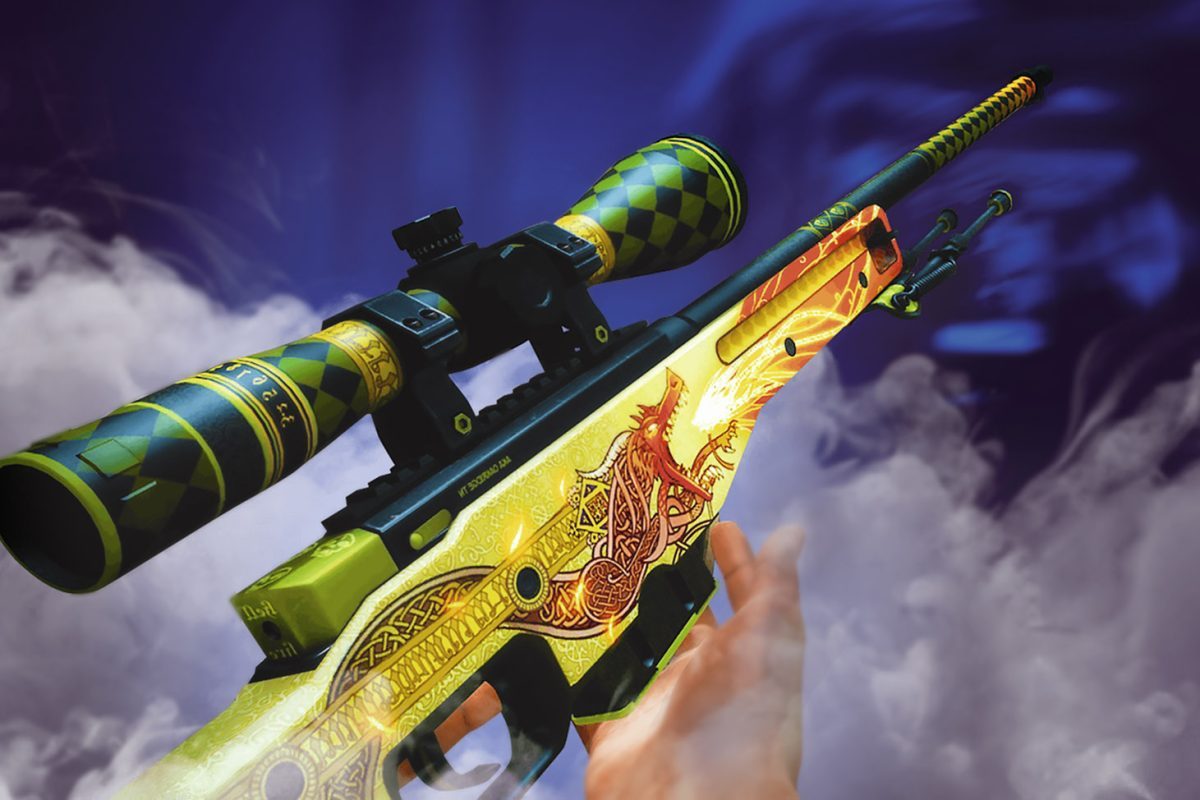
The legendary skin for the AWP sniper rifle — Dragon Lore in the game Counter-Strike
Volodymyr’s business is as old as the world — he trades. The difference is that the goods on his showcase can never be held in your hand — they exist only as lines of code. DMarket is the largest marketplace for in-game items. More than 1 million people visit DMarket every month, while its potential target audience reaches 150 million gamers actively trading online. But this is only the beginning. According to forecasts by Digi-Capital, the global market is expected to grow to $200 billion over the next five years.
HOW EBAY BLOCKED ME
W
hen your company has its own barista, it means either things are going very well or you’re renting a corner for your startup in a shabby café. Panchenko has a barista, and business is going well. The regular customers of the corporate coffee maker are DMarket employees. Along with the smell of roasted coffee, there is also the scent of jet lag — even without leaving the ground. That’s because DMarket operates across all time zones simultaneously, without downtime or even a sanitation break. Caffeine is essential here. Panchenko, however, has been energized even without coffee since 2000. That was when he planned to enter the history faculty of Taras Shevchenko National University of Kyiv. But stronger than his desire to unravel the complexities of history was his passion for computer games. He carried this hobby through his school years — and later through university classes.
«I remember that for the first three or four years, I basically played everything that came out. I might not have been interested in the football manager simulation genre, but I was curious about how it worked — the mechanics, the cards. I dove into all of it», Panchenko dissects his own passions. It all began with trading games in digital form. «Back then, very few people understood what could be done with it and how», our hero describes the spirit of the time. «With digital, you could do a lot of things». The business turnover grew. The Ukrainian entrepreneur began negotiating directly with game publishers for wholesale supplies to Ukraine.
In 2008, the 24-year-old Panchenko registered the company Suntechsoft. «It opened up great prospects — at that time, I already had about $6,000 in my PayPal account», he recalls. However, building a fully successful business on trading alone did not quite work out. Even though the young entrepreneur operated honestly for eBay, his offers appeared to be high-risk transactions. As a result, his account was blocked. «I even called them recently. I said: it’s time to unblock it — it’s been 10 years after all. And they told me: ‘No, according to our rules, if PayPal banned you once, it cannot be reversed.’ So the account was never restored, but the money was paid out», Panchenko shares.
However, this was only the beginning. By 2014, game discs had become a thing of the past, and Volodymyr turned to promoting games online. He founded Global Games, which quickly became the largest game distributor on the online platforms G2A and Kinguin. As a result, over the past five years, the Ukrainian entrepreneur has sold more than 30 million copies. The annual turnover of this business exceeds $25 million.
GAMER’S EXCHANGE
On June 13, 2019, an alleged arms dealer was almost detained at Los Angeles Airport. The «arms baron» turned out to be none other than Volodymyr Panchenko, who was carrying two massive laser rifles. The situation was saved by the non-local passenger’s good English. «They were just replicas of sniper rifles from the popular game Fallout, which I was bringing from the latest Electronic Entertainment Expo (E3)», — this is roughly how he managed to convince the increasingly alarmed security staff not to call for backup. This story became the leitmotif for the development of the entire market of gaming goods. It’s simple: want to win? Then get the best weapons and gear — at the best price, of course. People for whom gaming became an investment were willing to pay for advantages in their favorite games.
«Leveling up a player» — this is how the process of purchasing various virtual goods was described, allowing players to become more visually distinctive in the game. It all started with in-game items that provided a competitive advantage, but eventually a multi-billion-dollar industry emerged around so-called cosmetics — items that do not affect gameplay balance. The logic is simple: if you don’t look cool in a game, no one wants to play with you. «That’s how the whole thing with skins (different visual variations of characters and items) took off. It was a huge market, and we moved into it», Volodymyr recalls. In the spring of 2016, Panchenko’s team began developing Skins.Cash — a platform for instant purchases of in-game items. Valve Corporation (owner of the Steam marketplace) opened access to its code, allowing third-party developers to create additional software. From the initial idea to launch took just two months. The project went live in May 2016.
The system works like this: to sell various in-game add-ons (in gamer slang, skins), the user logs in through a Steam account. In the user dashboard, the program displays items from the most popular games that the platform is ready to buy immediately at a pre-set price. Skins. Cash then instantly resells the purchased items on Steam and other similar platforms. Agree, the business model is quite straightforward. However, even here, there is its own flying Tesla. The trick is that a special algorithm analyzes demand for skins on the main platforms trading in gaming items. This is how sales and prices are forecast. This is how it becomes possible to sell an artifact for 5–10% more.
«In nine cases out of ten, I can roughly understand how much we’ll sell, at what price, and when», Panchenko explains. By the end of 2016, the company had reached break-even. Panchenko spent $500,000 to launch Skins. Cash. He invested in the project with his own earnings from selling games. Total costs had reached $1 million by the end of 2017. But the game was worth the candle. According to Panchenko, in a year and a half, his platform bought 15.8 million skins and became the second most popular on the market at that time, after competitor Opskins. Incidentally, the latter has already lost its position. Two years ago, Panchenko’s company’s average turnover reached $2 million per month. Profit was about $100,000. The popularity of Panchenko’s platform is no accident. «We provided gamers with instant payouts, which had previously been considered pure fantasy», he says proudly.
GAMING PRACTICE
Since his school years, Panchenko has loved finding solutions to complex problems. Fortunately, gaming offers plenty of them. «Some of the skins we sold were worth $3,000–5,000, but in reality, the skins did not belong to the players. They belonged to the game developer, who could block an account at any moment. At the same time, the developer was constantly thinking about how to monetize the game, ensure its popularity before the official release, and make gamers happy. What was needed was a ‘bridge’ between the player’s universe and the game developer’s universe», Panchenko explains.
The solution was suggested by the hype around cryptocurrencies, whose code is stored in distributed databases, making them impossible to counterfeit. In early 2017, Panchenko realized that in the same way — using blockchain — it would be possible to secure ownership rights to in-game items. At the same time, the developer would be able to monetize the game, receive guaranteed payments, and keep the player satisfied. This is how DMarket was created.
«Volodymyr has the fastest mind I have ever encountered. The way he quickly grasps and dissects different things, I consider a unique competitive advantage. It’s some kind of superpower», says Oleksandr Kokhanovskyi, founder of the esports company Natus Vincere and co-founder of DMarket, praising Panchenko’s business acumen. Panchenko also does not hide his satisfaction with this partnership: «Sasha is very successful in esports, and I am very successful in the gaming industry. And we help each other a lot, especially at the start of the project». Another co-owner of the project is former investment banker and now DMarket co-founder Tamara Slanova. She currently serves as the company’s Chief Financial Officer and heads its London office.
Panchenko’s business KPI is to bring at least 100 games onto his platform. According to him, game publishers agree to cooperate because they sense growing demand for buying and selling virtual goods and expect greater gamer engagement. In addition, publishers can count on a pleasant bonus — about 80% of the commission amount. The business model is as elegant as all projects built on distributed databases. Panchenko signs agreements with game publishers, under which their players gain the ability to exchange or sell in-game items on the DMarket platform. Thus, a unified virtual currency is introduced across all games participating in the system. And every purchase or sale of in-game items is recorded on the blockchain.
The beauty of decentralization is that such information is almost impossible to alter or falsify. In this way, ownership rights to a virtual item are secured. Such a skin can no longer be «stolen», nor can the data about its owner be changed. When the project was just launching, it was supported by game developers such as 4A Games (Metro 2033, Metro: Last Light), GSC Game World (S.T.A.L.K.E.R., the Cossacks series), Tatem Games (Carnivores, Vivisector, Cryostasis), as well as the payment system Xsolla (a partner of Steam, Twitch, Aeria Games, Ubisoft). Today, the company is actively negotiating with dozens of developers, which may soon turn into multi-million-dollar contracts. «For developers, such a platform is an opportunity to popularize their game and attract a larger audience. These developers will earn more», says Oleksandr Kokhanovskyi.

VIRTUAL PROPERTY
The importance of good corporate coffee grows exponentially when you are no longer alone in the market. The once «blue» ocean is turning crimson with every new competitor. The Ukrainian entrepreneur’s project has gained several direct competitors — Enjin Coin, Voxel, and WAX, which are launching similar platforms. But both Panchenko and Oleksandr Kokhanovskyi believe this will only benefit the industry. At this pace, within the next five years, in-game items may evolve from virtual assets into fully-fledged real ones. However, no one is willing to give up their place in the market. Alongside these broader ambitions, DMarket continues to strengthen its business position. In 2017, Panchenko’s company successfully completed two rounds of token sales. This procedure is similar to an initial public offering, where the company is valued by the market itself. During the first round, tokens worth $11.5 million were sold. After the second round, total investment reached $19.1 million. The seed funding for DMarket included participation from the California-based investment firm Pantera Capital.
At the end of October 2018, DMarket announced a strategic partnership with the payment solution Xsolla. In November 2018, the service was localized into seven additional languages. That same year, a partnership was announced with the world’s leading game engine Unity. In August 2019, the service was relaunched as an in-game content exchange. DMarket users can not only buy and sell items from different games, but also exchange them without using money, create purchase orders even for items not yet listed for sale. In turn, developers can use pre-order services and trade in-game items even before the official release of the game itself.
Volodymyr plans to scale the advantages of his service to the entire gaming world. By his estimates, this will take about five years, though he intends to achieve it one and a half to two years faster. «My mission in the gaming industry is absolutely clear to me: I want people in the virtual world to feel more comfortable than in the real one — to own property in games, including virtual items, to be able to manage that property — to buy, sell, and exchange it — and at the same time feel completely safe», he says.
EPILOGUE
At the end of the meeting, Volodymyr mentioned the name of the painting above his chair — Diamond Sutra. This is the name of one of the most important sacred texts in Buddhism. If we are talking about achieving nirvana, the title is very fitting. Although in Panchenko’s virtual world, it is certainly not made of diamonds. It is digital.
When copying materials, please place an active link to www.huxley.media
Select the text and press Ctrl + Enter