FRANK LA ROCCA: The Composer Who Turns Faith into Music

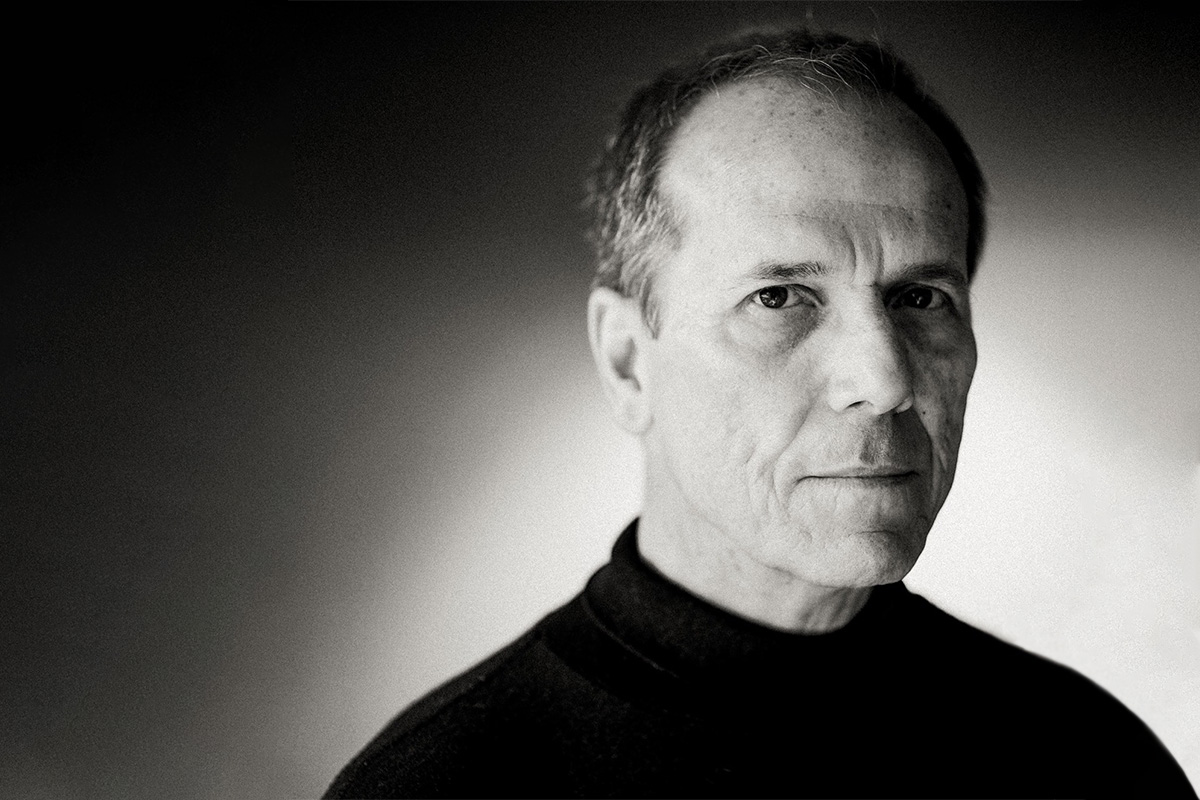
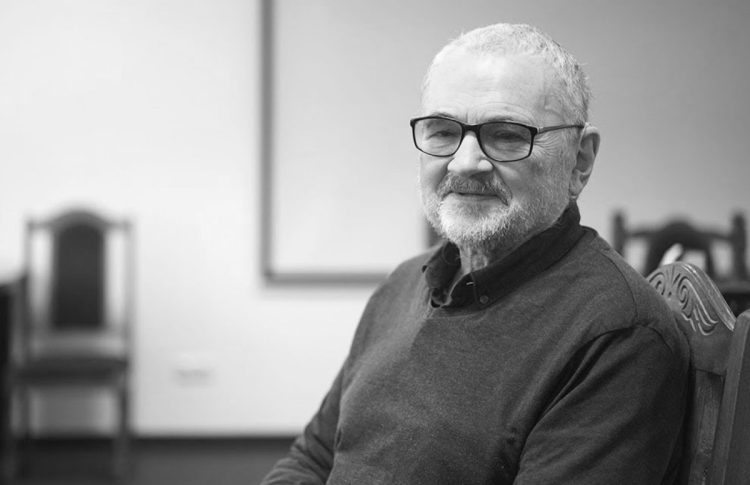
Frank La Rocca © Photo by Kevin McGladdery / ncregister.com
SHORT PROFILE
Name: Frank La Rocca
Date of Birth: 1951
Place of Birth: New Jersey, USA
Profession: Composer
Frank La Rocca stands among the foremost sacred composers of our time, serving as Composer-in-Residence for the Benedict XVI Institute. He describes his vocation as «an advocate for a distinctively Christian faith — not through direct persuasion, but through the beauty of music».
His well-known compositions include the Mass of the Americas, hailed as «perhaps the most significant Catholic composition of our lifetimes», and the Requiem for the Forgotten, which features the moving Hymn for Ukraine — a tribute to Fr. Andrei IschakHis well-known compositions include the Mass of the Americas, hailed as «perhaps the most significant Catholic composition of our lifetimes», and the Requiem for the Forgotten, which features the moving Hymn for Ukraine — a tribute to Fr. Andrei Ischak , the priest who, rather than escape from oncoming Russian soldiers and certain death, chose to remain with his flock to the end. The work is also dedicated to La Rocca’s Ukrainian grandparents, making it both a personal and universal act of remembrance and faith.
In this captivating interview for Huxley, Frank La Rocca shares personal stories of how music has come to him as revelation, as well as the struggles he faced in his early years as a composer, trying to conform to the demands of modernist traditions in which he felt a profound absence of true spirituality. His reflections trace a journey from doubt to faith, from suppression to freedom, revealing how his music grew into a language of mystical devotion that speaks to the soul as much as to the ear.
Leonid: Good afternoon, Frank! My name is Leonid Shokh, and I am a journalist working for Huxley. I would like to introduce Narad, my singing mentor. Narad, Richard Eggenberger, an opera singer by training, has been living in India for the past 60 years, where he originally met an extraordinary woman called Mirra Alfassa (The Mother) who gave him the mission of dedicating his life to bringing down a new music — music of spiritual depth and power.
A few years ago, Narad published a book titled The Descent of a New Music, in which he named composers whose music he felt carried the touch of this new music. Several of your compositions were included in the list.
Narad: Pleasure to meet you, Frank. I’m a great admirer of your music, and I would like to begin by asking you the following question: does music come to you as revelation?
Frank: Well, I have been asked many questions before, and that is the first time anyone has asked me that. I would say that music comes to me in different ways, at different times. There have been instances where I could say it came to me as revelation.
I remember very clearly, quite a few years ago, when I was sitting at a traffic light and suddenly a melody flowed through my head. It was so clear — as though I were actually hearing it with my ears, but of course it was just inside my head. I thought, «Oh, what could this be?»
I was on my way to teach, so I got to the university, went into my office, sat down at the piano, played the melody, and thought, «What could I do with this melody?» Thus began her path of revelation — as if she herself were asking to be heard.
For many years prior to that time, I had been wanting to set the text of Veni Sancte Spiritus. And when I played the melody, it fit the words perfectly — not just in affect, but in syllable count and accentual pattern. So I would consider that an example of having received music by revelation, because I wasn’t trying to do anything. I was simply sitting, waiting for a red light to turn green, when this melody entered my head. I guess it’s a kind of revelation.
There was another point — one of the most critical turning points in my whole life as a composer — when, without going into all the details, I had a very important premiere coming up in just a few days. The piece was in several movements, and there was a certain passage in the final movement meant to gather all the energy from what had come before and bring it to a satisfying climax and resolution. At rehearsal that day, we ran through that passage and it was a complete dud — a total failure. It utterly failed to do what I had wanted it to and what it needed to do.
I went home that Friday night in a state of desperation, knowing we had only one final rehearsal left on Monday. In those days, composing came to me very slowly, because I was still emerging from my graduate-school training, where our teachers accepted nothing but a kind of nihilistic, atonal music. I was fighting my way out of that. It was several years after graduate school, but it was as though I didn’t yet know myself, because the music I had been forced to write for my PhD was not the music that flowed from my spirit.
So there I was, Friday night, facing a public premiere. At that time, I was not a religious practitioner. I wasn’t even convinced of the existence of God. But I fell to my knees and prayed: «Dear God, if you are really there, I need your help right now. If you don’t give me something to revise this passage, I’m going to suffer a very public failure».
And I swear to you — remember, I was not a believer then — music came into my head. Within five or six hours, which for me was like working at light speed, I rewrote the passage. But it was not like the music I had been writing for all those years; it was something new. I decided to go with it and see where it would lead. I stayed awake for 36 straight hours, writing the music, refining it, and recopying the score and parts — this was 1989, before anyone was using notation software.
And by golly, when we rehearsed it, and then at the premiere, it was everything that passage needed to be — something I, in my own powers, had failed to achieve. Through this gift, this revelation, I had been given something better than I could ever have dreamed of.
Leonid: What is the name of that piece?
Frank: It’s called The Pure Fury, a setting of three poems by Theodore Roethke, the most important poet in my life, for tenor and chamber orchestra. I first encountered his work during graduate school, at a time when I was going through a deep crisis of confidence as a composer.
In my first year, as a doctoral student, the teacher I was told to study with returned from sabbatical, and it did not go well. For whatever reason, he didn’t like me, and I was certain I wouldn’t be allowed to continue. In a panic, I called another professor, Edwin Dugger, who reassured me. Still, I fell into a huge crisis and couldn’t compose a note.
Then, at the Berkeley Public Library, I discovered Roethke’s In a Dark Time: «What’s madness but nobility of soul at odds with circumstance?» It expressed perfectly my condition. I vowed to set it to music. That is where the piece The Pure Fury took its roots.
Narad: What is the mind’s function in your composition? Or does it have a function?
Frank: It very definitely has a function, but by itself I don’t think that it is sufficient to create true art. This was the great mistake of the total serialists of the 1940s — the Pierre Boulezes, the Karl Heinz Stockhausens, the Milton Babbitts of this world.
During my time in university, I was being told over and over again by my teachers that this was the way to go: you write out your twelve-tone matrix, you come up with your rows, and somehow you draw from that to put together music. And I knew that was wrong, but I had no way of defending what I wanted to do, which was a more traditional approach to music where the heart and the soul are the source of inspiration.
One day, in my graduate composition seminar, we had a guest who was also opposed to this total serialist music. He got into an argument with the teacher conducting the seminar, and speaking of Babbitt’s music, he said, «Well, it’s just logical positivism». And I thought, «Okay, I can spell those words, I know what at least one of them means, but I have no idea what he’s saying».
Later, I discovered that what he was describing was a particular school of philosophy. And that provided me with a kind of grounding for the critique of this totally intellectual music, something for which I had lacked both vocabulary and concepts.
So yes, I use my mind very definitely — but I don’t use my mind to get started. Either melodies come to me, or, as a pianist, I like to improvise. I find that if I allow my mind to let go and my fingers drift over the keyboard, I’ll hit on something and think, «Ooh, what could I do with that?» Then my mind takes over.
But when I do whatever craft work I do, based on what I’ve learned, I always evaluate its worth by asking: how does my spirit respond to this? How does my heart, how does my soul respond? I don’t think I’m any different from any other person out there listening to music in the broadly classical tradition. I don’t think I’m any different from the rest of the listeners. And if it has that effect on me, then I think, «All right, it’s probably going to have that effect on them». And this is what I wish to do.
Narad: Living in India, I had the great blessing to meet the most wonderful person in my life, Mirra Alfassa, who is known here as the Mother. She told me that there is a plane of music above words, which she called the plane of universal harmony. Brahms once said, «I can go to that plane and bring down any melody or harmony I wish. Have you ever had experiences with this?
Frank: Well, I do believe in the existence of something like cosmic resonances — not exactly the same, but somewhat akin to the medieval concept of the music of the spheres. I wouldn’t say that I can, by an act of will, go to what you are describing — whether in the sense of Brahms or of that universal harmony. I cannot place myself there. I have to be brought there by a spiritual guide.
For me, as a practicing Catholic, that spiritual guide is the third person of the Holy Trinity, the Holy Spirit. I believe the Holy Spirit can, and has, guided me to that place of universal music. But it sounds like Brahms could go there at will. I can’t. That is why I am not Brahms, and never will be. But I am a tremendous admirer of his music.
Narad: Frank, I feel that your music speaks of mystical devotion. The pinnacle of your work for me is O Magnum Mysterium.
Frank: Thank you very much. That’s one of my favorite pieces. It’s interesting because that piece resulted from a conscious decision on my part to try to write the simplest thing I could. That’s why the whole first page of music consists of just two chords, B minor and G major. It also gave me an opportunity to fuse that mystical simplicity with the craft of imitative counterpoint.
Narad: I wanted to ask you about your search for a personal creative language in music.
Frank: As a composer, you never want to stand still. There is always unexplored terrain that can provide new realms of expression, of spiritual encounter. I actually identify very closely with Arvo Pärt because he had a similar crisis of style in the 70s. He was a serialist, but he decided it was an expressive dead end and fell silent for many years. During that time, he researched chant and medieval and Renaissance music, and like a butterfly emerged from his chrysalis reborn, with some of the most beautiful, holy, spiritual music written in the last 80 years.
I had a similar experience in graduate school, where my natural musical language was suppressed. I agreed to that suppression in order to please my teachers and be more like my colleagues. It reminds me of my mother, who was born left-handed but was forced by her parents to become right-handed. They were Ukrainian peasants, and because of the superstitions they grew up with, they believed there was something wrong with being left-handed. I think that experience shaped my mother’s personality for the rest of her life.
In some way, she never really knew who she was. She always doubted herself. I felt the same way about my musical language. Having suppressed my natural instincts and adopted modernist techniques, when I left graduate school and suddenly had the freedom to write whatever I wanted — well, in fact, I couldn’t. It was as if I didn’t know my right hand from my left. I had lost my sense of myself.
It was precisely at that time that I discovered Arvo Pärt through a CD Club subscription. I bought my first CD of his, and I could not make sense of it. I recognized it as beautiful, mysterious, elusive — but I couldn’t understand how tones drawn only from a pure modal scale could be combined into such powerful, spiritual, holy works of music. Yet it intrigued me enough that, after some seven years after first encountering it — I decided: «I’ll give it a try at just using the seven tones of a modal scale and see what I can come up with».
That is how the work In This Place was born. I told myself, «Okay, you only have seven notes. What can you do with them?» In this way, I discovered a foundation of what I found to be simple, yet beautiful — and sometimes even profound — musical expression. It became the basis on which I build the music I write today. One of the things I discovered — something that somehow escaped me in my early listening to Pärt — is just how important silence is. It is absolutely essential between phrases, at the end of a phrase, allowing its resonance to linger in the air before moving on to the next.
Narad: In your Requiem for the Forgotten, which for me is very powerful, I don’t feel sorrow, but beauty, peace, and blessings. How is it so?
Frank: That piece was originally commissioned by the Archbishop of San Francisco Salvatore Cordileone as a requiem for the homeless. It took me forever to get started on it. A doctor friend of mine in San Francisco — who had treated many homeless people — told me: «Frank, writing this piece is going to change you». When I heard that, I realized that, I didn’t really want to fully embrace this topic. It made me uncomfortable.
But once I did, the phrase came to me: this is a requiem for their divine souls — not for their bodily suffering. So when I wrote the introduction, I approached it the same way I would if I had been commissioned to write a piece for a president, a king, or a prince — someone recognized by society as significant. Because the souls of every single one of those homeless people are just as significant as any king or president. I wrote music for their souls. It is grand, and it celebrates the nobility and beauty of those souls.
There is, however, one movement — the Meditation: O vos Omnes — that was very challenging. In that movement, I wanted to give the homeless themselves a voice. I chose a text from the prophet Jeremiah, written after the destruction of Jerusalem during the Babylonian invasion: «All you who pass by, have you ever seen any suffering like my suffering?»
To me, that text perfectly expressed what it must feel like to be a homeless person, sitting on the street with your few possessions, begging for help, while people simply walk by. You wonder: Do you even notice me? Do you even see me? That’s what the text from Lamentations conveyed to me. So I set it to music. Within the limits of my style, it becomes very intense, even dissonant at times, and it ends on a dark note. I didn’t want to tie it up with a pretty ribbon — because that wouldn’t be the truth. If there is one place where I tried to face and express the painful reality of their physical state, it is there.
Narad: I would like to ask you about the Expectavi Dominum.
Frank: Oh my goodness! This is another one of those early pieces I wrote. It is a very personal prayer because, without going into great detail, in the mid-1990s I had an experience that I suppose could be described as something like the road- to-Damascus experience of the Apostle Paul. I wasn’t riding a horse, I wasn’t blinded by a light — but I was completely knocked off my feet and had a blinding, undeniable visitation of an irresistible cosmic force.
Now, in my Christian theology, I understand that force as the person of the Holy Spirit. What it revealed to me was the reason why, for so many years — even though I would sometimes say to myself, «I would like to know God better» — I still felt a great gulf between God and myself. I realized that I was the one putting up the barrier. And that barrier was my intellectual pride: my Ivy League background, my sophisticated circle of artists and composer friends, my position in the San Francisco music scene. I didn’t want to be known as one of those backwoods fundamentalists you saw all over television at the time.
The irony is that, distorted as their message sometimes was, they were still saying many things that were true. But because I thought Christianity had been polluted by that kind of fundamentalism, I resisted being associated with it. What God showed me was that if I truly wanted to be a disciple, I was going to have to swallow my pride and risk that association.
Finally, I gave up and said, Not my will, but Thine. And that surrender began to express itself in the music I wrote. The text of Expectavi Dominum goes:
I waited patiently for the Lord; he inclined to me and heard my cry.
He drew me up from the pit of destruction, out of the miry bog,
and set my feet upon a rock, making my steps secure.
He put a new song in my mouth, a song of praise to our God.
Many will see and fear, and put their trust in the Lord.
That is precisely what I experienced. I still get very emotional even thinking about it. I had fallen into a very dark state — morally and in other ways. And God had pity on me. The voice of the Holy Spirit called me out of the darkness, cleaned me off, set my feet on a solid rock, and put a new song in my mouth. That is what Expectavi Dominum is all about. It is both a cry from the muck and mire, and the apotheosis of emerging from it cleansed and blessed.
The audio version was prepared using AI technology, so there may be some inaccuracies in pronunciation
When copying materials, please place an active link to www.huxley.media
Select the text and press Ctrl + Enter