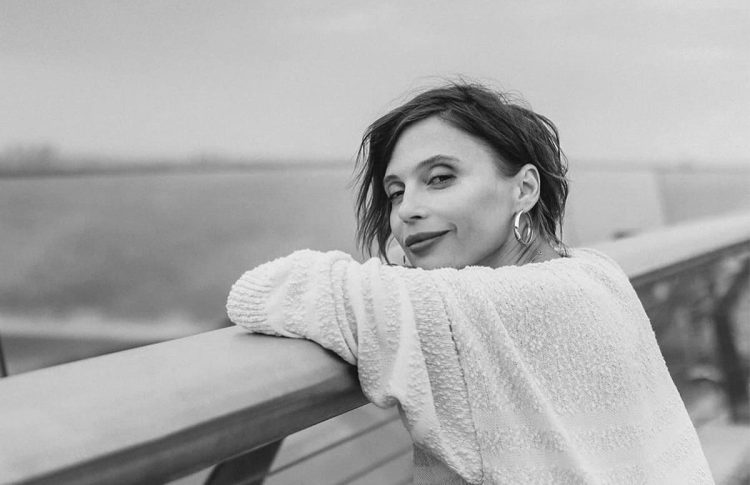
INNA REKA: “Rehabilitation Is the Art of Restoring a Person’s Ability to Live”

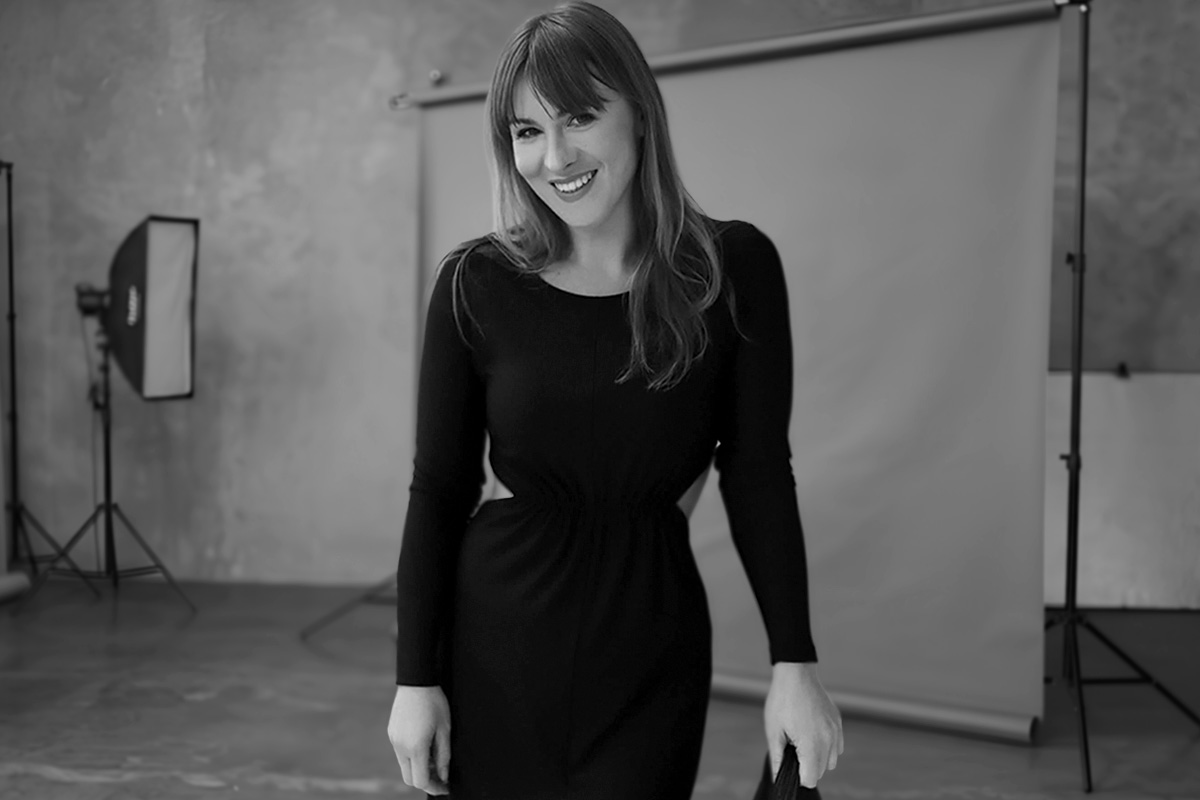
Inna Reka / Photo from the personal archive
SHORT PROFILE
Name: Inna Reka
Date of Birth: January 12
Place of Birth: Leonidivka village, Chernihiv Oblast, Ukraine
Profession: Physiotherapist, rehabilitation specialist, artist, actress
Inna Reka is a specialist in the rehabilitation of wounded military personnel, a member of the NGO Women for Change (Zhinky za Zminy), and an actress with the Truth/Perspective (Pravda/Perspektyva) theatre group. She works with service members who have undergone amputations and require prosthetic fitting. Her rehabilitation practice focuses on restoring motor function and includes psychological support. Her hobbies include theatre, painting and decorative arts, and boxing.
We will talk about strength, courage, humanity, sensitivity, and tenderness — about the ability to see the light and hold on to it under any circumstances.
Andriy Kostiuchenko: Inna, we finally met in the theater, sharing the same stage! But that’s not what I wanted to ask… You have so many qualifications and areas of expertise. What did you dream of becoming as a child? Did that childhood dream come true?
Inna Reka: As a child, I dreamed of becoming an artist and designer. I was always drawn to the world of art, creativity, and beauty. My mother did not share that passion and considered art impractical, so my future career path led me into medicine. But my childhood dream never disappeared, and as an adult I decided to return to what I felt was my calling and pursue an education in the arts. When I came to inquire about admission, the very first question I was asked was, “Which art school did you graduate from?” At that moment, I felt embarrassed to admit that as a child I had attended no art school and did not even have my own paints, because in my family such things were considered unnecessary.
I was told that studying without basic training would be impossible. I was deeply disappointed, but decided at least to learn about the admission requirements. That was when something happened that, as it turned out, changed everything. I mixed up the buildings and accidentally walked into a classroom where fashion design was being taught. After listening to my story, the instructor asked to see my artwork. Looking through it, she said words I have never forgotten: “You have a natural sense of form and an innate ability to draw. It is a talent worth developing”. That was the moment I realized that if a dream truly lives in your heart, it will always find a way to come true — even if, at one time, no one believed in it.
A. K.: You have chosen an exceptionally demanding and profoundly important profession — helping severely wounded service members recover after amputations. It is incredibly difficult work, especially emotionally, and especially today. What inspires you? Where do you find the strength to carry on?
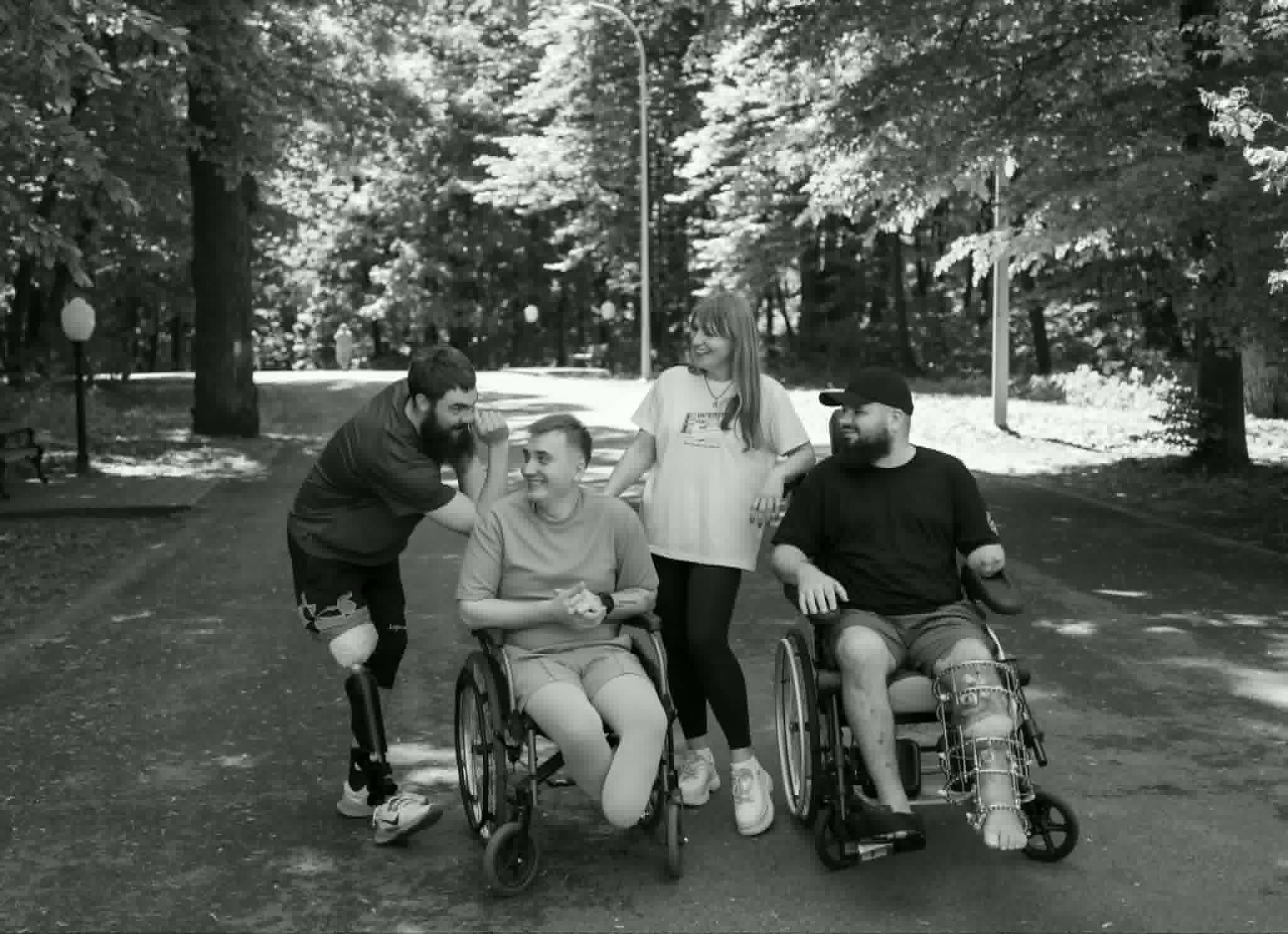
I. R.: I consciously chose this path because I believe that in the most difficult times for our country, everyone should contribute where they are needed most. For me, that means rehabilitating military personnel. Every day, I strive to help them regain mobility, strength, and, most importantly, confidence in their own abilities — from the acute stage of recovery to learning how to walk with prosthetic limbs. The hardest part is not only the physical pain. It is coming to terms with the loss, when the brain has not yet accepted that the limb is gone. A person instinctively believes they can still stand on that leg, forgets about the amputation, takes a step, and falls. After such a fall, they must find the strength to get up and try again. That moment is often far more difficult than the physical exercises themselves.
My greatest source of inspiration is the outcome. When I see someone who, after a devastating injury, was unable to move independently and then takes their first steps on a prosthetic limb, returns to an active life, makes new plans, smiles, and believes in themselves again, I know exactly why I do this work. Despite everything they have endured, what impresses me most is not their pain, but their strength. Every day they prove that a person can rise again even after the harshest of trials. For me, that is the greatest lesson in courage I could ever receive. This is a profession in which I can be of service to the people who defend our country at the risk of their own lives — and thanks to whom I am able to sit here and speak with you today.
А. К.: Inna, you are also involved in decorative and applied arts. When and where do you find time for that kind of creativity? When do you take up your easel?
I. R.: Unfortunately, because of my professional work, I have very little time to paint these days. But the inspiration has never left me. I enjoy working in solitude the most — somewhere in the forest, by a river, surrounded by birdsong, where there are no people and I can be alone with my inner world. Every painting carries the energy of its creator. It preserves the emotional state in which the artist brought it to life. If a canvas is painted during a period of profound pain, despair, or emotional turmoil, it absorbs that energy. But when a painting is born from light, love, gratitude, faith, and good intentions, it takes on an entirely different meaning and fills the space with harmony. That is why I am very mindful of the state of mind I am in when I pick up a brush. It is important to me that every work I create comes from a place of kindness, because art is not only about aesthetics — it is also a part of the artist’s soul, left behind on the canvas. We should be mindful of everything we bring into our homes and avoid filling our space with negativity.
А. К.: We have already begun talking about rehabilitation. But you chose to work with the most severe cases. How do people whose lives have been shattered by war respond to a rehabilitation specialist — a physically delicate woman?
I. R.: The world of hospitals and rehabilitation units is a place where human life follows a different rhythm. It has none of the familiar pace of the outside world. Here, time is measured not in hours but in stages of recovery: the first attempt to sit up, the first step, the first “I can”. How do military patients respond to me as a woman working in rehabilitation? The truth is, I have never felt that gender or appearance is what matters in this profession. For me, everything begins with trust. I come not as a woman, but as a person who sincerely wants to help. As someone who is willing to stand beside them in their darkest moments, to listen, to support them, and not to turn away. Sometimes the most important thing is not to find the right words, but simply to remain quietly by someone’s side until they are ready to take that first step forward. That trust is where true recovery begins. I see different reactions at different stages of rehabilitation after severe injuries.
Many service members initially withdraw into themselves, avoid contact, or even refuse rehabilitation altogether. That is a completely natural response. They have endured an unimaginably severe trauma, lost control over their own bodies, and experienced the loss of a part of themselves. They are still living with physical pain, phantom sensations, and profound psychological suffering. And at that very moment, a stranger appears, asking them to move, touching them, explaining things, offering help. For the patient, that in itself is another difficult challenge. In situations like these, it is impossible to demand trust or expect immediate results. The specialist’s task is not to force, but to create a safe space in which a person can gradually begin to believe again — in themselves and in those around them. Very often, that trust becomes the first and most important step on the road to recovery.
А. К.: I happened to notice that you write with your left hand. To be honest, I haven’t met many people who do. More often than not, they turn out to be remarkably talented — even brilliant. But you seem to be both right- and left-handed at the same time. How do you manage not to confuse your left hand with your right?
I. R.: I learned to write before I started school. I clearly remember writing my name, while our neighbors would ask me to write something for them and marvel at the fact that I held the pen in my left hand. To them, it seemed unusual. Unfortunately, it was difficult for my mother to accept as well. She believed that all children should be the same and was convinced that I needed to be retrained. The same thing happened in kindergarten. Because people believed at the time that children should write and even eat only with their right hand, the teachers would constantly move the spoon into my right hand and scold me, asking how many more times they had to explain it. I genuinely could not understand what they wanted from me, because doing everything with my left hand felt completely natural. It created an inner conflict between what I instinctively felt and what the adults expected of me.
When I started school, my mother asked my teacher not to allow me to write with my left hand. The only exception was art class, where I was allowed to use my left hand. That was a small but genuine joy. But while the other children were learning to write letters and pen strokes with their dominant hand, I was forced to learn to write with my right. It was incredibly difficult. It felt as though everything inside my head had been turned upside down and my natural way of perceiving the world had been disrupted. This continued until the fifth grade. Although I was a good student, I constantly skipped words — or even entire sentences — during dictation. My grades suffered, and I could not understand why. One day, I simply picked up the pen with my left hand and began writing the way that felt natural to me. It was like a miracle: the omissions disappeared. Since then, I have written only with my left hand.
Because I spent so many years being retrained, I eventually learned to perform many tasks with either hand: writing, eating, cutting, and working. This ability is not innate but the result of years of adapting to educational practices and stereotypes inherited from the Soviet school system. Although I went to school in independent Ukraine, many teachers and educators had themselves been trained during the Soviet era, when left-handedness was considered undesirable. Today, I describe myself as a kind of “artificial ambidextrous person”. I no longer see it as a flaw but as part of my personal story. It taught me to stand up for my own nature and reminded me that being different from the majority does not mean being wrong. Sometimes people simply need to be allowed to be themselves.
А. К.: Theater is a separate story altogether. How did it find its place in your schedule? What draws you to it? What interests you most today — the director, the play, yourself in the leading role… or perhaps something else?
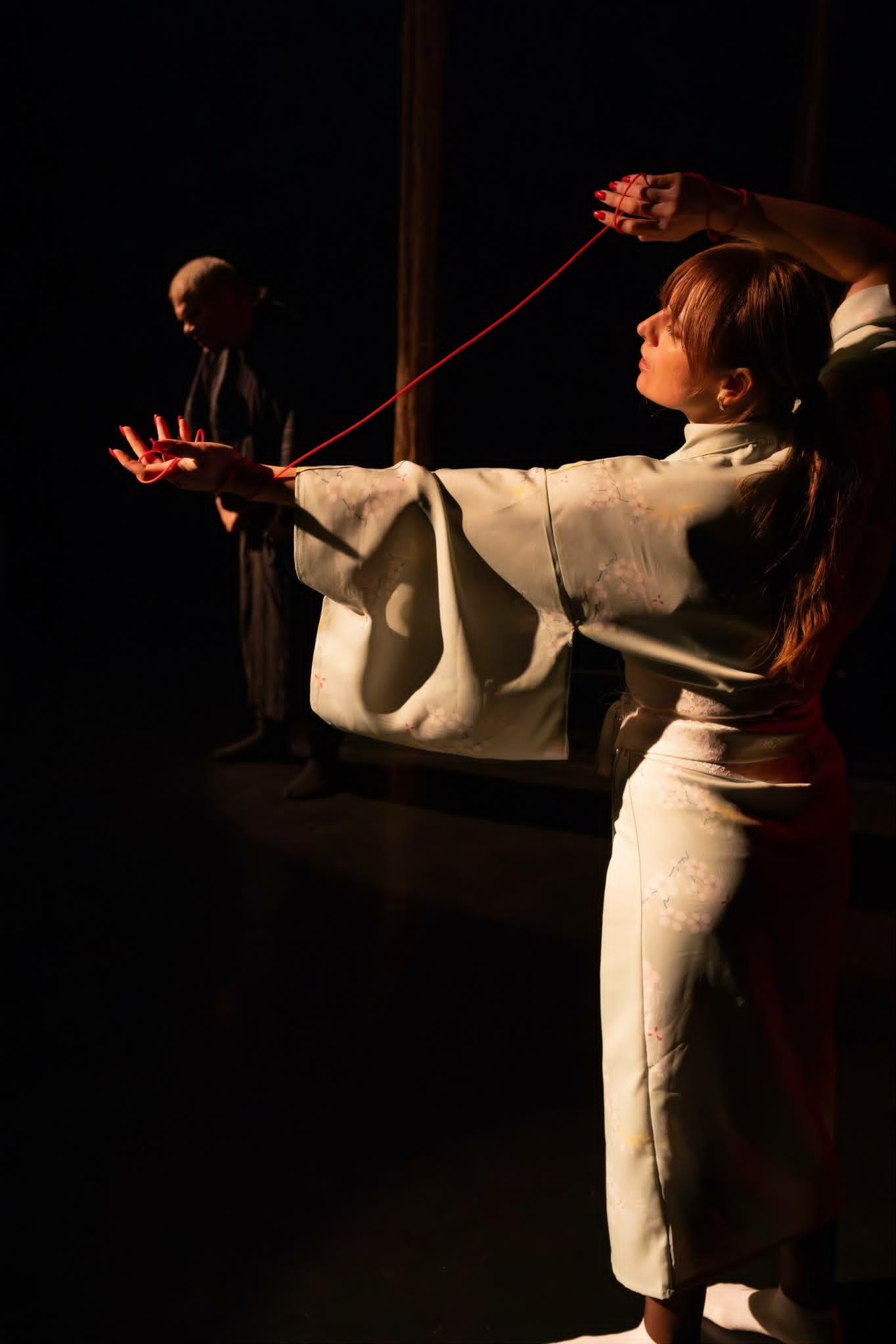
I. R.: Theater is much more than a hobby for me. It is an inner need that I did not fully recognize for many years because, as a child, I was shy and rather reserved. I often heard that I was “different from everyone else”, that I should be different, that I should live up to other people’s expectations. Over time, I simply learned to hide my true self. I found my way into theater completely by chance. A friend of mine, Kostiantyn Druid, invited me. He was the one who saw something in me that I could not see in myself — an acting talent. Together with director Yevhen Lapin, he was working on a production, and I decided to give it a try. With time, I realized that it had not been a coincidence at all. Yevhen Lapin’s theatrical vision resonated deeply with me. It was through his productions that I gradually began rediscovering the person I had once hidden from the world.
These two people helped me return to my true self. Today, theater is another language through which I communicate. After working in rehabilitation, I want not only to help people physically but also to touch their inner world. That is why the stage means so much to me. What fascinates me most are psychologically complex roles — characters struggling with inner conflicts, searching for themselves, and undergoing profound personal transformation. I am drawn to theater that does not simply entertain but compels people to reflect, to feel, and to recognize themselves in its characters. Every production I have had the privilege of taking part in has been far more than an opportunity to perform a role. It has been another step on my journey toward understanding myself. And I feel that this journey is only just beginning.
А. К.: Finally, let’s talk about boxing. Such a charming woman — and boxing! When I found out, I realized I’d better not wave my hands around when you’re nearby… Is it for your own peace of mind, or…?
I. R.: Boxing is much more than a sport. It is not about aggression; it is about self-discipline, self-control, endurance, and the ability never to give up. These qualities are developed not only in the ring — they become part of your everyday life. Boxing teaches me to master not only my body but also my emotions, to cope with difficult situations, not to give up when it feels as though I have no strength left, and to keep going until the very end. It is not simply a sport — it is a philosophy of life. And, by the way, my coach is not just a boxer. He is a boxing champion, the founder of his own boxing school, whose students consistently win prizes in competitions. He is also a professor of philosophy. As a woman, I understand how difficult it is to raise a real man on your own, especially at a time when so many children are growing up without fathers. For his students, Kostiantyn has become both a father figure and a mentor.
А. К.: And finally, after such a fascinating conversation, what would you wish for yourself and for all of us during this time of challenges and suffering — a time of genuine love?
I. R.: At every stage of life — past, present, and future — and throughout the time we are given on this earth, it is profoundly important to value the people who come into our lives. I firmly believe that no one enters our life by chance. Every person either gives us valuable experience or becomes part of our own journey, helping us grow and change. That is why we should care for one another, cherish every encounter, learn from the lessons life offers us, and face both its joyful and its difficult seasons with dignity. And perhaps most importantly, whatever the circumstances, we should always remain human — with respect for others, inner dignity, and light in our hearts.
When copying materials, please place an active link to www.huxley.media
Select the text and press Ctrl + Enter