NOBEL PARADOXES — 2025: «Levers of Wealth», or Why Economists Are Talking About the «Inequality Trap»

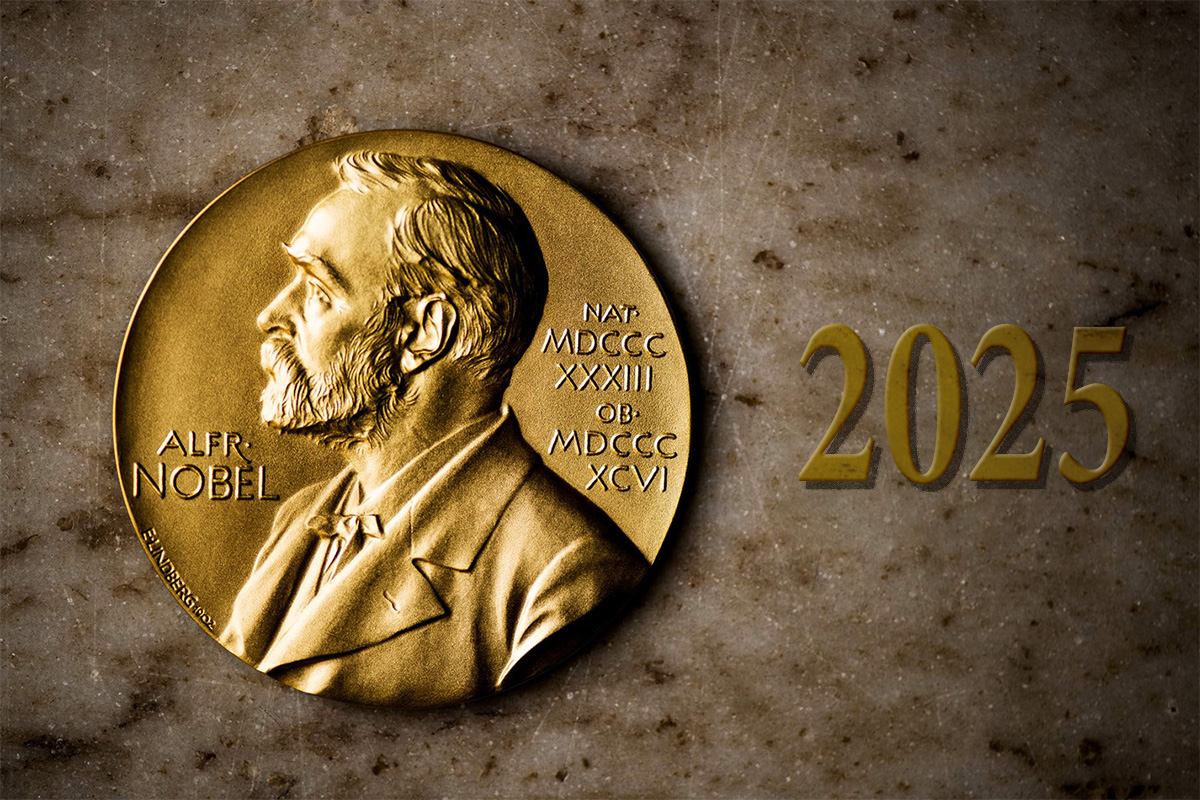
Photo by: Oleksandr Makhmud, 2018. Art design: Olena Burdeina (FA_Photo) via Photoshop
As is well known, Alfred Nobel’s will contained no mention of any «Prize in Economics». Perhaps because the inventor of dynamite considered it «not quite a science»? Indeed, in the sense that physics or chemistry are sciences, economics is far from exact — though it does rely on mathematical methods and statistical analysis. The 2025 Nobel laureates in economics present something resembling an «economic anthropology». It is less about numbers than about the condition in which modern humanity and contemporary society find themselves.

ECONOMICS: ART OR SCIENCE?
I
f we look at the original, literal meaning of the word economy, we find that the ancient Greeks understood it not as a science, but as the art of managing a household. In general, it is quite difficult for economists to claim objectivity. Their perspective is inevitably shaped by cultural norms, beliefs, and value judgments. The same economic theories may be relevant to certain eras and cultures while being entirely unsuitable for others.
As a result, economists cannot rely unconditionally on strict mathematical models — real economic processes are usually far more complex and do not fit neatly into formulas. It is no coincidence that Robert Shiller, the 2013 Nobel laureate in economics, noted that «as soon as we focus on economic policy, a multitude of factors come into play that have nothing to do with science». Human behavior, unlike mathematical formulas, is rather unpredictable. And even if we assume that this unpredictability has its own patterns, it still shifts the object of economic study away from the exact sciences — toward the study of human beings and their behavior.
INNOVATION AND CREATIVE DESTRUCTION IN THE SPOTLIGHT
Undoubtedly, economics is a science — though not an exact one. It is closer to anthropology, sociology, and philosophy than to mathematics or physics. At least, when the Bank of Sweden corrected Alfred Nobel’s «oversight» in 1968 by establishing the Prize in Economic Sciences, it regarded it as an exceptionally important social science. The achievements of the 2025 Nobel laureates once again confirm the validity of that view.
This year, the prize was divided into three parts. Exactly half went to the American-Israeli economic historian Joel Mokyr for his analysis of the conditions necessary for technological innovation. The remaining half was shared by Peter Howitt of Brown University (USA) and Philippe Aghion, who works at the Collège de France and the London School of Economics and Political Science.
The latter two economists received the award «for developing a theory of economic growth through creative destruction». They studied situations in which the emergence of new, more advanced products drives out the old ones, while companies with outdated technologies suffer significant losses. This process has both objectively positive and negative consequences. «Creative destruction» inevitably generates sharp conflicts — and these require timely, constructive solutions. Otherwise, innovations risk being blocked by powerful players and interest groups.
A VERY MODEST AND VERY ISRAELI LAUREATE
But why did the Swedish bankers single out Joel Mokyr’s contribution to economic science in particular? First, a few words about the laureate himself. Mokyr is 79 years old — a renowned historian and economist. He was born in Israel and educated at the Hebrew University of Jerusalem. However, for the past fifty years he has been teaching at Northwestern University in Illinois. Mokyr modestly remarks that he is merely one among a long list of people who truly deserve this prize.
«I was completely stunned; I absolutely did not expect it. The Nobel Prize is a wonderful occasion for academic gossip. I was shocked — but, as they say, I will take the money», he noted. Joel believes that this award speaks well of his homeland rather than solely of his personal contribution to economic science. He also expressed regret that fame came to him rather than to his recently deceased friend Elhanan Helpman, who, however, was not without recognition during his lifetime — he received the Israel Prize, the Bernhard Harms Prize and Medal, the Rothschild Prize, the EMET Prize, and the BBVA Foundation Frontiers of Knowledge Award.
It turns out that it was Helpman who was confidently on the way to the «Nobel», but Mokyr reached it instead. Yet, however modest the new laureate may be, his contributions to global science deserve the highest recognition. He was awarded the prize «for discovering the prerequisites of stable economic growth resulting from technological progress». So what lies behind this seemingly dry formulation?

TECHNOLOGICAL CREATIVITY DRIVES ECONOMIC GROWTH
Joel Mokyr gained wide recognition for his works on the economic history of the Industrial Revolution. He posed a fundamental question: why was there no sustained economic growth in Antiquity or the Middle Ages, even though discoveries of various kinds were made from time to time? Antiquity was almost unfamiliar with new technologies, while the comparatively backward medieval Europe teemed with inventions. Why did technological progress move so slowly between the Reformation and the Industrial Revolution, despite the great geographical discoveries and the flourishing of science?
Why did extraordinarily innovative societies such as ancient China or Britain during the Industrial Revolution eventually fall into stagnation? Why did military victories, access to mineral and colonial resources, life expectancy, and labor costs bring only side benefits? The scholar presented his conclusions in the book The Lever of Riches: Technological Creativity and Economic Progress, demonstrating how closely these two phenomena are interconnected.
However, not every kind of economic growth leads to an increase in social well-being. Sustainable technological progress became possible only when modern science emerged. For technological development, what matters is not so much what a single individual «knows», but what the community knows. It is the collective knowledge of an educated community — rather than of society as a whole on a national scale — that plays a decisive role in fostering technological creativity.
THREE CONDITIONS FOR TECHNOLOGICAL CREATIVITY
Technological innovation directly influences productivity growth, which in turn leads to economic prosperity. Yet, according to Mokyr, technological creativity requires three essential conditions.
First — a society must have the necessary human capital: inventive and enterprising innovators. In a constantly stressed, malnourished, superstitious, or overly traditionalist society, innovation is unlikely to occur. Second — the institutionalization of both material and non-material incentives for innovation. Third — an atmosphere of tolerance that protects innovation from those who perceive it as a threat to their own interests.
Mokyr insists that one should not wait for economic growth in order to achieve technological breakthroughs and advancements. The latter are themselves the very cause of economic growth — and no other equivalent driver can be found. Modern states and governments would do well to listen to the new Nobel laureate and ask themselves: «What is really happening with your atmosphere of tolerance, collective stress, and encouragement of innovation? Are we not all steadily heading — despite the apparent progress of many sciences — toward the same evolutionary dead end that once befell ancient China?»
IN THE TRAP OF EXTRACTIVE INSTITUTIONS, GROWTH IS IMPOSSIBLE
It is no coincidence that, when awarding the Nobel Prize in Economics, the members of the Nobel Committee mentioned the so-called «trap of extractive institutions». This term refers to economic and socio-political systems that extract resources and income for the benefit of a small elite group rather than for the broader population. One of the hallmarks of such a «trap» is low economic growth.
Why did the committee members emphasize this point? Perhaps because they wanted to highlight the true reasons behind the steady slowdown of the global economy.
According to OECD analysts, global GDP growth is expected to decline from 3.3% in 2024 to 3.2% in 2025, and further to 2.9% in 2026. Next year, U.S. economic growth is projected to slow sharply to 1.5%, while China’s is expected to decelerate to 4.4%.
«The introduction of inclusive institutions creates long-term benefits for all, whereas extractive institutions provide short-term gains only for those in power. As long as the political system guarantees them control, no one will trust their promises of future economic reform. That is precisely why no improvement occurs», explained the Nobel Committee.
When copying materials, please place an active link to www.huxley.media
Select the text and press Ctrl + Enter