NOBEL PARADOXES — 2025: They have reshaped our understanding of immunity

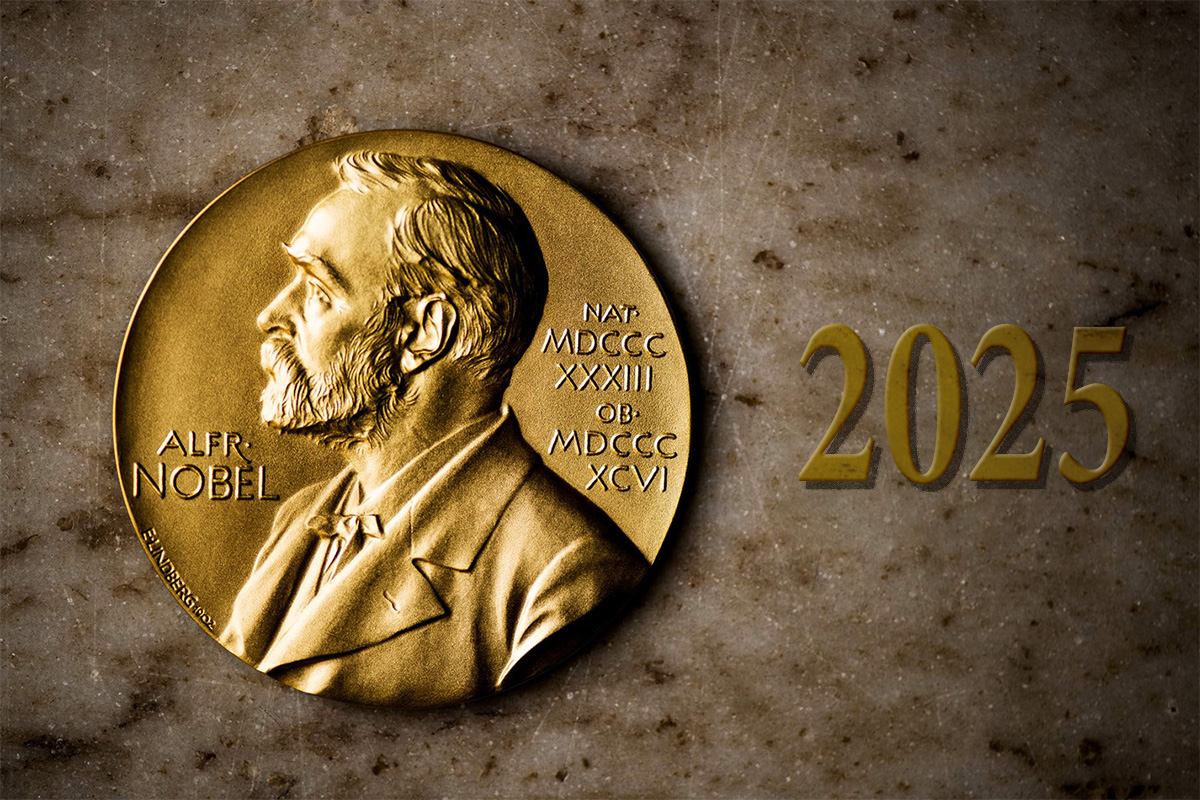
Photo by: Alexander Makhmud, 2018. Art design: Olena Burdeina (FA_Photo) via Photoshop
The COVID pandemic, which truly frightened humanity, once again drew heightened attention to the problem of immunity — the system that protects us from everything foreign. Nature contains an astonishing number of diverse microbes. Scientists have identified more than 200 types of viruses capable of infecting humans. Yet the danger lies not only in their sheer number, but also in mutations that allow pathogens to disguise themselves as healthy cells. How can we ensure that the «bodyguard» doesn’t confuse anything — and doesn’t accidentally kill the very one it is meant to protect? This is the question the Nobel Prize laureates set out to answer.

WHY PATHOGENS DISGUISE THEMSELVES
I
mmunological tolerance is a property of the body that allows immune cells not to destroy «its own» — that is, the normal, healthy cells of our body. Pathogens, however, which constantly seek to invade our tissues, are attacked mercilessly. In other words, the body is somehow able to distinguish «who is who» and control its immune response. But microbes, like all living things, want to survive. Being killed is not part of their life plan. That’s why many of them try to alter their appearance to resemble healthy cells. Tumor cells, for example, often resort to this type of clever disguise. And if our immune system worked perfectly, humanity would have long forgotten what cancer is.
HOW TO STOP HITTING OUR «OWN»
Unfortunately, our «ideal bodyguard» sometimes fails. This can manifest in the inability to distinguish «self» from «other», leading to various autoimmune diseases, about 80 of which are known today. The immune system also often identifies transplanted organs as «foreign». This creates a serious limitation for such operations, which doctors try to overcome by using various immunosuppressants. But if we could learn to regulate immunological tolerance and increase its effectiveness, it would be a true breakthrough in transplantation, as well as in treating autoimmune and oncological diseases. The three Nobel laureates in physiology and medicine took on precisely this challenge. And to begin, they had to carefully study the mechanism by which tolerance is formed.
SAKAGUCHI DISCOVERED T-CELLS
In the mid-1990s, Shimon Sakaguchi began studying, using laboratory mice, the risks that the immune system might attack both disguised pathogens and the body’s own cells. As a result, he was the first to isolate T-lymphocytes — a special class of cells capable of suppressing excessive immune activity, later named Treg, or simply T-cells. The letter «T» in their name refers to the place where these cells are produced.
This occurs in a small organ located behind the sternum called the thymus. The thymus produces several types of cells. The work of one type of T-cells can be imagined as a kind of territorial patrol checking identification documents: if a cell’s «papers» are not in order, fire is opened immediately, with the aim to eliminate the target. Another type of T-cells specializes in coordinating the immune response; in an emergency, they give the command to produce antibodies or to initiate an inflammatory process.
A NEW TYPE OF IMMUNE TOLERANCE
Sakaguchi discovered that some T-cells can suppress the activity of other T-cells when the latter attack the body’s own tissues. Later, joining his research, Brunkow and Ramsdell were able to determine how regulatory T-cells are created and controlled, ensuring balance in the immune response. Back in the 1970s, scientists found that the thymus produces a number of defective T-cells that attack both «self» and «non-self» indiscriminately. Most of these, however, are destroyed in the thymus before they can exit it. This phenomenon was called central tolerance. The newly awarded Nobel laureates discovered signs of an additional mechanism — peripheral tolerance, which operates outside the thymus.
THE PROMISE OF DISCOVERING A NEW GENE
In 2001, the results of another study conducted on laboratory mice were published. American researchers identified the Foxp3 gene, previously unknown to science. Its mutation can lead to autoimmune diseases, since this gene regulates the work of a vast number of other genes. Among other functions, Foxp3 is responsible for peripheral tolerance, for the development of T-cells that regulate the activity of other T-cells. Much in these processes still requires further study. However, the discoveries made by Sakaguchi, Brunkow, and Ramsdell have already triggered several hundred clinical trials, laying the foundation for new approaches to the treatment of cancer, asthma, and diseases of the skin and intestines, as well as for improving outcomes in organ transplantation.
When copying materials, please place an active link to www.huxley.media
Select the text and press Ctrl + Enter