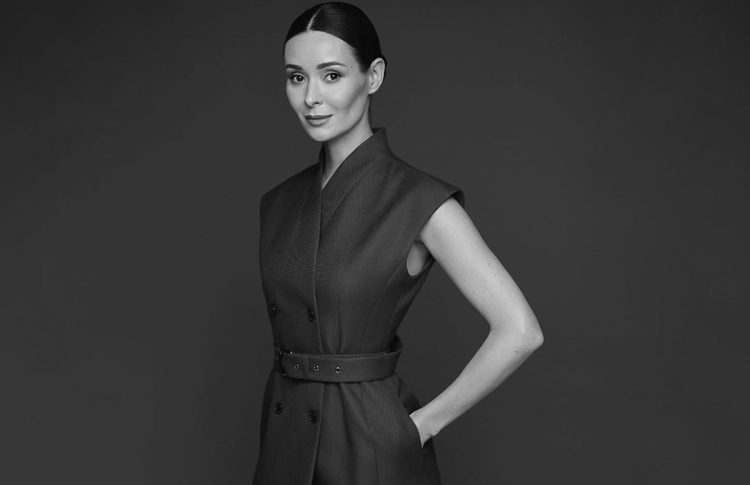
OLEG NAUMENKO: The anchor lies within yourself


Photo by Lucas Vieira dos Santos on Unsplash
SHORT PROFILE
Name: Oleh Naumenko
Date of Birth: 5 November 1970
Place of Birth: Ivano-Frankivsk, Ukraine
Occupation: Businessman, practitioner of integral yoga
Zhanna: Today, the world seems to be falling apart — morality, truth, and even the very sense of wholeness are being distorted. In such moments, one longs for something genuine. Something alive and pure, like spring water. It raises the question: what can a modern person rely on in a world torn by contradictions?
Oleh: I won’t be original in saying that the anchor lies within yourself. That’s precisely why we are now entering a time of renewed mysticism — not in a narrow religious sense, but in a spiritual direction. History offers many examples of spiritual revivals arising in the darkest of times. Because people begin to feel that beyond ideologies, politics, and rituals, there is something real… that the external no longer provides answers.
Yes, you’re right — people long to touch that spring-like purity. And that spring is not outside, but within. Disappointment increasingly becomes the push that brings this realization: people see how the Fathers of organized religion turn either into businessmen, preoccupied with the number of funerals and baptisms, or into politicians speaking on behalf of power.
This becomes especially evident when the language of enmity is heard in temples more often than the language of love. When spiritual leaders begin to justify violence with «higher goals», they cease to be channels of Light and become mouthpieces of power.
Zhanna: Some believe that Christianity was lost from the very beginning — that from the start it went down the wrong path by becoming part of the official machinery too soon.
Oleh: Yes, already in the early centuries, the emphasis shifted from the experience of presence and personal connection with Christ to the authority of the ecclesiastical hierarchy. As a result, the Church increasingly became the guardian of structure and lost the living flame. And without that flame, Christianity turned into a moral system and a cultural tradition, but not a path for the awakening of the soul.
To this day, many of Jesus Christ’s teachings are interpreted intellectually or emotionally. Yet they require a reading through the heart. That means — it’s not a path of words: it is the path of presence, the path of personal experience.
This is exactly how faith was understood by the spiritual figures of Christian mystical tradition: Macarius of Egypt, Isaac the Syrian, Symeon the New Theologian, Seraphim of Sarov. And in the Western tradition — Meister Eckhart. All of them bore witness to the fact that true faith lives not in the external, but in love and the light that comes from the heart.
Zhanna: Do you believe that true mystics — both Christian and Eastern — speak of the same thing, just in different languages?
Oleh: Absolutely. The deeper you go into the essence, the fewer differences remain. True mystics — whether Christian or Eastern — speak of the inner light, of the transformation of the heart. And almost in the same centuries, in the East — in India, China, Japan — we hear the same tones: Laozi, Bodhidharma, Shankara… Later — Ramana Maharshi, Sri Aurobindo, Mirra Alfassa, Satprem, Krishnamurti.
Different eras, different cultures — but the essence is the same: this is the path not of religion, but of living consciousness, living presence. But today, unfortunately, official religions increasingly resemble stagnant swamps. A far cry from a spring…
Zhanna: Many call themselves believers, practice meditation, read sacred texts… yet they remain on the level of the mind — in correct words and ritual observance. So where does the subtle boundary lie between the idea of faith and its intimate presence in the heart?
Oleh: True faith is complete surrender to the Lord, total trust in the Divine will. Only then can the transformation of the human’s animal nature begin. After all, what does it mean to attain the Kingdom of God on earth? It is not an external event. It is, first and foremost, an inner psychological victory over death. As is well known, the fear of death is the emperor of all fears, the root from which all other human fears grow.
Zhanna: I notice how differently people behave during war. For some, fear becomes embedded in their consciousness, turning into constant inner tension or even panic attacks — and this happens even when the explosions are in another city. Others remain completely calm, even if a missile hits a house on the next street.
Oleh: This is exactly where the line runs between true faith and self-deception. Of course, if an explosion goes off behind your back, there may be a brief moment of fear — that’s instinct, a natural reaction of the body. But if there is an anchor within, it’s as if something inside you knows: God is with you. This knowledge cannot be invented — it comes when you pass through real darkness and do not turn away.
If a person says they believe in God, calls themselves a Christian, a Buddhist, a Muslim — it doesn’t matter — but their heart remains unchanged, if the fear of death still governs them, then what kind of faith is that? It’s still at the stage of an idea, an illusion, a comfort for the mind. Such «salvation» is worth nothing.
Faith that does not transform is not faith at all, but decorative plaster. True faith always brings with it inner work, challenge, the pain of purification — and light.
Zhanna: What is fear?
Oleh: In Eastern traditions, particularly in Sri Aurobindo’s integral yoga, which I’ve been practicing for over 20 years, fear is a vibration of the vital plane — a force that either enters from the outside or rises from below. That’s why fear is not part of the true self, not part of the soul. It can and must be rejected. Anyone who seeks to transcend the narrow confines of animal nature and turns toward spiritual development is capable of beginning the process of freeing themselves from fear.
Zhanna: In my circle, there are quite a few people who are far from God, yet they display enviable calm even in the face of real danger. How is that possible?
Oleh: One way is through the mind: to logically realize that fear is not only useless but also destructive. People with a strong mental nature, like scientists, can deeply understand the mechanisms of fear, «decode» it, see its illusory nature — and thereby deprive it of its power.
On the other hand, there are people with strong vital energy. Their path is different: they don’t analyze fear but instinctively resist it. Their nature thrives on strength, movement, and overcoming — and in the moment, such vital energy can simply reject fear as weakness, as an enemy.
Such individuals often don’t so much overcome fear as they prevent it from arising in the first place. This can have a tangible effect — but it is usually temporary if not rooted in a deeper consciousness.
So even a person far from God may find temporary freedom from fear — through the power of the mind or the power of the vital. But full and final liberation comes only when a person surrenders themselves to the Divine. Total surrender to God.
Zhanna: You mentioned that Christian and Eastern mysticism are in many ways similar: both emphasize personal spiritual experience through which the heart is inwardly transformed. For the rational Western mind, this may sound vague and hard to grasp.
Oleh: One of the key Gospel concepts is Transfiguration. Many know the word, but not what it truly means. And yet it is a very clear and understandable phenomenon. Christian mystics, particularly the monks of Byzantium and Mount Athos (the hesychasts), described Transfiguration as the descent of the uncreated Light — dazzling, white, real, descending through the crown of the head.
In that moment, a person feels bliss, comes to know that the truth is within, and that God is love. This is not a symbol, but a real physical experience. The same is described in Eastern traditions — in Indian, Buddhist, and Taoist paths, where the perception of Divine Light is also accompanied by a state of inner illumination and bliss. This is true faith — not blind acceptance, but living experience.
Zhanna: Oleh, is it even possible today — especially for someone from a country at war — to come close to the Gospel ideal? Christ said, «Love your enemy». But what should one do when the enemy is not a metaphor, but a reality… How can a Ukrainian today love a Russian?
Oleh: Humanly — no, it’s impossible. Not after Bucha, Mariupol, Sumy. But the Gospel doesn’t speak to human logic. Love for the enemy is not about sentimental feelings toward them. It’s about not letting evil take root in you. It’s like standing at the edge of a cliff and not taking that step forward. It means not becoming like the enemy, but keeping within yourself the breath of God. And God certainly doesn’t breathe through revenge.
Zhanna: I recently listened to a major Ukrainian politician who called on people to cultivate hatred and a sense of vengeance toward the eastern neighbor for generations. In his view, without this fuel, Ukrainians won’t win the war or survive as a nation.
Oleh: Hatred poisons the one who uses it. It makes the heart incapable of receiving the Divine Light, which could transform both the individual and the nation. If struggle is necessary, let it be based on the power of truth, on the courage of the soul, on the purity of intention — not on the passion for revenge.
When a struggle is waged, even in the name of a just cause, but with the weapons of hatred, anger, and vengeance, then in the eyes of the Divine, the distinction between the opponents begins to blur. And even the just side may find itself deprived of help from above — because the Divine will not support one darkness against another.
Zhanna: I agree. Christ calls us to remain human even when circumstances push us to become a beast. In your view, how can Ukraine endure this struggle and preserve both national and human dignity?
Oleh: Ukraine is, above all, its people, its history, and its culture. You ask: «How to endure?»
First — do not accept the role of the victim.
Second — do not accept the role of the executioner, even if we are being pushed into it.
And third — remember that dignity does not begin with declarations, but with the heart.
With how we defend ourselves, with what thoughts and intentions. When a person keeps their face — they have already won. If Ukraine comes through this war without losing its humanity, then it will become not just a shield. But a light. And not for Europe. But for itself. And that — means much more.
From the cycle «Inspired by Conversations in Auroville», 2025
When copying materials, please place an active link to www.huxley.media
Select the text and press Ctrl + Enter