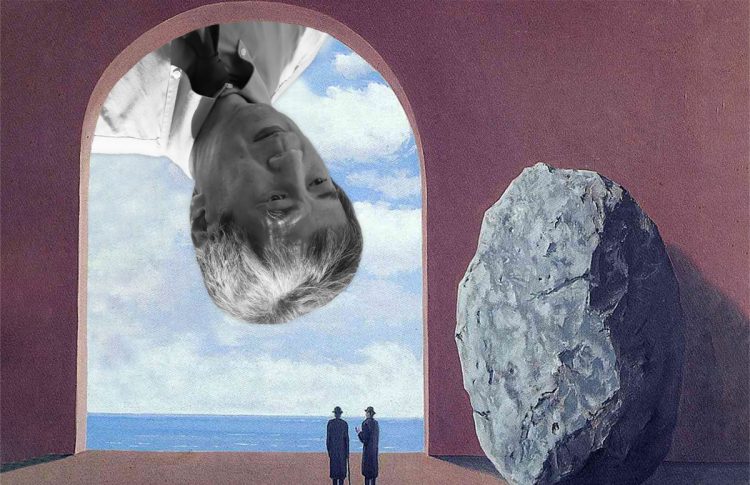
OVERCOMING UNCERTAINTY: Pretend That Probability Exists


Janus – one of the oldest Roman gods, the patron of entrances and exits, beginnings and endings. He was depicted as a man with two faces on either side of his head / wikipedia.org
Uncertainty — In the 1920s, Werner Heisenberg introduced this concept into science, and since then, it has become one of the fundamental principles of quantum physics. From that moment on, humanity continued to live under the sign of uncertainty. Various theories — from information theory to game theory — began to address it more frequently.
Today, uncertainty has become almost absolute, turning into a defining characteristic of our ability to understand the world around us. Too much of the past, present, and future lies beyond the limits of our direct experience. Therefore, without a grasp of probability and uncertainty — without a conscious awareness of our ignorance — we cannot navigate reality…
LANGUAGE VS. STATISTICS
When we talk about uncertainty, we must not forget that we are dealing with language. To describe it, we use words like «maybe», «possibly», and «likely». However, these words, which attempt to convey a degree of statistical probability, can be highly deceptive.
In 1961, the CIA presented U.S. President John F. Kennedy with a plan for an invasion of communist Cuba. Before making a decision, Kennedy asked top military officials about the chances of success. The experts estimated it at 30% — meaning, in their view, there was a 70% likelihood of failure.
However, in the report that reached the president’s desk, these 30% were framed as a high probability and described as a «fair chance». The invasion at the Bay of Pigs went ahead — and, as we know, ended in disaster. This example illustrates the serious consequences that can arise from a conflict between language and statistics.
To avoid the pitfalls of language, a specialized method was developed to convert verbal expressions of uncertainty into approximate numerical values. For example, in the British intelligence community, a scale was created where the term «likely» corresponds to a probability range of 55% to 75%.
THE MAGIC OF STATISTICS: DOES «PROBABILITY» EVEN EXIST?
Attempts to quantify randomness and uncertainty led us into the mathematical realm of probability, which is now widely applied across numerous fields. Our desire to rid ourselves of cursed uncertainty — to «know everything precisely» — has made statistical methods critically important for our civilization, turning them into a modern version of ancient predictive magic. This has become especially true in the era of big data.
Statistics help predict the outcome of football matches and tomorrow’s weather. They can determine the luckiest passenger on the Titanic and expose serial killer Harold Shipman. They calculate the number of trees on the planet and the number of unemployed in a country. However, any numerical probability is not an inherent property of the world itself.
This is precisely the point emphasized by David Spiegelhalter, Honorary Professor of Statistics at the University of Cambridge and author of The Art of Uncertainty: How to Navigate Chance, Ignorance, Risk, and Luck (Penguin, 2024).
According to Spiegelhalter, statistics is a construct based on personal or collective judgments — and, moreover, on assumptions that are often quite questionable. In most cases, it does not even measure some fundamental «true» value. This raises an important question: Does what we call «probability» actually exist at all?
«TWO-FACED JANUS» FOR OUR CONSCIOUSNESS
Probability entered mathematics relatively late. For thousands of years, people experimented with probability and uncertainty — starting with dice games, which were originally used as divinatory rituals. However, it wasn’t until the 1650s that the correspondence between French mathematicians Blaise Pascal and Pierre de Fermat laid the foundation for the scientific analysis of «random» events.
After that, it was as if an invisible dam had broken — probability flooded into various fields: finance, astronomy, law, and, of course, gambling. Weather forecasting provides a clear example of how this works. Meteorologists predict specific values for temperature, wind speed, and precipitation levels for a given time and location.
The first three can be compared to their «true» values — you can step outside and measure them. But a 70% chance of rain has no such «truthfulness». Rain either happens or it doesn’t. So, how do we determine its probability?
We have thermometers to measure temperature but no equivalent instrument for probability. Philosopher Ian Hacking was right when he described probability as «two-faced Janus», which simultaneously eliminates two troubling aspects of our consciousness — randomness and ignorance.
WHAT’S ON THE OTHER SIDE OF THE COIN?
Imagine that before flipping a coin, you are asked to estimate the probability of it landing heads. You might say 50/50. The coin is flipped and lands but remains covered by a hand. Now, what is the probability that it’s headed?
Most people hesitate before reluctantly repeating their original estimate of 50/50. But the event has already occurred — there is no longer any randomness involved, only your ignorance. The situation has shifted from aleatory uncertainty (the realm of risk) to epistemic uncertainty (the realm of knowledge).
In the first case, we were dealing with an uncertain future. Second, it is now a concrete fact that we simply do not yet know. The situations are different, yet we apply numerical probabilities to both. This reveals that statistical models of future events rely entirely on subjective assumptions.
For instance, we assume that every coin has a head and a tail. But now, imagine that the experimenter flips a coin with two heads. That means you were estimating probability based on a false perception of reality. According to David Spiegelhalter, the objective world engages in a game with us when we test our assumed probabilities against reality.
However, this does not mean that probabilities themselves are objective. Some assumptions used to estimate probability may certainly be more reasonable than others. For example, carefully examining a coin before flipping it is a wise move. Similar limitations exist in all fields that use probabilities — including science.
DOES «OBJECTIVE» PROBABILITY EXIST?
But is it possible that true probability exists objectively and that we simply make errors in estimating it? We know that at the subatomic level, mathematics reveals fixed probabilities for seemingly causeless events. However, even these probabilities may be tied to external objects or observers, meaning they are not intrinsic properties of quantum particles themselves.
Let’s set aside the quantum micro-world and the centuries-old debates about free will in the non-quantum macro-world. Instead, let’s focus on what «objective probability» really means. Every attempt to define it seems more like a mystical idea or a thought experiment rather than an actual feature of reality.
Yes, there is a limited set of highly complex, repeatable scenarios where probability distributions exhibit stable, predictable properties in the long run. For example, in Newtonian physics, gases follow the laws of statistical mechanics. In genetics, the immense complexity of chromosomal selection results in stable patterns of inheritance.
But even here, we are dealing with pseudo-objective probability. In every other domain — sports, economics, climate forecasts, risk analysis — we cannot claim to be measuring true probabilities. We are merely expressing our personal or collective uncertainty in probabilistic terms based on the knowledge and judgments available to us.
LET’S PRETEND IT EXISTS!
But why do the laws of probability make sense if they are fundamentally based on something we essentially invent? Scientific debates on this question have been ongoing for nearly a century, involving some truly remarkable figures.
Take Frank Ramsey, for instance — a brilliant mathematician. He was a large man, weighing 108 kg, with a thunderous laugh. He worked only in the mornings, dedicating the rest of his time to his wife, his mistress, tennis, and wild parties. According to Ramsey, under certain conditions, even arbitrarily structured mathematical objects develop an inherent order.
Another scientist who attempted to define probability was Alan Turing, who tragically took his own life, becoming perhaps the most famous victim of historical homophobia.
Turing is best known for the Turing machine and the Turing test, which made groundbreaking contributions to computing and artificial intelligence. He acknowledged that practical probabilities are based on expectations — on human judgment.
At roughly the same time as Ramsey, Italian mathematician Bruno de Finetti developed the concept of subjective probability. If Ramsey was a staunch socialist, de Finetti began as a supporter of Italian fascism and Benito Mussolini.
Starting with the provocative claim that «probability does not exist», de Finetti demonstrated that in everyday practice, it might not even be necessary to determine whether objective «chances exist at all.
From a pragmatic perspective, we do have a way to reduce uncertainty and assess probability: it seems that probability doesn’t objectively exist — but we must act as if it does!
Original research:
When copying materials, please place an active link to www.huxley.media
Select the text and press Ctrl + Enter