ROMAN BALAYAN: The Patriarch’s Eight-Fifth Spring

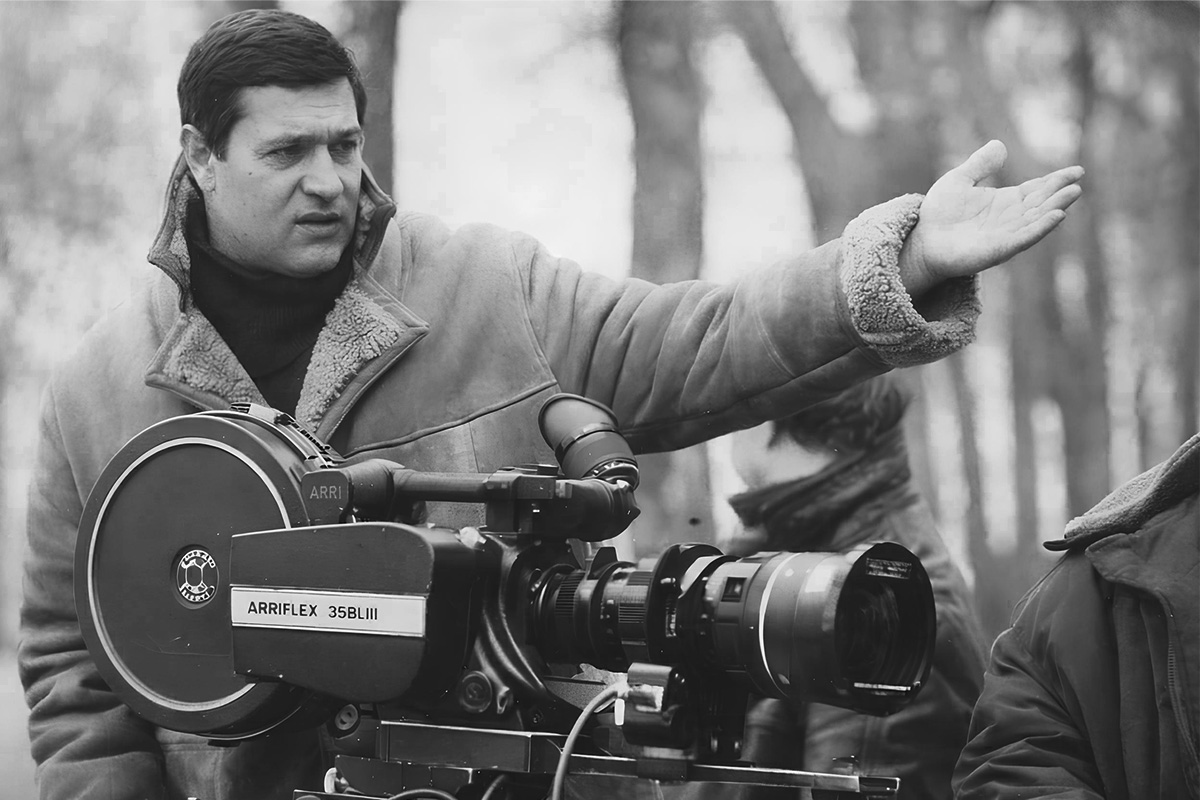
Roman Balayan / irbis-nbuv.gov.ua
Between the little boy born in the small village of Lower Oratag in Nagorno-Karabakh on the eve of the war, and the master, lies an 85th anniversary — a vast journey commonly called life. Throughout this entire path, Roman Balayan moved forward as if in jest, playing and misbehaving. He does not speak of what matters most, preferring anecdotes. Of what matters most, he makes films. A student and friend of Sergei Parajanov, the creator of the great Flights in Dreams and in Reality (1982) and another dozen significant films, throughout his life, he has filmed lonely loners who seek happiness and flee from it.
Roman Balayan never made films of convenience (he nearly starved for five years because he refused to make movies about commissars, Kovpaks, and the peasantry “born of the revolution”, which the Dovzhenko Studio was producing on an industrial scale) — he never served. He was ruthless and at the same time deeply merciful toward the human being, so imperfect and fragile. It is no coincidence that his heroes are often impossible to distinguish from antiheroes, and that in his films it is hard to find even the slightest trace of any ideology.
R
oman Balayan’s “universities” were Sergei Parajanov, his friend, mentor, and spiritual father. It was Parajanov who suggested to the young student the subject of a lifetime, one he would cultivate all his days: the city and the human being within it. Often a superfluous person. A lonely person. Having begun in the mid-1960s as an unofficial assistant to Parajanov on the ill-fated project Kyiv Frescoes (after viewing the screen tests, the studio’s artistic council shut the film down as formalist, while Parajanov was driven out of the profession, out of Kyiv, and out of Ukraine), Balayan would, fifteen years later, create his absolute masterpiece — a film for decades to come — in which he captured every sign of the late Brezhnev stagnation with its unheroic heroes, disorder, and lostness: Flights in Dreams and in Reality. Its content is exhausted by the personality of its author.
Balayan succeeded in filming the backwater of his private life — with its clownery of despair and the suffering of millions of strangers. The film outlived the era that gave birth to it, and now even the children of those who retreated into inner emigration in the 1970s and 1980s recognize themselves in that mirror. After the triumph that, three years later, brought him the State Prize, the love and envy of millions of Soviet intellectuals, the director would go on filming again and again. Yet each time he would make Flights in Dreams and in Reality once more. He would release them under different titles, sometimes changing the actors around Oleg Yankovsky or renaming the characters for variety, but the essence remained unchanged. For roughly half a century, Roman Balayan traced the same outline with his finger upon a windowpane, until at last the glass itself disappeared. What remained was the hum of history, which does not allow us to live our own private, contemporary lives now; an awakened past that, as it turned out, had never really fallen asleep.
Filming about himself and from himself (most often through someone else’s material) by reflected light, Balayan inadvertently became the singer of urban culture in Ukrainian cinema — a theme unofficially banned in the Ukrainian SSR. This fact makes him not merely a director, a staff filmmaker of the Dovzhenko Film Studio, but a chronicler of the middle class of that time. Of the people we once were. A class alien both to the ruling elite and to the silently obedient majority. His films provide a complete picture of the age of “deep-water fish brought to the surface” (in the words of Andrei Tarkovsky), and remain guides to today’s life, with all its unfree freedoms. All of these are small urban tragedies of lost intellectuals from countless research institutes and design bureaus, known by surnames instead of names, inhabiting a world where science has turned into a productive force, intelligence into a trade, and creativity into a means of earning a living.
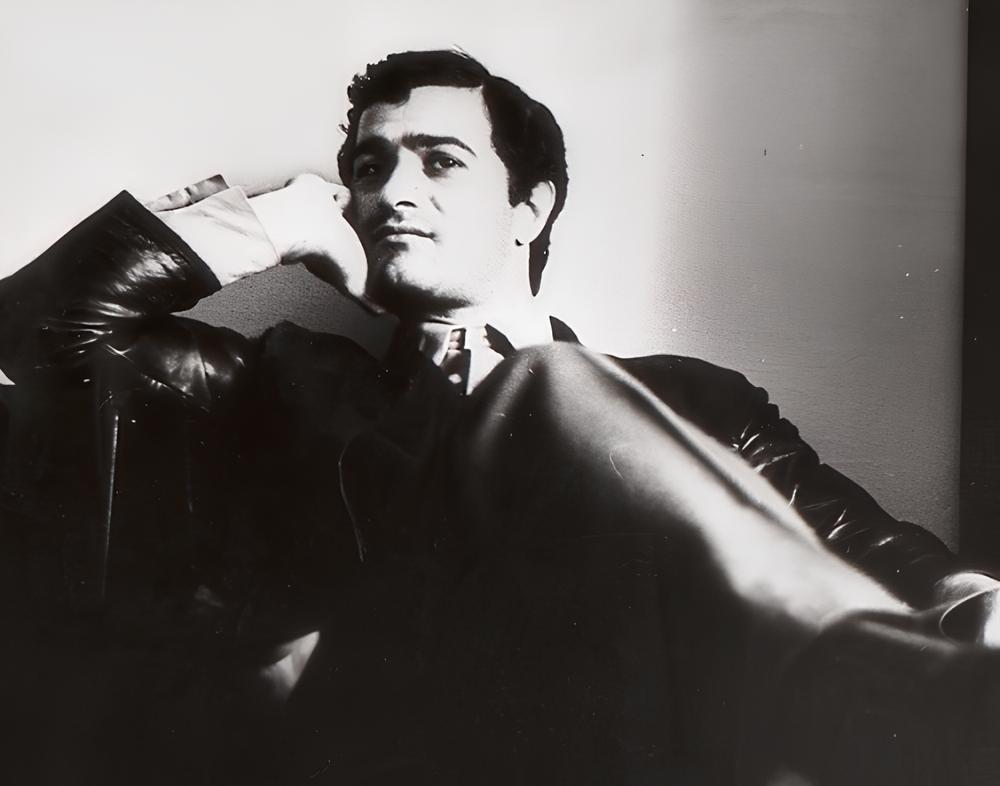
Balayan’s cinema is a complete, harmonious aesthetic universe — an almost perfect circle in which, by the creator’s will, an individual directorial technique, a stable typology of characters, recurring themes, and narrative motifs all converge. Balayan’s world passed through several stages of development before, by the late 1970s, the photograph began clearly to reveal the mesmerizing identity between creator and creation: Balayan’s heroes live Balayan’s way of life and commit acts dictated by Balayan’s character. In the director’s finest films, there is not a single detail that does not bear Balayan’s seal, his vivid authorial imprint, or over which the shadow of his closed, hermetic world does not fall — one film shot under different titles, in different historical contexts, yet always preserving the same essence. Beginning with talented short imitations of Sergei Parajanov (The Thief, Palm Sunday), Roman Balayan already reached toward the urban romance of the solitary outsider in his feature debut, the satirical sketch The Romashkin Effect (1973), whose unique visions are intensified by kefir.
For the first time, Balayan films the city of Kyiv. The outcast Romashkin becomes the first “superfluous man” in his filmography, someone integrated nowhere. A character whose loneliness is dictated by a special gift that has simultaneously become a curse. Strengthening a little, two years later, he directed Kashtanka (1975), his first true creative success. Anton Chekhov’s story of a dog and betrayal, Balayan filmed as if it were his own, focusing not so much on the animal as on the clown, the saddest of all people. Seven years before Flights in Dreams and in Reality, the director rehearsed the drama of life’s emptiness and homelessness in a provincial performer, refining his signature style: a sparing selection of details, measured rhythm, the melancholy of golden autumn as a metaphor for moods and feelings, and the frightening desolation of the provincial town. The Balayan hero already understands that life did not begin yesterday and will not end tomorrow, and that somehow one must live, yet does not know how. The superfluous man stands at the center of his next film, Biryuk (1977), about the daily life of the sullen, almost mute forester Khoma, rough on the outside and kind within.
For Biryuk, which entered the main competition of the Berlin International Film Festival, Balayan was called a traditionalist moving against the demands of the times. Yet modernity in Biryuk lies between the lines, in the very innovative reading of the classic text: a nine-page story becomes a seventy-seven-minute screen narrative, proving his professional mastery through plastic expressiveness and an ability to manage with almost no words, while reflecting on the bond between the wider world and the individual, on continuous attraction and repulsion. Having endured a five-year pause and many hardships, Balayan in 1982 created his most personal film — the drama Flights in Dreams and in Reality. The almost plotless story of the wayward and unhappy engineer Makarov — a loner among others, whose leaf has already yellowed but not yet fallen — became the defining film of the unheroic era of stagnation. A portrait of one and of many like him — equally beautiful and unhappy — brought to the screen by Oleg Yankovsky, dressed in the director’s own clothes (Balayan gave the actor his jeans and sweater).

Flights in Dreams and in Reality made Balayan a superstar of Soviet intellectual cinema. He became the most desired guest at every artistic gathering, earned many envious rivals at the Dovzhenko Film Studio, and admirers far beyond it — among them Andrei Tarkovsky and Marcello Mastroianni. While the film’s box-office glory was still resounding, Balayan had already made what was, in essence, its first self-remake — The Kiss (1983). Based on the Anton Chekhov story of the same name about a misunderstanding involving a tsarist officer, The Kiss once again tells not the story of a hero, but of a solitary man enduring the drama of everyday life and inhabiting the protected world of his dreams. Oleg Yankovsky, having just triumphantly passed the test of Flights in Dreams and in Reality, once again demonstrates futile attempts to be understood, the foolishness of his anxieties, and his inability to live without them. Once more, he seems to exist in two registers at once, moving from duel to reconciliation, from dream to reality, from pastel memories of childhood to harsh and unsettled daily life, from dreams to waking life. The actor performs the same transformation in what is perhaps Roman Balayan’s most formally complex film — Keep Me, My Talisman (1986).
The structure of this story about a Perestroika-era journalist who has gone too far in his games is a sum of mirror reflections in which truth cannot be distinguished from fiction, nor new reality from appearances. Balayan brings to the screen a hero trapped in self-deception. “In Talisman, I turned to a hero who had already defined himself. The result — compared with Makarov — proved even more dramatic. The hero of Flights…, while going through a crisis, did not deceive himself. But in Talisman, he suddenly looked at himself anew. We showed the torment of a man who goes not to kill, but to die. Alexei’s doubts touched all his ideas about himself. Suddenly, everything within him seemed shaken”, Balayan later recalled. Talisman has much in common with Flights…, but there is one difference: here Balayan created a majestic, almost biblical image of a woman, played by Tatyana Drubich. She alone does not renounce through love; she forgives and saves.
Balayan would return to the contemporary person — exhausted by inner contradictions, resisting life’s temptations — in another of his Perestroika hits, The Informer (Filyor, 1987). This drama about a pre-revolutionary schoolteacher (again played by Oleg Yankovsky), who out of need begins cooperating with the tsarist secret police, became a turning point in the director’s biography: here art ended in his life, and profession — mere work — began. Always wary of sharply social themes and journalistic directness (the chief features of Perestroika cinema, which sought uncomfortable answers to painful questions), Roman Balayan here and afterward seemed to lose himself in this new world of revelations and “truth”. To rebuild himself, he once again turned to the classics: he directed Nikolai Leskov’s Lady Macbeth of Mtsensk (1989), about a young merchant’s wife driven to crime by sudden and powerful passion; then Ivan Turgenev’s First Love (1995), about a boy’s first and unrequited love for a young flirt secretly sleeping with his father (played by Oleg Yankovsky). He filmed the story of a Hamlet who, in late-1990s Kyiv, prefers a relationship with a chance-met Ophelia to revenge (Two Moons, Three Suns, 1998); and a sentimental tale of the inhabitants of a boarding school for deafblind children drowned in lush grasses (The Night Is Bright, 2004), whose heroes try to fly — even if they fall while doing so.
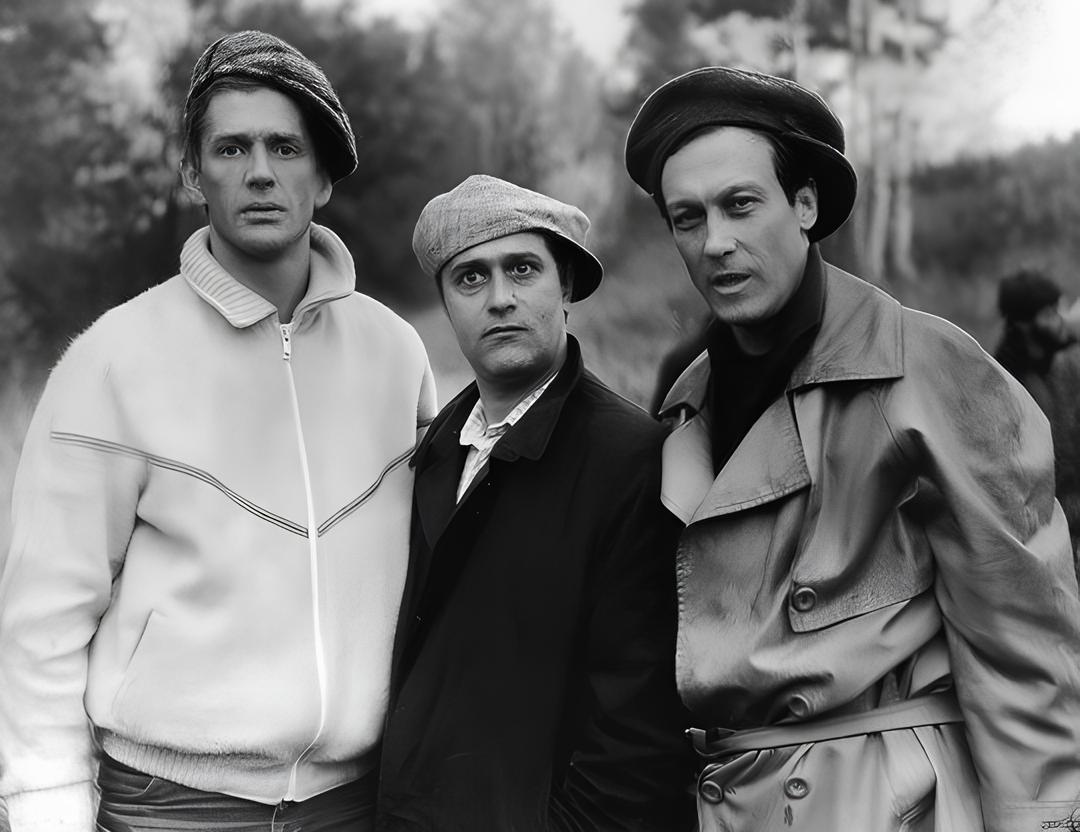
Finding himself in a time entirely new to him, Balayan longed for the vanished era, and that longing would lead to Birds of Paradise (2008). Now in the rank of an honored classic, Balayan attempted to tell how it all truly was: Birds of Paradise is, in essence, the backstage story of Flights in Dreams and in Reality. At its center is a love triangle — a young writer, a mature dissident, and his young wife — at the fading end of the Brezhnev-stagnation years (the action unfolds in 1981). Birds became the final work of the creative duo Balayan–Oleg Yankovsky and, it seems, the true swan song of the great master. Having lost a close friend, his screen avatar (Yankovsky died in May 2009), and unable to find himself in the new era, Balayan seemed to withdraw from it, dissolving into cultural service: he actively helped others, sat on various important commissions, served as artistic director, generously shared wisdom with those still searching for themselves in the profession, and insisted he had left cinema forever. Left it only to return on the threshold of eternity.
In 2020, the maestro, surrounding himself with a very young team, made the film We Are Here. We Are Near (2020), based on a sketch from his student years, is a drama about a lonely surgeon painfully grieving the death of his own godson on the operating table. For the first time, the director allowed himself black-and-white imagery, entrusted the lead role (read: himself) to Akhtem Seitablaiev, and gazed so openly with love upon his beloved city: in the film, Kyiv is an island, the only place on earth where the only people on earth still live. To the aching melody of composer Volodymyr Gronsky, Balayan scatters before the viewer not only the fates of his characters — the doctor and the stranger he meets (Katya Molchanova) — but also a whole series of “perfect pictures”, almost posters.
We Are Here. We Are Near quite literally radiates the author’s longing for lost time on the one hand, and an anxious sense of the present on the other. Balayan, like all his heroes, is a tree standing in water and suffering from thirst. Because his whole life has had roots reaching toward the sky. Looking today at his professional achievements (seventeen films in all), one understands: Balayan does not have a filmography. He has an anthropology degree.
When copying materials, please place an active link to www.huxley.media
Select the text and press Ctrl + Enter