TAXI DRIVER: a cult journey of loneliness

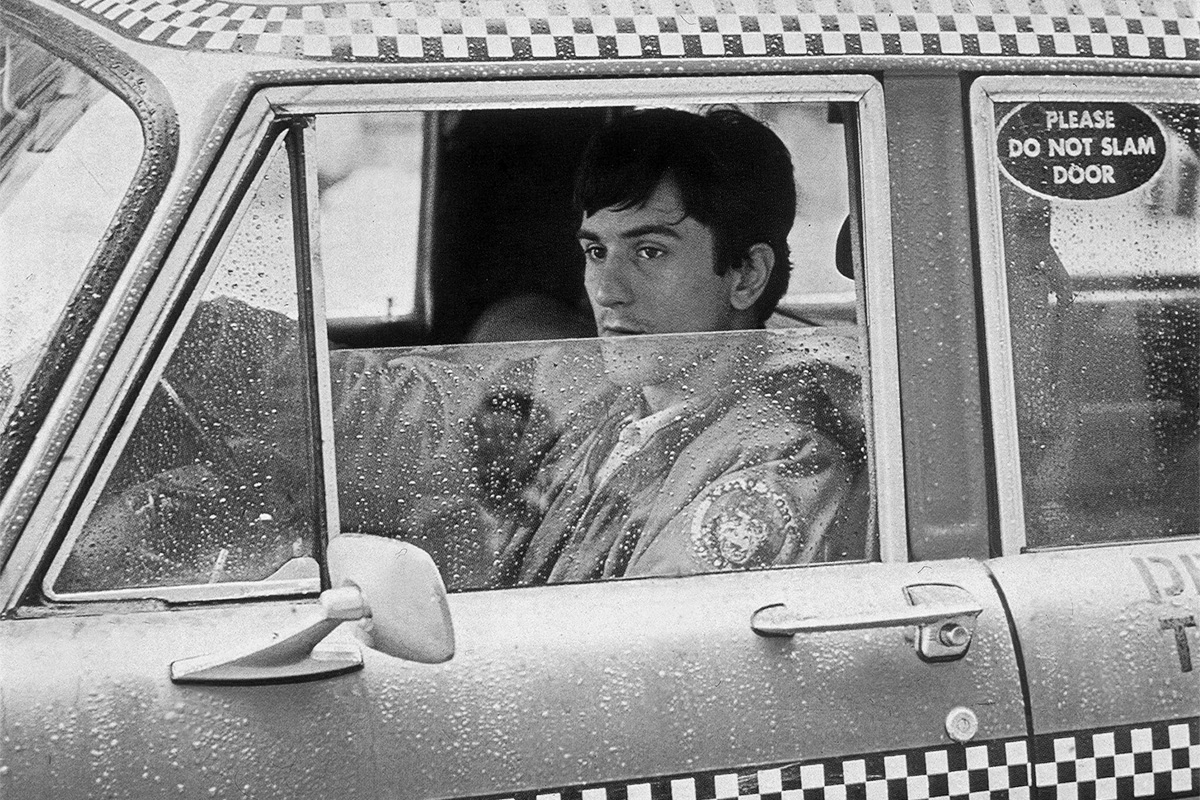
Still from the film Taxi Driver / imdb.com
Half a century ago, Taxi Driver was released — a disturbing masterpiece of the New Hollywood era directed by Martin Scorsese. It did more than canonize New York as a voyeuristic paradise, launch the career of the young Jodie Foster, who played the underage prostitute Iris, and transform the young Robert De Niro into a cinematic Mona Lisa. It changed the very landscape of world cinema. This New York nightmare is not only Martin Scorsese’s best film. It may well be the greatest film ever made. A monumental story about loneliness in the big city — about a little person, lost among everyone else, invisible to the point of complete obscurity. Why and for what reason have we loved this film so much, sympathizing for fifty years with a hero who can hardly be called positive?
A
gain and again, for half a century now, Vietnam veteran Travis Bickle (Robert De Niro) takes a job driving a taxi and at the end of every shift realizes that the world is fundamentally wrong. And then he shaves his head into a mohawk, arms himself to the teeth, and sets out on a path of war and urban madness — against deceitful, hypocritical politicians, vile pimps who trade in little girls, prostitutes, and the whole infernal hell into which they have turned New York and America. That is essentially the entire plot of this film of films, in which post-traumatic stress speaks and reveals itself. Fifty years have passed. The era known as New Hollywood is gone, as is that America — the country of drugs, Vietnam, and rock and roll — and that trash-strewn, «sewer-like», yet so magnetic cinematic New York. And yet the film continues to be watched. Watched avidly, absorbing every frame. With it began the «important» films that tell the story of a society through a lost and broken hero.
Despite its modernity and relevance, Taxi Driver is at the same time a unique time capsule carried into 2026 from an America disillusioned by the Watergate scandal and the Vietnam War. It is a portrait of New York City with its high crime and swindlers, a city that nearly went bankrupt in 1975. In just the past quarter century, their own versions of Taxi Driver, looking back at Scorsese’s masterpiece, have been made — by the most modest estimates — by Alexei Balabanov (Brother, 1997), David Fincher (Fight Club, 1999), Niels Mueller (The Assassination of Richard Nixon, 2004), David Jacobson (Down in the Valley, 2005), Jacques Audiard (Dheepan, 2015), Lynne Ramsay (You Were Never Really Here, 2017), Nicolas Winding Refn (Drive, 2011), and Todd Phillips (Joker, 2019). And the lonely psychopath with a savior complex, as the young Robert De Niro appears on screen, has since been attempted by many actors — from Sean Penn and Ryan Gosling to Joaquin Phoenix, who has performed this trick even twice.
Beyond sociopathy, Taxi Driver raises themes of sin, redemption, chosenness, and retribution. How could it have been otherwise if the film was directed by a would-be Catholic priest and written by someone raised in a Calvinist family? «If Travis Bickle lived today, he probably wouldn’t be an Uber driver but rather an incel sitting in the basement of his parents’ house, exploring the dark, misogynistic depths of the internet», reflects Paul Schrader, who wrote the screenplay for this masterpiece fifty years ago. «The word ‘incel’ simply didn’t exist in my time, although such loners, incapable of establishing contact with women, certainly did. Then as now, they were a kind of concentrated resentment, imagining a transcendental transformation through violence».
Schrader grew up among Dutch Calvinists in Michigan and had not seen a single film until the age of seventeen. The image of Travis — a samurai, a psychopath, a racist, a loner — he partly wrote from himself. No, he is not really such a sociopath, and certainly not an incel. A former film critic and protégé of Pauline Kael — at that time the most authoritative voice of The New Yorker — Schrader, at twenty-six, was going through the most difficult period of his life, which ultimately poured itself into Taxi Driver, becoming a form of self-therapy. About ten years ago I happened to meet Schrader in Venice, on the island of Lido. We talked for several hours in the bar of the Hotel Excelsior. Naturally, about Taxi Driver. «You see, I had just lost my job, divorced my wife, the girlfriend for whom I had left my wife had also abandoned me, and suddenly I found myself on the street without a roof over my head. My ex-wife occasionally let me stay in her apartment when she went away on business trips. But most of the time my home was my old battered car. I drove through the night city in it, like in a metal coffin. That went on for a couple of weeks».

I sat there, listening in fascination as Schrader described how, just like his hero, he passed the time in the spit-stained New York porn cinemas that operated around the clock. It was there that the future screenwriter of Taxi Driver and several other masterpieces by Martin Scorsese could sleep for a couple of hours, usually choosing the balconies that abounded in the «old porn palaces of New York» for this purpose. «Sometimes people woke me up, but more often than not I managed to get a fairly decent sleep», Schrader says.
One day he felt a pain in his stomach, and soon afterward he lost consciousness. When he came to in the hospital — where doctors discovered a bleeding stomach ulcer and immediately operated on him — he saw, in his own imagination of course, his Travis: «He jumped out like a jack-in-the-box. And I thought: ‘That’s me — a guy locked inside a yellow box floating through streets littered like sewer drains. He looks as if he lives among people, but in fact he is completely alone. I would even say totally alone’. In most people’s minds taxi drivers are talkative, annoying creatures. I saw in Travis the heart and soul of Camus’s The Stranger. And also the pickpocket from Robert Bresson’s film of the same name».
That is precisely why, before beginning work on the screenplay, Schrader carefully reread both Camus and Jean-Paul Sartre in order to draw proper inspiration. «I wanted to take this character who existed in European and American literature — the underground man, the existential hero — and place him on the pages of my script. The first draft of Taxi Driver was written in just ten days. After finishing it, I immediately began rewriting everything. I needed to drive this character out of myself, to rid myself of him. At that moment it seemed to me that if I didn’t do it, I might become him myself».
Beyond its deeply personal dimension, Taxi Driver also has another — a political one. The film was made right after the Watergate scandal, which significantly undermined ordinary Americans’ trust not only in government but in the world as a whole. Travis constantly follows the activities of presidential candidate Palantine, until he realizes that he is the same hypocritical liar as all the other politicians. The culmination of this storyline is the scene in which Robert De Niro’s character, with a mohawk haircut, goes to a political rally intending to kill Palantine.
While imagining this scene, Schrader was inspired by the real assassination attempt on President Gerald Ford carried out by a woman named Sara Jane Moore in San Francisco in September 1975. «She shot at Gerald Ford. She missed, and the next week she was on the cover of Newsweek. That’s when I thought: ‘This is what our culture has come to! You shoot at the president, miss, and for that you end up on the cover of the biggest American magazine». Among other things, this event influenced the ending of Taxi Driver, where after all his actions the psychopath Travis becomes a genuine American hero. By a grim irony of fate, Taxi Driver itself later became the cause of an assassination attempt on the head of the White House: after watching the film fifteen times, twenty-year-old John Hinckley fell so deeply in love with the young Jodie Foster that five years later he shot at Ronald Reagan in order to attract the actress’s attention.
Taxi Driver is, if not the best, then certainly one of the finest roles in Robert De Niro’s career. A textbook example of the chameleon actor, the highest achievement of Lee Strasberg’s studio, he would repeatedly transform himself for his characters — gaining weight, losing weight, shrinking in stature, mastering unfamiliar professions, brilliantly portraying catatonics, priests, criminals, Frankenstein, Al Capone, and even the Devil himself. But he would never again play such a «new» Holden Caulfield — filled with resentment, anger, self-hatred, and an inability to connect with the surrounding world. Here De Niro makes a breathtaking transition from normality to madness and back with such intensity that the two seem to change places. The scene in which the actor, standing before a mirror with a gun in his hand, addresses his reflection with the words, «You talkin’ to me?» has become one of the most quoted moments in modern cinema and in internet memes.

«In my script it was written that he takes a gun, plays with it, points it at the mirror, pretends to shoot, and talks to himself,» Paul Schrader recalls. «‘What does he say to himself?’ Bobby asked me. ‘What line would he say?’ I replied: ‘Try to imagine that you’re eight years old and playing cowboy, shooting at the mirror and saying: «Hey, got you! I’m faster than you!» De Niro immediately grasped the idea and launched into improvisation». About ten years ago, during a screening of Taxi Driver at the Tribeca Film Festival in New York, the actor told fans that not a single day goes by without someone meeting him on the street and asking: «You talkin’ to me?» De Niro, of course, is being a little coy, pretending to display the «weariness of a star». The man for whom he once obtained a driver’s license and a taxi license, and then spent several months driving a yellow cab around New York (there are still people today who claim they rode with De Niro), has remained with him forever. It is no coincidence that years later, if Schrader is to be believed, he seriously discussed the possibility of making a sequel to Taxi Driver.
«I told him then: ‘Bob, first of all, he’s dead, but even if he weren’t, today he wouldn’t be driving a taxi anymore. You understand? He would probably have locked himself in a cell somewhere in Montana and be making homemade bombs. And his name would no longer be Travis Bickle, but Ted Kaczynski’» . Besides Travis, the film has another hero — New York itself. Cinematographer Michael Chapman films it with particular reverence. Travis’s yellow taxi drives through an inky city. New York, caught during the filming in the midst of a garbage collectors’ strike (which Todd Phillips would later show in his Joker), appears on screen now as a prison, now as hell, now as a voyeuristic paradise, and now as the center of the world.
The New York of Taxi Driver is the opposite of the New York, say, of Woody Allen’s Manhattan, filmed around the same time: instead of romance, confusion. The unnatural red lighting of hostile streets, the suffocating air of porn theaters and rented flop houses give way to a leaden gray, almost monochrome light flooding the back alleys. A drunken, aggressive crowd on the sidewalks, adrenaline-fueled teenagers throwing bags of rotten food at passing cars. Rock rules everything here; everything is predetermined. Any attempt to change something will inevitably end in tragedy. The New York that Scorsese shows us is a city where it is hard not to fall into sin and even harder to cleanse oneself of it. A city we see through the eyes of Travis Bickle. And this subjective gaze, burdened by a fractured human consciousness, is underscored by the brilliant music of composer Bernard Herrmann.
The author of the soundtrack to the legendary Citizen Kane (often called the «gospel of cinema») and eight films by Alfred Hitchcock, Herrmann at first turned Scorsese down, saying he did not write music for films about taxi drivers. But after reading the script he changed his mind, falling in love with the scene in which the protagonist pours whiskey over pieces of white bread. The soft jazz melody, shifting into anxious bursts of brass, conveys the borderline state of Travis Bickle — ice and flame. Herrmann managed to complete the music for Taxi Driver and died on the last day of re-recording, on Christmas Eve 1975.
For Martin Scorsese, Taxi Driver is a key statement. In it he pushes nervous tension to the extreme, yet even on the brink of despair he never stops seducing the viewer. Seven years later he would essentially remake it as a black comedy. Again with Robert De Niro. The self-remake, The King of Comedy (1982), would tell the same story of a little man driven to the edge — this time not a veteran but a self-taught comedian named Pupkin who, dreaming of appearing on the television show of the famous Jerry Langford, takes his idol hostage.
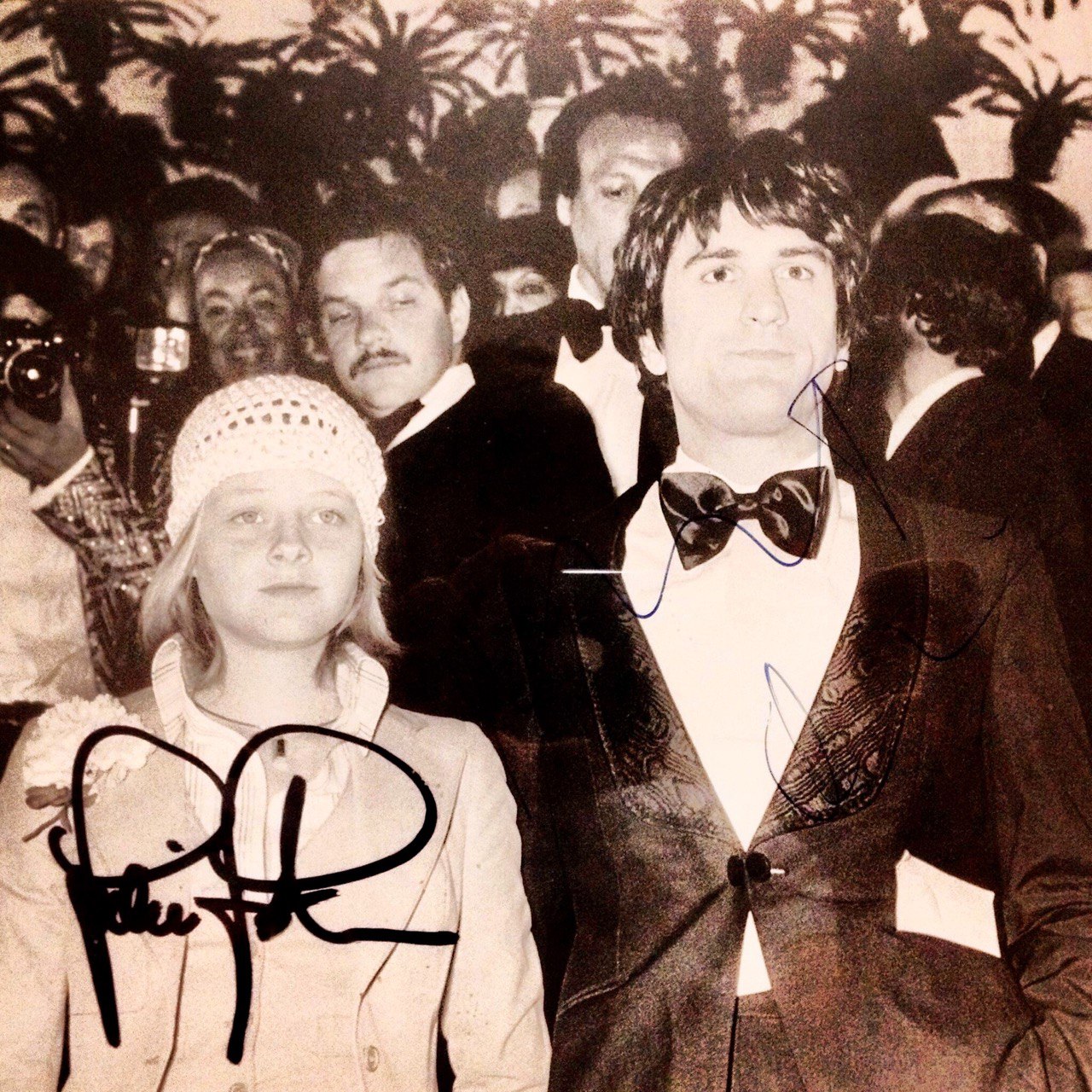
Taxi Driver, even fifty years later, still causes confusion because no one quite understands what is happening in it. Scorsese himself does not know the answers to his cursed questions. But who needs answers when there are such questions! The film was released in February 1976. To obtain an R rating without removing the risky scenes of violence, Scorsese, on the advice of his friend Steven Spielberg, muted the color of the final massacre, turning the bright red blood into a «tabloid» brown. And then it took off. Crowds of young people besieged the cinemas. The Cannes premiere in May 1976, however, was accompanied by whistles and jeers. The audience was literally outraged by the level of violence with which Martin Scorsese had infused his film.
Jodie Foster, whom I met in 2012 when she was signing a photo for me from that historic premiere, recalled that, apart from the press conference, Scorsese and De Niro simply stayed in their hotel rooms, avoiding journalists. «So I had to take the heat for them», Foster told me then. Fluent in French, she gave interviews to the media. But the anxiety soon ended in a magnificent triumph: Taxi Driver, contrary to expectations, received the Palme d’Or from the hands of the jury president, playwright Tennessee Williams. It received it — and stepped into eternity.
Fifty years later, it continues to captivate new generations. Just as it once captivated fifteen-year-old Quentin Tarantino, changing his life. «I first saw Taxi Driver in 1977 at the Carson Twin, where everyone in the audience (except me) was Black. No film in the history of cinema reflects so precisely the chaotic life of New York streets in the 1970s. No Hollywood film before it had shown so accurately the cruelty, despair, and comic absurdity of that life. The film radiated a wave of authenticity, and it carried us along — those of us who recognized that reality», recalls the author of Pulp Fiction.
Such cultural significance largely explains why Taxi Driver has not left the stage for half a century and will undoubtedly endure for just as long. Each new generation discovers this masterpiece for itself, just as each new generation encounters the feeling of loneliness. Even if it is loneliness on the internet. And that means Taxi Driver is eternal.
When copying materials, please place an active link to www.huxley.media
Select the text and press Ctrl + Enter


