MASTERPIECES OF MADNESS AND HOPE: the films «Shock Corridor» and «The Holdovers»


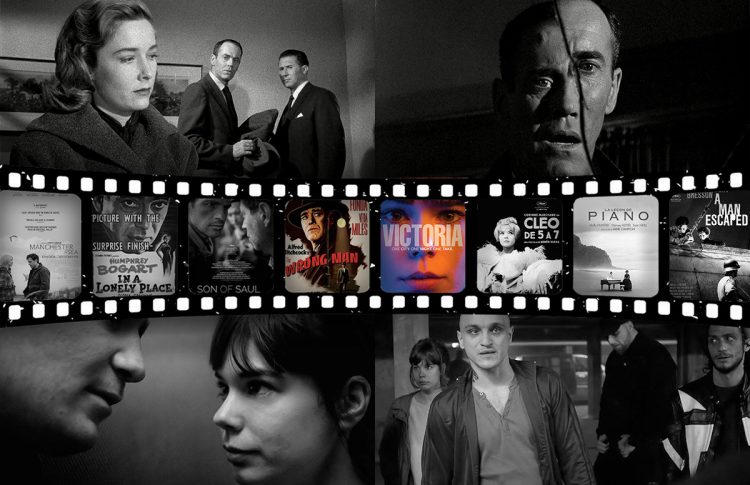
Art design: huxley.media via Photoshop
«Kinosophia» is wrapping up the outgoing 2025 with two masterpieces that better than anything else reveal the very essence of this year — a year in which the world has finally turned into a madhouse, where looking up and articulating cause-and-effect relationships is strictly forbidden, and people band together into chosen families simply to survive, to keep warm, to endure.
The black-and-white Shock Corridor (1963), shot virtually on the fly amid the ruins of the American studio system by the desperate smuggler Samuel Fuller, exposed the hypocrisy of Cold War–era America through a journalistic adventure set in a psychiatric clinic. Today, it offers a sweeping portrait of our own world, which, alas, differs little from the stifling confines of Fuller’s on-screen asylum.
Bathed in warm, lamplike light, Alexander Payne’s The Holdovers (2023) shows how, at Christmas, class barriers dissolve along with time itself, and how joy not only brings together teachers, kitchen staff, and troubled teenagers (even if only for one night), but also sprinkles their sorrow and loneliness with great hopes.
Payne, following in the footsteps of his great compatriot Frank Capra, the author of the iconic Christmas tale It’s a Wonderful Life (1946), convincingly demonstrates that the main Christmas genre is not spectacle, not fairy tale, but melodrama. Children ask to be told the same beloved story at bedtime again and again. In exactly the same way, adult viewers ask to be retold, every twenty or thirty years, the same melodramatic story, inevitably framed by Christmas scenery. The Holdovers is precisely such a story.
«SHOCK CORRIDOR» (USA, 1963)
Director: Samuel Fuller
Cast: Peter Breck, Constance Towers, Gene Evans, James Best

A
n ambitious journalist pretends to be insane in order to investigate a mysterious crime committed in a psychiatric hospital and win the long-awaited Pulitzer Prize — only to lose his own sanity in the process. A former crime reporter and soldier who landed with the Allied forces in Normandy in the summer of 1944 and helped liberate Nazi concentration camps, a favorite of the French New Wave (Jean-Luc Godard gave him a lavish cameo in his cult Pierrot le Fou, 1965), Samuel Fuller looked at the world through a movie camera viewfinder as if through a gunsight.
A battle-hardened soldier, he anathematized weakness simply because, in his view, the weak do not survive in this world. Pain is cured only by pain. A bullet is the last argument — but the most reliable one (Fuller seems to be the only director in the world who did not use a traditional clapperboard on set, preferring instead to mark takes with shots from his army Colt). The main thing is not to think. Fuller’s characters are not intellectuals. He made intuitive, emotionally charged, dynamic cinema. «Every film is a battlefield. And the main thing in a film is love, hatred, action, violence, and death. In a word — emotions», Fuller said these words as an improvisation on the set of Pierrot le Fou, bringing the young Godard literally to tears. What interested him most was conflict. Whatever he filmed — the Old West (Forty Guns, 1957) or Cold War America (Pickup on South Street, 1953) — his films are saturated with sexual energy and violence.
The films of this director were a powerful antidote to America’s self-satisfaction in the era of the «Iron Curtain». He was the most notorious artistic smuggler of the 1950s, mercilessly mocking any ideology. American hypocrisy was his constant target. Perhaps that is why Fuller’s protagonists are almost impossible to distinguish from his antagonists. Coming to cinema from journalism, Fuller found his niche in making B-movies and genre films, which gave him maximum creative freedom. But when the studio system collapsed, burying the entire Hollywood Golden Age beneath its ruins, Fuller turned to low-budget, independent productions.
He had neither big money nor big stars — only very modest sets. Yet even under these harsh constraints, he managed to make a film like Shock Corridor. Here, he employs the same knock-you-down techniques as the yellow press uses in its headlines. What appears on screen is not a private story but Cold War America and Southern racism. Fuller unfolds a broad panorama of all kinds of American madness. Black patients here beat themselves into a racist frenzy, ominously chanting «Ku Klux Klan», a fat man stubbornly insists that he is an opera star, and a group of nymphomaniacs roam the ward like wild animals.
Cinematographer Stanley Cortez (whose credits include such classics as The Magnificent Ambersons (1942) and The Night of the Hunter (1955) floods the sealed world of the psychiatric clinic and its deranged inhabitants with bright, expressive light, embracing them in smooth panoramic movements. The monochrome image in the climactic scene is interrupted by a burst of color. In such a toxic atmosphere, it is difficult not to go mad — let alone recover from madness. The metaphor is crystal clear: in Fuller’s view, America has turned into a madhouse. More broadly — the world. Pain and meaninglessness. There is perhaps no other psychiatric thriller that feels as if it were filmed not by a director, but by a ruthless and grieving surgeon.

«THE HOLDOVERS» (USA, 2023)
Director: Alexander Payne
Cast: Paul Giamatti, Dominic Sessa, Da’Vine Joy Randolph, Carrie Preston

Added to the treasury of Christmas cinema is another small masterpiece — one that is not only worth watching, but rewatching. It is a film that became a classic the very moment it was released. On Christmas Eve of 1970, a handful of students at a secluded New England boarding school do not go home for the holidays but find themselves stuck on an empty campus, in the company of a Black head cook and a despised ancient history teacher, Hunham (Paul Giamatti) — a loner and a miser who forces them to study even during the holidays. By a happy coincidence, the wealthy father of one of the abandoned children suddenly appears like a magician in a blue helicopter and takes all the students away on a skiing trip. All of them except one — a boy named Angus Tully. His parents are far too busy enjoying their honeymoon to think about their son or even to let him fly away with the others.
Tully is left as the only one not taken — the third member of a company consisting of the cook and the irritating Mr. Hunham. Each of the three suffers from the same affliction, whose name is loneliness. The historian is too obsessed with his profession (which is both his calling and his curse) to be married; the cook grieves for a son killed in Vietnam; and Tully is simply… an inconvenient child to a hedonistic mother. One by one, the three lash out at each other, imperceptibly turning into a family they themselves choose to create.
The Holdovers is a Christmas carol in prose of Dickensian dignity, devoid of startling plot twists and untainted by agenda. Focused on everyday life, the film skillfully conveys the very spirit of Christmas — a holiday made up of hope and sorrow. Director Alexander Payne, a master of piercing human stories (About Schmidt (2002), Sideways (2004), Nebraska (2013), armed with the brilliant Giamatti, brings to the screen a new Scrooge — a lifelong prisoner of his boarding school, an intellectual fanatic who lays the most precious thing he has on the altar of scholarship: life. Living, unpredictable, complex — and so dear.
Rapturously reflecting on ancient history, Giamatti’s character fails to notice that he has no history of his own. The Holdovers, which garnered every possible accolade at home and achieved a box office impressive for its scale ($45.7 million against a production budget of $13 million), is a cinema of astonishing delicacy and tenderness. And so it stops just short of becoming a sober melodrama. It freezes on the edge of the abyss — then makes a sharp turn and steps straight into eternity. Almost as if walking on water.
When copying materials, please place an active link to www.huxley.media
Select the text and press Ctrl + Enter